

 Locations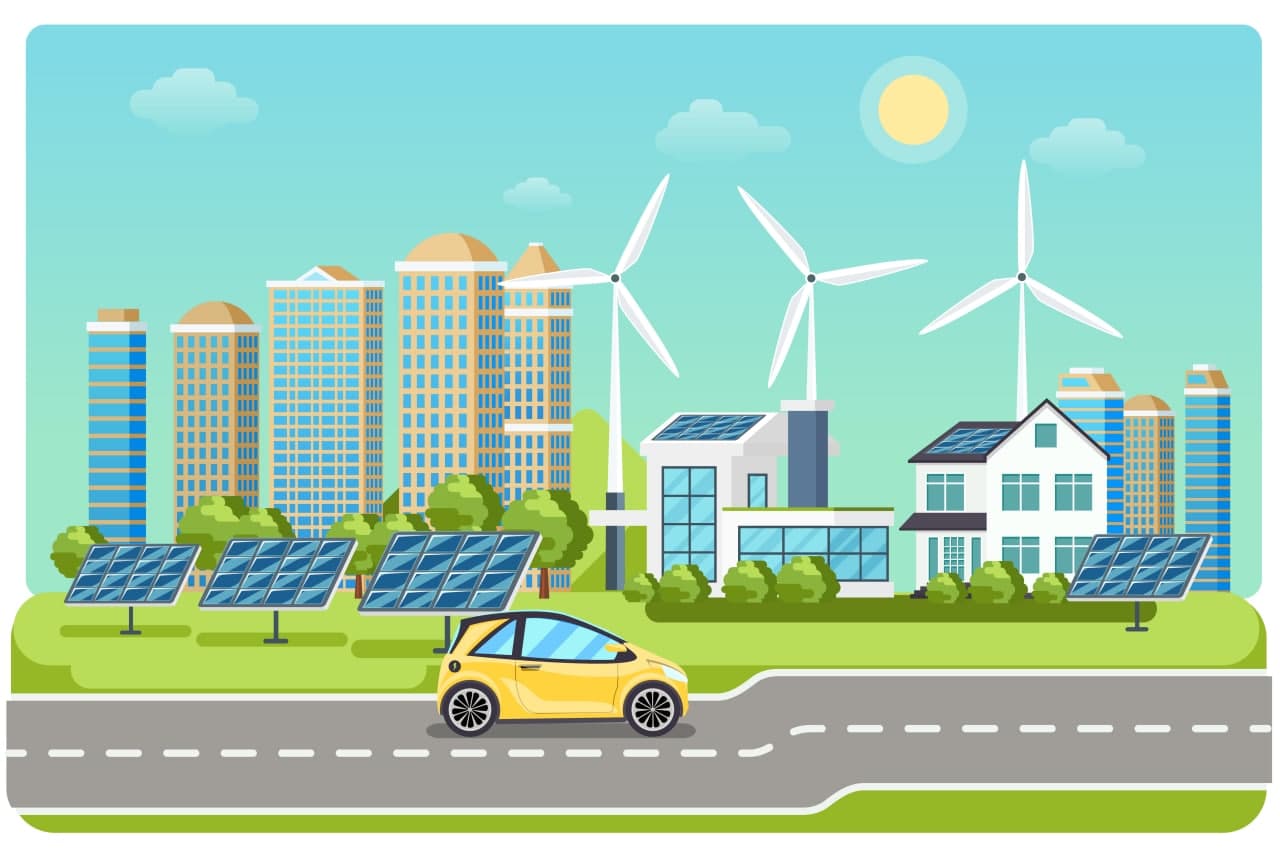
Image: UNDP Uzbekistan
Cities and roads are built for people, which means that they should not only be comfortable and have a modern design, but also be based on an integrated urban development plan, be resistant to external influences, organically combined with a "green" infrastructure, and promote public health. The way to do this is through the "green" development of cities.
First of all, modern approaches to the integrated urban planning system are needed, which must take into account current and future risks. These include the process of climate change, the state of urban ecology and its relationship to the forecast of urban population growth, motor vehicles, the pace of construction work, and other factors. If cities are not developed along the green way, they, in particular, will be unable to fully function and can become a "trap" for the local population during periods of adverse external influences, such as hot summers (the "heat island" effect due to the abundance of concreted surfaces and asphalting), long-term droughts or pandemics like COVID-19.
The lessons of the pandemic have shown that people can no longer put off solving problems that they already know about. Moreover, humanity must clearly predict possible risks, and choose the path of development that will help to minimize them. The path that lies through the green development.
These issues were discussed at the international online forum «Building forward better: Green Recovery of Uzbekistan after the COVID-19 coronavirus pandemic", organized on March 3-4, 2021 by the UNDP and the Government of Uzbekistan together with a number of partners.
Thanks to the growing concentration of people per square kilometer, the cities are now the key place for implementing measures to combat climate change and other urging risks. The COVID-19 pandemic has shown that the relationship between the state of the environment, the economy and human health is clearly realized. So, using this lesson, you need to start a post-bubble urban development according to the green scenario. In order to do this, it is necessary to combine the resources and experience of different parties- starting from the government, city administration and the private sector, ending with the public to international partners and green investments. What is now called a cross-sectoral approach based on consultation and collaboration with key stakeholders.
What can we do today for the development of cities along the green way? The green economy is not just the implementation of modern technologies, it is also a tool for identifying, quantifying and evaluating ecosystem goods and services. That is, the ability to go to the adoption of any decisions on urban development, through the analysis of how this will affect the normal, and therefore eco-friendly, life of the city today and tomorrow. Take at least the trend towards a warming climate, which is already impossible not to take into account, with the growing urban congestion.
Green urban development begins with short-term planning (1-5 years) and long-term development plans (5-20 years), including the construction and housing sectors. In urban planning, it is important to apply standards that will work not only for today, but also for the future-that is, how it will come back in 10-20 years or more. In today`s world, such standards are already used, in particular, in LEED (standards of Leadership in energy and environmental design) or BREEAM (The Method of environmental assessment of the construction research center). Studying the existing experience, it is possible to start launching it here and see real results.
This is crucial, because today the same construction works are carried out by using technologies and processes that do not meet advanced standards, in particular, there are no special rules for preventing pollution on construction sites.
The modern approach to the processes of reconstruction and construction of infrastructure includes the creation of green areas and parks. And this is based on clear calculations of the economic and social benefits that such practices of landscape designing provide. That is why urban planning is based on modern methods and approaches. Examples of such planning in their own countries were given by participants of the international online forum.
Cities are also a huge source of greenhouse gas emissions that affect the process of climate change. And, if nothing changes in the cities growth, the volume of emissions will also increase. The way out is to make all new construction of houses and buildings energy efficient and with zero carbon emissions. How to do this? – to use the introduction of energy-efficient technologies and solutions with zero emissions in the production of building materials, even for the cement. Yes, it will require the study of these new technologies, but there is simply no other way. By destroying the environment, we are destroying our lives. And as the pandemic has shown, if we don't solve the problem overserves, nobody will do it for us.
International experience shows that the development of local production promotes the energy efficiency of construction equipment and materials. And here the state will support enterprises for the production of insulation materials, windows, insulated pipes and other products. This is a real way to achieve a greater energy efficiency in urban construction.
There is also a need for serious monitoring by a sufficient number of highly qualified inspectors of the implementation of new energy-efficient standards in the construction and heating of buildings. This makes it possible to ensure real transparency and standardization of processes. Taking into account the current pace of construction in Uzbekistan, monitoring of this level should be organized as soon as possible, because many decisions on energy efficiency have already been made in the country. Now it is important to analyze their compliance at each construction site.
Transparency will make it possible to create a system of reliable data, the lack of which today reduces the effectiveness of urban planning. Moreover, effective urban development requires strategic urban planning based on scenarios to identify risks, understand relationships, and address risk factors. It is also important to establish interaction, networking and exchange of experience between cities, which will provide a platform for learning best practices and obtaining practical technical recommendations. At the current level of digitalization, this is not difficult, the main thing is qualified specialists, a comprehensive analysis of successful practices, including local ones, and their implementation. This will lead not only to the successful and promising development of cities, but also to the improvement of the general management processes in the country.
In the green development of cities, it is impossible to ignore such an aspect as waste management, which is one of the topical issues of the ecosystem, both the cities themselves, as one of the main sources of waste, and directly landfills for waste storage.
Modern preservation of environmental sustainability in any country is impossible without the creation of modern infrastructure and enterprises for the processing of industrial waste, stimulating the sustainability of their activities. A number of steps were discussed during the online forum to effectively create such an infrastructure. These include: conducting an assessment of all large waste landfills for the content of useful substances and conducting an inspection to ensure that the waste meets 100% environmental standards; clarification of the waste classification rules and bringing them in line with the best international practices, in particular, the EU standards; determination of the profitability of processing and calculation of the necessary investments; determination of options for processing or disposal of hazardous and toxic waste.
During the discussion of green scenarios of urban development, the participants of the online forum also presented successful technologies for organizing road infrastructure, industrial activities of cities, waste water management, access to sources of green financing for the implementation of promising projects, and other aspects that allow the development of cities to move forward according to the green scenario. To create better conditions for the people living in them, to increase the resilience of cities to climate and non-climate crises, the possibility of which was proved by the pandemic.
By scrutinizing the lessons of COVID-19 resistance between people of all countries of the world, including Uzbekistan, have a chance to understand the importance of developing along the green path. Not to do this means step by step to worsen the quality of your life and the lives of your children and subsequent generations. The later people take up green development, the more difficult it will be to return to the previous level of the situation, in particular, such as today. And the fact that the choice of the green path of development of our country depends on each of us, eloquently testified the examples given by the participants of the international online forum.
We should add that in October 2019, the "Strategy Republic of Uzbekistan transition to a "green" economy for the period 2019-2030 " was adopted.
The Strategy sets targets for reducing emissions by increasing energy efficiency, increasing the use of renewable energy sources, increasing resource efficiency and crop yields, and limiting land degradation.
In turn, the COVID-19 pandemic has clearly demonstrated that public health is closely linked to climate and nature. The lessons of the pandemic are an incentive for the world to start a green recovery through the sustainable use of natural resources, climate change mitigation and adaptation. Today, it is obvious that it is important to use the opportunity to overcome the crisis on a more environmentally friendly, low-carbon path, where economic recovery becomes possible without increasing greenhouse gas emissions.


