Locations
Central Asian Countries Unite with One Regional Vision for Wildlife Conservation and Resilient Landscapes at GEF Assembly
June 6, 2026

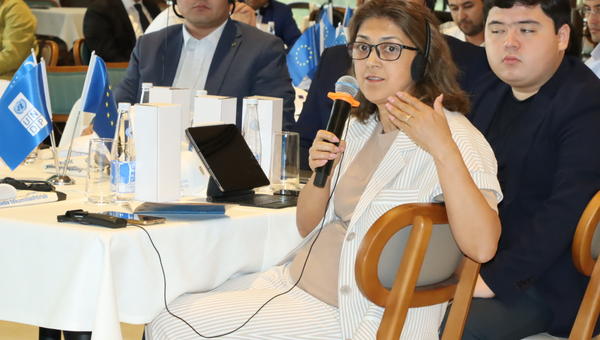
Samarkand, Uzbekistan — Governments from across Central Asia, together with the United Nations Development Programme (UNDP), the Global Environment Facility (GEF), international partners and conservation organizations, convened at the Eighth GEF Assembly in Samarkand for a high-level side event focused on strengthening regional cooperation for wildlife conservation and resilient landscapes.
The event, titled “From Corridors to Communities: A Regional Vision for Wildlife and Resilient Landscapes in Central Asia,” highlighted a shared regional ambition to protect globally significant biodiversity while supporting sustainable livelihoods and climate resilience across the Mountains of Central Asia biodiversity hotspot.
Central Asia is home to some of the world’s most important transboundary wildlife populations and mountain ecosystems, including snow leopards, argali and saiga antelope. These ecosystems support local livelihoods, ecological stability and long-term economic resilience across the region. However, increasing pressures from habitat fragmentation, climate change, land-use change and human-wildlife conflict require coordinated responses that extend beyond national borders.


Opening the event, representatives of the Governments of the five Central Asian countries, the Global Environment Facility and UNDP emphasized the importance of regional partnerships in addressing shared environmental challenges and advancing sustainable development. Akiko Fujii, UNDP Resident Representative in Uzbekistan, moderated the dialogue.
The side event brought together senior government representatives from Kazakhstan, Kyrgyzstan, Tajikistan, Turkmenistan and Uzbekistan, namely Mr. Aziz Abdukhakimov, Advisor to the President of the Republic of Uzbekistan on Environment and Chairman of the National Committee on Ecology and Climate Change, Mr. Akyl Toktobaev, Minister of Natural Resources, Ecology and Technical Supervision of the Kyrgyz Republic, Mr. Bahodur Sheralizoda, Chairperson of the Committee for Environmental Protection under the Government of the Republic of Tajikistan, Mr. Nuri Jumashev, Deputy Minister of Environmental Protection of Turkmenistan, Ms. Shattyk Tastemirova, Head of the Adaptation to Climate Change Unit in the Climate Policy Department of the Ministry of Ecology and Natural Resources of the Republic of Kazakhstan, and Mr. Marcos Neto, UN Assistant Secretary-General and Director of UNDP’s Bureau for Policy and Programme Support. They discussed common conservation challenges, innovative national solutions and opportunities for closer regional cooperation. The opening part of the side event concluded with signing of the Joint Expression of interest by Central Asian countries to advance coordinated regional efforts for the sustainable management of mountain ecosystems in Central Asia.
Later, participants also explored how a new generation of GEF-9 biodiversity investments can help strengthen wildlife conservation, secure habitat connectivity, support community stewardship and wildlife-compatible livelihoods, and improve monitoring and knowledge exchange across the region.
The event also underscored opportunities to deepen regional cooperation on wildlife conservation and mountain landscape resilience, bringing together governments, development partners, financial institutions and technical organizations to advance shared priorities and joint action across Central Asia.


Participants reaffirmed the importance of maintaining habitat connectivity for transboundary wildlife populations, strengthening conservation institutions, and expanding partnerships that benefit both people and nature.
The discussions concluded with a shared commitment to continue collaboration on developing coordinated investments, mobilizing resources and advancing a regional vision for biodiversity conservation that contributes to global environmental goals while supporting sustainable development across Central Asia.
About UNDP
The United Nations Development Programme (UNDP) works in about 170 countries and territories, helping to eradicate poverty, reduce inequalities and build resilience so countries can sustain progress. In Uzbekistan, UNDP supports national efforts to achieve sustainable development through initiatives focused on climate action, biodiversity conservation, good governance, inclusive economic growth and social development.