Locations
Creating a Culture of Resilience: “Yashil Uyim” Eco-Festival Brings Climate Action to Namangan
July 23, 2026

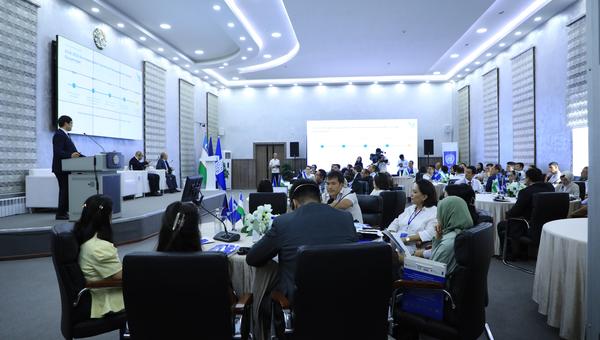
NAMANGAN, Uzbekistan, 23 July 2026 – The three-day “Yashil Uyim” (Green Nest) Eco-Festival opened today in Namangan, bringing together residents, youth, families, experts, and local authorities to explore practical solutions for building a greener, more climate-resilient future.
The festival is organized within the regional project “Enhancing Urban Resilience to Disaster and Climate Risks in Central Asia”, implemented by the UNDP with financial support from the Government of Japan. Running from 23–25 July, the event aims to strengthen environmental awareness and encourage sustainable lifestyles by providing participants with practical knowledge and hands-on experiences related to climate adaptation, urban resilience, and environmental protection.


Namangan was selected as the pilot city for the regional initiative due to its commitment to sustainable urban development and growing efforts to address climate-related challenges. The project supports Central Asian cities in responding to increasing risks associated with extreme heat, drought, and other climate impacts by promoting innovative solutions and fostering a stronger culture of resilience at the community level.
The festival programme is organized around four interconnected themes and features interactive workshops, expert discussions, educational activities, and community engagement events.
23 July – Waste Management and Sustainable Urban Development
The opening day focuses on waste sorting, recycling, and environmentally responsible urban planning. Participants learn practical approaches to reducing waste and creating cities that balance development with environmental protection. Sessions are led by urban planning expert Shukhrat Abdullaev and environmental activists Mo’tabar Khusvaqtova and Feruzbek Sayfullayev, among others.
A special open dialogue session brought together representatives of the Namangan City Administration, the Ecology Department, and "Uzsuvtaminot" JSC (National Water Supply Company of Uzbekistan), Department of Landscaping and Improvementproviding residents with an opportunity to discuss local environmental priorities and ideas for making the city more sustainable.
The dialogue session focuses on several critical themes, starting with ongoing initiatives to address Namangan’s water supply challenges through modern water-saving technologies. Participants also discussed long-term urban greening plans, proper tree maintenance, and measures to mitigate the environmental impact of construction projects. Furthermore, the dialogue highlighted broader efforts to improve air quality and waste management, emphasizing the vital role of civic engagement and joint efforts between residents and the city administration to solve the region's top ecological priorities.


24 July – Science, Innovation and the Future
The second day explores the intersection of science, technology, and environmental sustainability. Participants will dive into discussions on AI’s resource consumption—specifically whether AI "drinks" water—featuring physicist Boburshoh Ibragimov, followed by an exploration of space and astronomy with astronomer Orifjon Shermatov. The day will conclude with a networking lunch and closing remarks..
25 July – Family Ecology Day
The final day is dedicated to children and families, featuring robotics workshops, science experiments, educational games, and interactive reading sessions. The festival will conclude with a screening of the animated film “WALL·E” in Uzbek, encouraging younger generations to reflect on environmental responsibility in an engaging way.
Throughout the festival, visitors can also explore an eco-friendly products fair, participate in a SWAP initiative for exchanging books and plants, and contribute to environmental action through dedicated collection points for batteries, used cooking oil, plastic, and paper waste.
More than 100 participants attended the opening day, and between 450 and 600 visitors are expected over the course of the festival, including government representatives, international experts, students, volunteers, and local residents.
The festival forms part of broader efforts to pilot innovative climate adaptation and disaster risk reduction measures across Central Asia, helping cities become more resilient, sustainable, and prepared for the challenges posed by climate change.