

 Locations
UNDP Presented Feasibility Study on Integrating Climate Change Education into Uzbekistan's School Curriculum
Integrating Climate Change Education into School Curriculum
November 20, 2025

Workshop presenting feasibility study on climate change education integration into school subjects.
Alpamis Babaniyazov
21 November 2025, TASHKENT, — the United Nations Development Programme (UNDP) in Uzbekistan, in partnership with the Ministry of Preschool and School Education of Uzbekistan, presented the results of a new Feasibility Study Report at a validation workshop at the Hyatt Regency Hotel in Tashkent with the participation of local and international experts, schoolteachers, and area specialists.
The purpose of this workshop:
discuss the possibility of introducing climate change education components into the school curricula of applied and natural sciences (biology, geography, chemistry, and physics) for grades 7-11 in general education schools based on a systematic and interdisciplinary approach;
analyze the current situation in the curricula in this area, develop proposals to expand students' knowledge about climate change and increase the share of practical training;
formation of a concept of methodological solutions and educational materials suitable for the conditions of Uzbekistan based on the study of international experience (Finland, Germany, the Republic of Korea, Japan, and Sweden);
proposals for creating a sustainable climate education model that fosters environmental awareness, responsibility, and leadership skills in the younger generation.


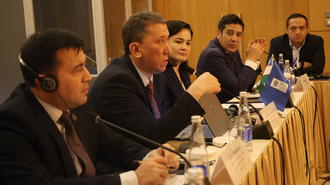

The workshop agreed targeted trainings to educators in Uzbekistan on embedding climate education into applied and natural sciences curricula to elevate students' scientific literacy and drive human capital advancement. Sessions analysed the current integration of climate topics in upper-grade school subjects, identified opportunities for incorporating climate change materials, showcased innovative and interactive teaching methods, offered practical guidance on addressing local challenges like rising temperatures, drought, water scarcity, and desertification, and drew on international interdisciplinary models linking biology-geography and physics-chemistry.
UNDP and partners introduced new resources and recommendations, prepared to equip over 1.3 million students in grades 7-11 with vital climate knowledge and skills for sustainable community progress. This initiative supports Uzbekistan's commitments under the Paris Agreement on climate change and the Strategy for Transitioning to a Green Economy 2019–2030.
Media Contact:
Mr. Alpamis Babaniyazov
PR and Outreach Associate, UNDP in Uzbekistan
Email: alpamis.babaniyazov@undp.org
For more information, visit: www.uz.undp.org


