Locations
Energy-Efficient Cooling Training Supports Climate Action in Uzbekistan
December 19, 2025

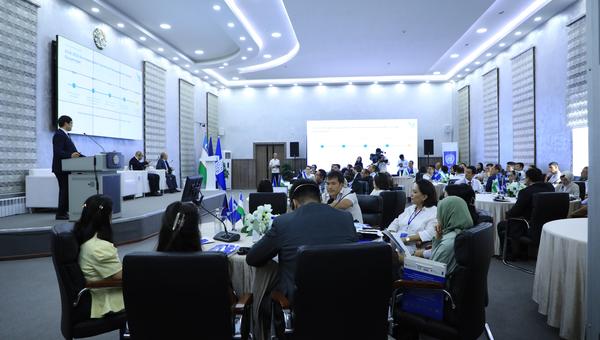
Gulistan, 19 December 2025 - a specialized interactive training on air-conditioning and climate control systems for technical staff of social sector facilities has been conducted as part of ongoing efforts to improve energy efficiency and climate resilience in public buildings.
The training focused on strengthening participants’ knowledge in key areas, including:
- Key challenges in heating and air-conditioning
- Properties of refrigerants and energy-efficient use of natural refrigerants
- Refrigeration cycles and processes in air-conditioning systems
- Design, operating cycles, and equipment of climate systems
- Air-conditioning refrigerants and their environmental impact

During the sessions, the trainer highlighted that many social facilities were constructed without adequate energy-efficiency requirements, leading to excessive energy consumption. Participants explored modern approaches to heating, cooling, and ventilation systems, including heat pumps, chillers, split and centralized air-conditioning systems, as well as the role of building insulation in reducing heat losses and energy demand.
The training also addressed the environmental impact of conventional refrigerants with high global warming potential and demonstrated how transitioning to natural refrigerants, such as ammonia, can significantly improve system performance while reducing emissions. Practical examples illustrated how improved insulation and modern HVAC technologies can simultaneously lower operating costs, reduce fuel consumption, and mitigate negative environmental and health impacts.

This initiative supports efforts to reduce energy consumption in public buildings and contributes to Uzbekistan’s broader climate action and decarbonization goals. The training was implemented in cooperation with the Ministry of Economy and Finance of the Republic of Uzbekistan, with financial support from the Government of Japan, as part of UNDP’s Climate Promise. Since 2021, Japan has contributed over USD 77 million to the Climate Promise, enabling UNDP to support climate action and resilience-building in 28 countries, regions, and territories, including Uzbekistan.
More information about the project is available at:
https://www.undp.org/uzbekistan/projects/promoting-innovative-decarbonization-solutions