

 Locations
From immediate relief to long term recovery, UNDP work to build back after natural disasters has brought hope, strength and solidarity to Nepal.
Rebuilding futures after disaster
May 21, 2026

Photo: UNDP Nepal
When disasters strike, they leave more than broken buildings behind. Lives are upended, livelihoods are lost, and the fabric of daily life--schools, markets, and local governance—can grind to a halt. In these moments of crisis, the United Nations Development Programme (UNDP) works alongside the Government of Nepal and communities not only to support immediate recovery, but to build resilience against future shocks.
From ruins to resilience
Following the 2015 Gorkha earthquake, UNDP played a pivotal role in helping Nepal’s recovery across 31 districts, including 14 that were severely affected. In close partnership with government institutions and local communities, UNDP supported the reconstruction of more than 31,500 earthquake-resistant homes, enabling over 157,000 people to return to safer living conditions.

Photo: UNDP Nepal
In Gorkha district alone, through the Gorkha Housing Reconstruction Project, more than 24,000 households received technical guidance to design and build homes in line with the national building codes. The efforts went beyond rebuilding structures—they helped restore dignity, safety, and confidence for affected families.

Photo: UNDP Nepal
Restoring public services and livelihoods
When another devastating earthquake struck western Nepal in November 2023, UNDP again partnered with local governments to support recovery efforts. For several months, the Jajarkot District Administration Office operated from temporary tents after its building collapsed. In May 2024, UNDP handed over a new earthquake-resistant, fire-proof, and durable pre-fab building, allowing officials to resume essential public services and reinforcing a sense of stability and hope within the community.

Photo: UNDP Nepal

Photo: UNDP Nepal
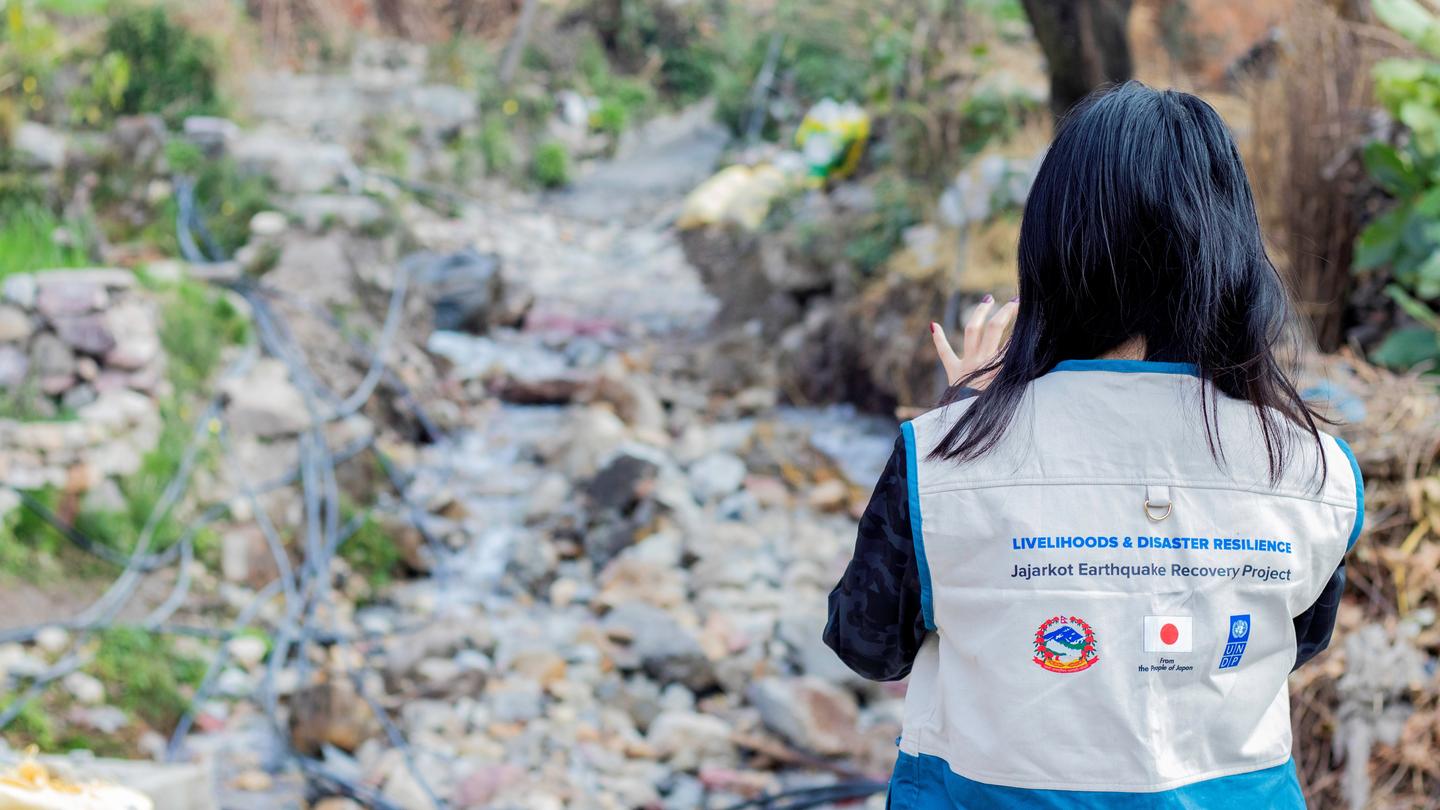
Beyond Jajarkot, UNDP also built similar pre-fab facilities for seven additional government institutions, including ward offices, police stations, and agriculture and veterinary centers. Nearly 150,000 people have benefited through the Livelihoods Improvement and Disaster Resilience Enhancement project in partnership with UN-Habitat, which places a strong focus on women, youth, and marginalized groups. Recognizing the often overlooked impacts of trauma, the project also provided psychosocial counseling to more than 400 people.




Recovering from a global crisis
When COVID-19 brought global disruption, UNDP once again stood with Nepal. Partnering with 29 local governments across 15 districts, UNDP supported community-led recovery efforts focused on livelihoods and food security. More than 150,000 people, over half of them women, received support to increase their incomes through more productive and climate-smart agricultural practices. Between 2020 and 2023, farmers were provided with seeds, tools, and training, while 220 hectares of previously barren land were restored through multilayer plantations.


A future built on resilience
UNDP’s support extends beyond recovery, together with UNICEF and UN Women, we are helping to strengthen systems and institutions that prepare Nepal for future risks. Further, seven provincial governments and 16 local governments have adopted disaster risk reduction policies and action plans, laying the foundation for climate-resilient and inclusive development across the country.

Photo: UNDP Nepal
From rebuilding homes to restoring livelihoods, and from strengthening public services to shaping forward-looking policies, UNDP’s partnership with Nepal has been a story of endurance and hope. Together, we continue to turn each disaster into an opportunity—not only to rebuild what was lost, but to build back better and stronger for generations to come.
To learn more about UNDP's efforts in building climate resilience:
Related
content
content


