

 Locations
UNDP implementing the Japan‑funded initiative in close collaboration with national counterparts
Equipment to Help Manage Sargassum Delivered to Saint Kitts and Nevis
February 27, 2026

(L-R) UNDP Project Coordinator, Ms. Shawn Carter; UNDP Resident Representative, Mrs. Limya Eltayeb, Minister of Agriculture, Fisheries and Marine Resources, Hon. Samal Duggins; Honorary Consul of Japan, Ms. Sonya Parry; Assistant Secretary in the Ministry of Agriculture et al, Nevis, Mrs. Rhosyll Gaskell; and Permanent Secretary (Ag.) in the Ministry of Agriculture et al, Mr. Randel Thompson.
UNDP Barbados and Eastern Caribbean/Yajaira Archibald
BASSETERRE, SAINT KITTS AND NEVIS - Saint Kitts and Nevis is now better equipped to manage recurring sargassum influxes with the handover of specialized equipment through the United Nations Development Programme (UNDP) project for Improving National Sargassum Management Capacities in the Caribbean, with funding support from the Government of Japan.
The handover event hosted by the Department of Marine Resources on 26 February marks a milestone in the country’s efforts to respond more effectively to the growing environmental, economic and public health impacts associated with sargassum landings along its coastlines. The support forms part of a wider regional initiative aimed at improving coordinated, sustainable sargassum management across the Eastern Caribbean.
Delivered to national authorities, the equipment will enhance Saint Kitts and Nevis’ ability to collect, remove, transport and manage sargassum more efficiently, while reducing disruption to coastal ecosystems, fisheries and tourism‑dependent communities. The handover also reflects a broader approach that combines equipment with capacity development, technical support and long‑term planning.
“Today marks a transformative step in how St. Kitts and Nevis responds to the recurring challenge of sargassum. Through the invaluable partnership with the Government of Japan and the United Nations Development Programme, we are able to shift from reactive clean‑ups to more proactive, risk‑informed national strategies. These new equipment paired with targeted training, community engagement and site‑specific management will not only strengthen our capacity to protect our coastlines, but also safeguard livelihoods and build long‑term environmental resilience,” said Minister of Agriculture, Fisheries and Marine Resources, Hon. Samal Duggins.


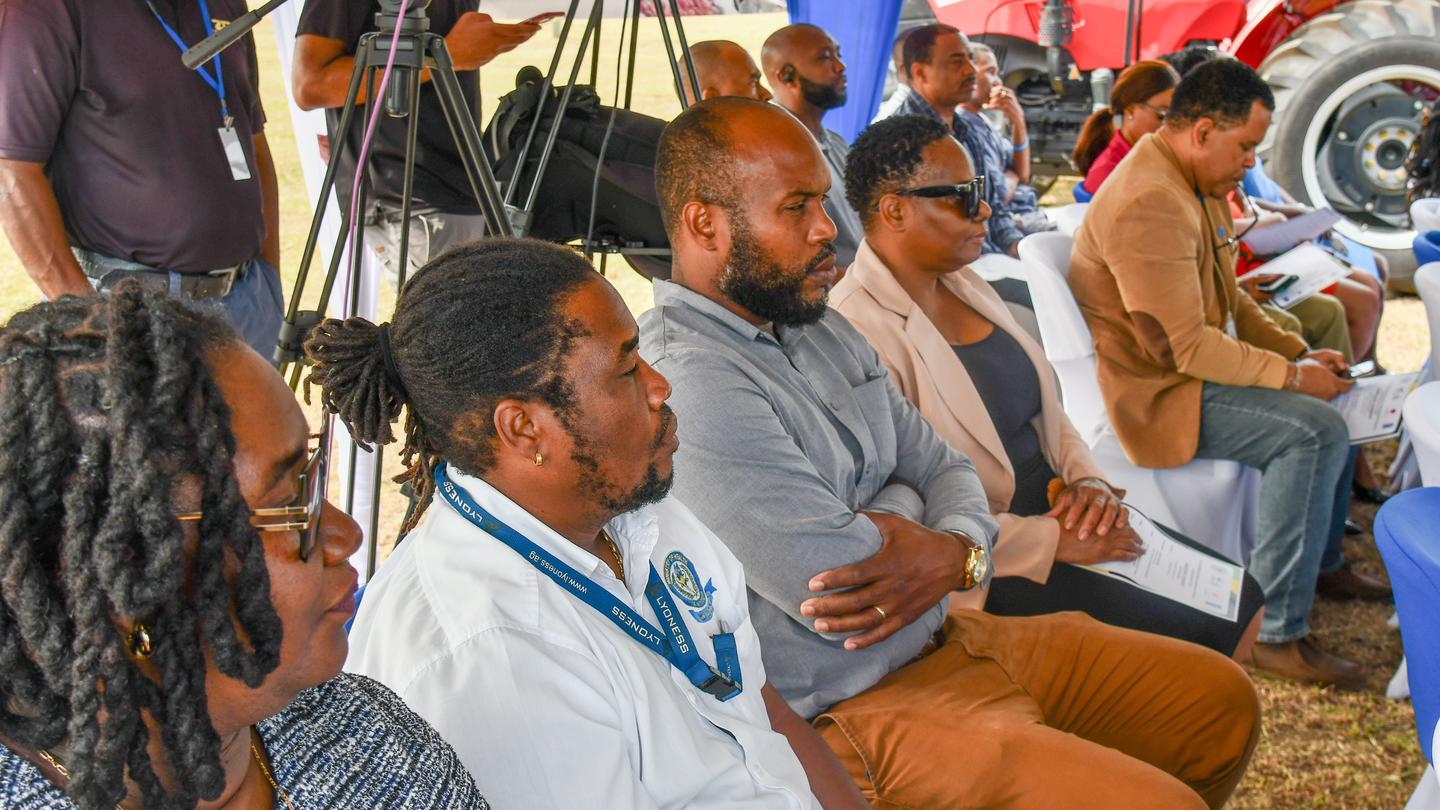


UNDP Resident Representative for Barbados and the Eastern Caribbean, Mrs. Limya Eltayeb, highlighted the importance of partnership in addressing climate‑related challenges that increasingly affect Caribbean Small Island Developing States. She commended the stakeholders and community members whose insightful contributions ensured that the project's interventions - and the equipment procured - were suitable for the local environment and needs.
Honorary Consul of Japan in Saint Kitts and Nevis, Ms. Sonya Parry, told the gathering, "The Government of Japan remains committed to working hand-in-hand with the people of St. Kitts and Nevis and with our partners across the entire Caribbean to build resilience against environmental challenges and to promote sustainable development. We trust that the equipment handed over today will serve as a valuable tool in protecting coastal communities, safeguarding livelihoods and preserving the natural environment for generations to come."
The Japan‑funded initiative, implemented by UNDP in close collaboration with national counterparts, supports Saint Kitts and Nevis and other participating countries to build resilient, practical systems for managing sargassum influxes - contributing to climate resilience, environmental protection and sustainable development across the region.
Related
content
content


