Locations
Author: Iroda Muminova
Turning Trash into Treasure: How Dilorom Boboniyazova transformed plastic waste into sustainable livelihoods
May 5, 2026

Photo: UNDP Uzbekistan
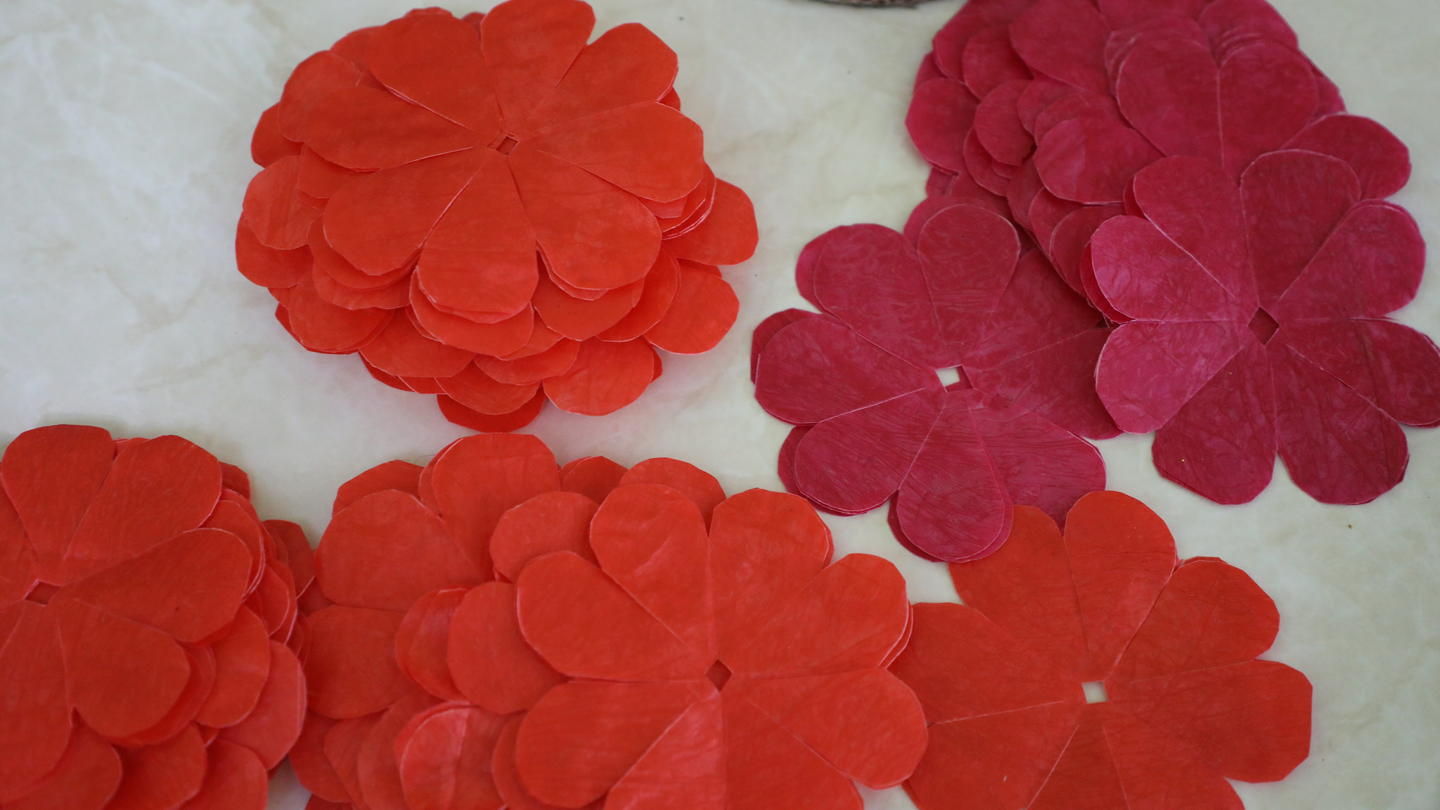
Every day, millions of plastic bags are thrown away without a second thought. They pile up in landfills, pollute rivers, oceans and remain in the soil for decades. However, in one community, which is Urgench district of Khorezm region something remarkable is happening: plastic waste is being transformed into delicate flowers - symbols of hope, creativity and opportunity.
Behind this transformation Dilorom Boboniyazova - an environmental advocate and social entrepreneur who saw possibility where others saw pollution.
“When people throw away a plastic bag, they see waste, - Dilorom says. - But I see the beginning of something beautiful”.
Through her innovative idea, discarded plastic bags are now turned into vibrant artificial flowers, creating sustainable livelihoods for women while helping reduce plastic waste in the environment.
How it begins: A Mother’s wish that sparked a movement
The journey began with a deeply personal moment. On her mother’s birthday, Dilorom and her family gifted her a bouquet of fresh flowers. Her mother’s face lit up with happiness, but as days passed and the flowers began to wither, that happiness slowly faded. Watching the petals droop and colors lose their vibrancy, her mother quietly said: “If only they didn’t fade - if only such beauty could always delight our eyes”. Those words stayed with Dilorom.
Determined to create something lasting, she made flowers out of colored paper. Her mother appreciated the gesture, but over time even the paper flowers lost their quality. Dilorom began to wonder: was there a way to create beauty that would not fade and that would not harm the environment?
That question led her into research. She explored ideas online, studied materials and learned about the properties of polymers and recycled plastics. Then she discovered something remarkable: through simple techniques and creativity, recycled plastic could be transformed into durable, elegant flowers that look as joyful as fresh bouquets.


From Plastic Waste to Petals of Hope
“Plastic bags are everywhere around us, - Dilorom says. - I simply chose to see them not as waste, but as opportunity”.
What began in her home as a small experiment soon grew into a meaningful mission. She started collecting used plastic bags from her household first, then from friends and neighbors. People who once threw away plastic bags without thinking began saving them for her. Waste became raw material and pollution became possibility. Her bouquets did not fade, did not require water and they did not harm soil. Instead, they preserved memories, decorated homes and symbolized hope.
As demand for her creations grew, Dilorom realized that her idea could do more than produce decorative flowers - it could create opportunities for other women. She began teaching women in her community how to transform plastic waste into handcrafted flowers. Many of them had limited access to employment but were eager to learn new skills.
At the same time, Dilorom realized that while she had strong practical skills and passion, she still needed deeper knowledge in business management to effectively grow her initiative and guide others.
To strengthen these skills, she participated in Women Entrepreneurship Support Program (WESP) – business trainings initiated by HAMROH and implemented by UNDP. The experience helped her better understand entrepreneurship, leadership, marketing and how to support other women in building their own economic opportunities, as well as let her become a member of the big community of women-entrepreneurs.
“The training helped me see my work not only as a creative activity, but as a sustainable business that can empower many women, - Dilorom says. - I gained confidence in managing my initiative and learned how to mentor others who want to start their own small activities”.
She adds that the knowledge she received changed how she approaches her mission:
“Before the training, I focused mainly on making the flowers. Now I understand how to organize production, support other women and think about long-term growth”.
With this support, Dilorom expanded her work beyond individual production and began training other women in her community. Today, more than 60 women are engaged in producing handcrafted flowers from recycled plastic, many of them generating their own income through home-based work. This has created accessible economic opportunities for women who previously had limited employment options, while also fostering confidence, financial independence, and community collaboration.
This initiative contributes directly to the Sustainable Development Goal 5 by expanding women’s economic participation, the Sustainable Development Goal 8 by creating income-generating opportunities, and the Sustainable Development Goal 12 by promoting recycling and reducing environmental impact.
“When women learn a skill and start earning their own income, their confidence grows”, Dilorom says.

Photo: UNDP Uzbekistan
Challenges and the road ahead
Despite its success, the journey has not been without challenges. Limited infrastructure, high logistics costs and the difficulties of scaling production without compromising quality remain ongoing concerns. There are moments of doubt, moments of fatigue and moments when growth feels slower than expected. However, Dilorom remains guided by her original inspiration - her mother’s wish for lasting beauty.
She believes that every challenge is part of the process of building something sustainable. Rather than seeing obstacles as barriers, she views them as opportunities to innovate.
The future for Dilorom’s enterprise is ambitious and inspiring. She plans to expand training programs for women, particularly those in rural areas who have limited access to employment. By equipping them with practical skills, she hopes to multiply both environmental impact and economic empowerment. She also aims to explore international markets, where demand for sustainable décor and ethical products is growing rapidly. Collaborations with designers, institutions, and eco-conscious brands are part of her strategic roadmap.
Dilorom Boboniyazova’s story is not just about recycling plastic. It is about transforming perspective. Her journey reminds us that innovation does not always require advanced technology or massive funding. Sometimes, it begins with compassion - with listening carefully to a simple wish and daring to respond creatively.
“Real change begins when we start seeing value where others see waste, - Dilorom says. - If one plastic bag can become a flower, imagine what people can become when they are given opportunity”.

Photo: UNDP Uzbekistan
About the project:
The Women Entrepreneurship Support Program (WESP) is initiated by HAMROH – Women’s Entrepreneurship Support company established with the Presidential Decree, and implemented by UNDP with support by the Ministry of Economy and Finance of the Republic of Uzbekistan. The project’s goal is to promote women’s entrepreneurship in Uzbekistan and expand women’s economic opportunities.