Locations
Uzbekistan and UNDP Announce a New GEF-Supported Initiative to Strengthen Chemicals and Waste Management
June 4, 2026

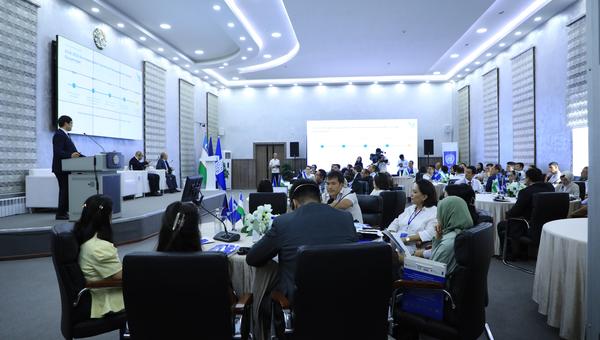
Samarkand, Uzbekistan, 3 June 2026 — On the sidelines of the Eighth Assembly of the Global Environment Facility (GEF), the National Committee on Ecology and Climate Change of the Republic of Uzbekistan and the United Nations Development Programme (UNDP) launched a new initiative, “Supporting Implementation of the Stockholm Convention through the Sound Management of Chemicals and Waste in Uzbekistan,” aimed at strengthening the country’s capacity to manage hazardous chemicals and waste and reduce risks from persistent organic pollutants (POPs).
The launch was accompanied by the signing of a Statement of Intent between the National Committee on Ecology and Climate Change and UNDP, reaffirming a shared commitment to advancing implementation of the Stockholm Convention and strengthening cooperation on chemicals and waste management.
Persistent organic pollutants are among the most hazardous chemicals released into the environment. They can remain in ecosystems for decades, accumulate in food chains, and pose serious risks to human health, biodiversity, and sustainable development.
The new GEF-funded initiative will support Uzbekistan in strengthening monitoring and laboratory systems, improving the identification and management of contaminated sites, enhancing regulatory and institutional frameworks, and promoting environmentally sound management of hazardous chemicals and waste. The project will also contribute to stronger implementation of Uzbekistan’s commitments under the Stockholm Convention and related international environmental agreements.


“Today’s signing marks more than the launch of a project. It reflects a shared commitment to sustained and ambitious action on chemicals and waste management, helping translate international commitments into practical results that protect people, ecosystems and future generations,” said Akiko Fujii, UNDP Resident Representative in Uzbekistan.
Uzbekistan joined the Stockholm Convention in 2019 and has since taken important steps to strengthen its policy and institutional framework for managing hazardous chemicals and waste. The new initiative will help accelerate implementation of the Convention’s National Implementation Plan while supporting broader national priorities on environmental protection, public health, climate resilience, and sustainable development.
The initiative reflects the catalytic role of GEF support in bringing together national institutions, international partners, technical expertise, and financing to address complex environmental challenges. It also demonstrates how integrated approaches can generate multiple benefits, contributing to healthier communities, stronger environmental governance, and the protection of ecosystems.
The launch event brought together representatives of the Government of Uzbekistan, the Global Environment Facility, the Secretariat of the Basel, Rotterdam and Stockholm Conventions, UNDP, and other development partners to discuss practical approaches for advancing the sound management of chemicals and waste in Uzbekistan and across the region.
As host of the Eighth GEF Assembly, Uzbekistan continues to demonstrate its commitment to advancing global environmental objectives while promoting sustainable and inclusive development at the national and regional levels.
About the Stockholm Convention
The Stockholm Convention on Persistent Organic Pollutants is a global treaty adopted in 2001 to protect human health and the environment from chemicals that remain intact for long periods, become widely distributed geographically, accumulate in living organisms, and have harmful impacts on people and ecosystems. Uzbekistan became a Party to the Convention in 2019.
About UNDP
UNDP is the leading United Nations organization fighting to end the injustice of poverty, inequality, and climate change. Working with a broad network of experts and partners in 170 countries and territories, UNDP helps nations build integrated, lasting solutions for people and planet.