

 Locations
Breaking Barriers: Advancing Women’s Employment and Gender Mainstreaming in Uzbekistan’s Transport Sector
January 16, 2026

For many years, women’s participation in Uzbekistan’s transport sector was constrained by legislative restrictions that effectively barred them from certain professions. One of the most significant barriers was a regulation prohibiting women from driving passenger vehicles with more than 14 seats, as well as freight vehicles with a load capacity exceeding 2.5 tons. These restrictions made it impossible for women to be employed as bus or heavy truck drivers. As a result, demand for women in these professions remained extremely limited, reinforcing gender imbalance in a traditionally male-dominated sector.
Recognizing this challenge, the UNDP/GEF-supported project “Tashkent – Accelerating Investment in Low-Emission Vehicles” (TAILEV) conducted analytical studies that clearly demonstrated that legal constraints—rather than lack of interest, skills, or capacity—were the primary obstacles preventing women from entering the profession. In response, the Project Management Unit, in close cooperation with the Ministry of Transport, initiated and supported critical policy reforms aimed at removing these barriers.
These reforms were aligned with broader national commitments to gender equality. According to the newly adopted edition of the Constitution of the Republic of Uzbekistan, women and men have equal rights, and the State guarantees equal rights and opportunities for women and men in governance, public administration, and all spheres of social and state life.





In addition, the Presidential Decree of the Republic of Uzbekistan No. PQ-4235 dated 7 March 2019, “On Measures to Further Strengthen Guarantees of Women’s Labor Rights and Support Entrepreneurial Activity,” stipulated the abolition of restrictions on the employment of women in certain sectors and professions. These important policy measures created the legal foundation for removing long-standing prohibitions affecting women’s employment in the transport sector.
As a result of continued reform efforts, legislative restrictions—particularly those affecting the transport sector—were fully abolished in 2024, paving the way for women to legally work as bus and heavy truck drivers. This reform was formalized through Government Resolution No. 85 dated 12 February 2024, which officially removed prohibitions on women driving buses and heavy vehicles.
This landmark decision marked a historic milestone for Uzbekistan’s transport sector and reflected the Government’s growing commitment to gender equality, inclusive labor markets, and equal access to employment opportunities.
Following the adoption of the resolution, Uzbekistan witnessed the hiring of its first-ever two female bus drivers by the Tashkent Bus Company—an unprecedented achievement that symbolized a shift in long-standing gender norms. This breakthrough clearly demonstrated how targeted policy reforms can translate into real and tangible employment opportunities for women.
Beyond legislative change, the project focused on ensuring that women could practically access these newly opened opportunities. In line with gender mainstreaming principles, UNDP and the Ministry of Transport prioritized capacity building and professional skills development for women interested in public transport professions.
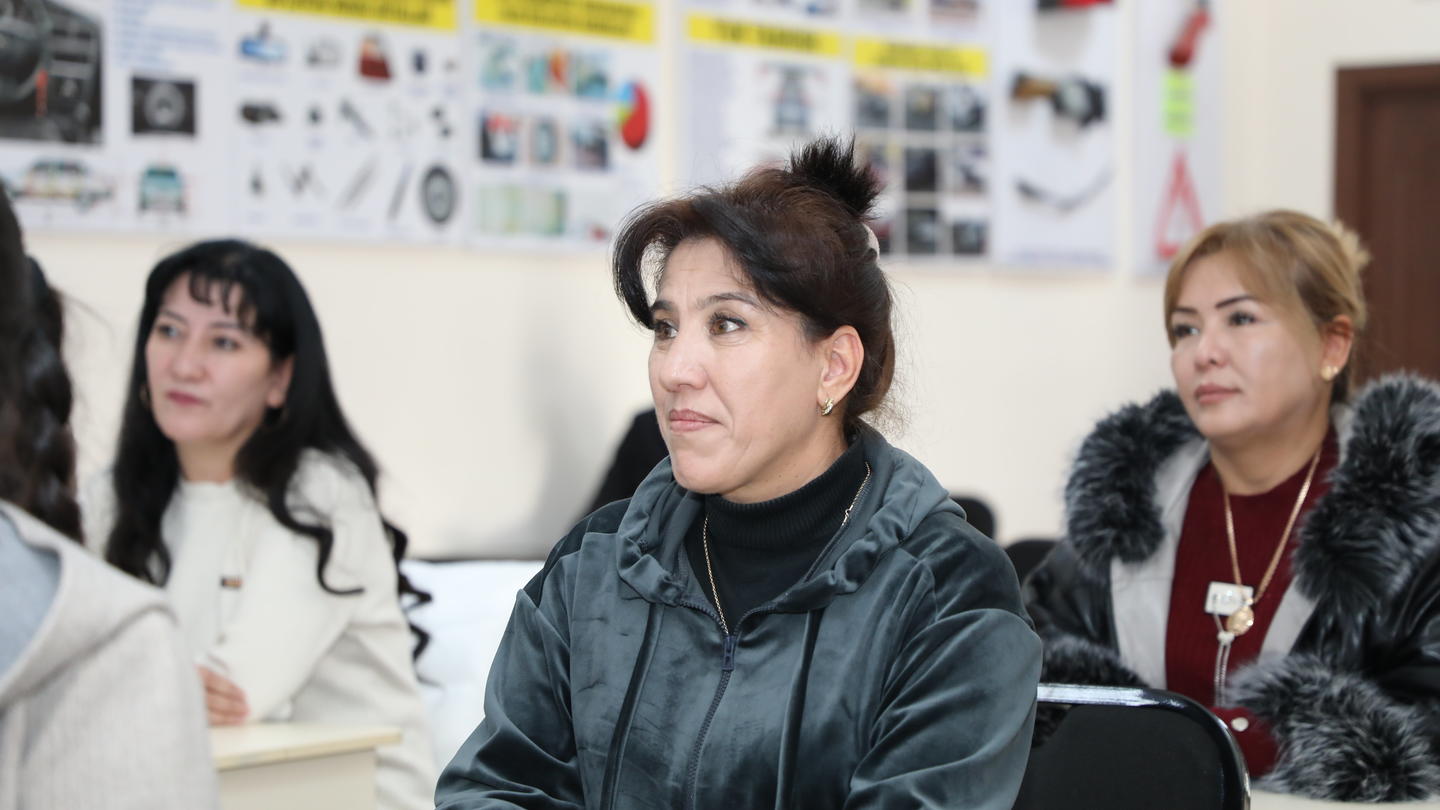
During the official visit of the UNDP Uzbekistan Resident Representative, Ms. Akiko Fujii, to the Ministry of Transport, discussions with the Minister of Transport, Mr. Ilhom Makhkamov, resulted in a concrete agreement to jointly support the training and preparation of female bus drivers. Under the ongoing TAILEV project, it was agreed that 50 women would be sponsored to undertake professional bus driver training using project funds.


To date, 20 women have successfully completed the training courses and are preparing to take the official examinations at authorized testing centers. Upon successfully passing the exams and obtaining Category “D” driving licenses, they will be eligible for employment as professional bus and heavy truck drivers.
Certificates of completion of the training courses were officially awarded by the Deputy Director of the Institute for Training of Transport Personnel, Mr. Sherzod Ergashev, jointly with UNDP Resident Representative Ms. Akiko Fujii. The participants were congratulated on this important milestone and wished success in their future careers. It was emphasized that the achievements of these 20 women are expected to inspire many more women to choose this profession in the near future.
Notably, the removal of legal barriers has created broader employment opportunities for women beyond urban bus services. As Uzbekistan’s economy continues to grow and international trade expands, demand for professional drivers in freight and logistics is increasing. The reform enables women to participate not only in public transport, but also in domestic and international freight transportation, significantly diversifying employment pathways within the transport sector.
These developments reflect a systemic shift toward greater gender inclusivity in Uzbekistan’s transport sector. What began as policy reform has evolved into tangible change—women entering new professions, acquiring technical skills, and contributing to sustainable and low-emission transport systems.
This initiative stands as a clear example of how UNDP-supported projects can help create an enabling environment for women, promote decent work, and advance gender mainstreaming in traditionally male-dominated sectors. By addressing legal barriers, investing in capacity building, and fostering strong institutional cooperation, the UNDP/GEF supported project contributes to long-term social inclusion and a more equitable labor market in Uzbekistan.


