

 Locations
Developing Ukraine’s Biodiversity Conservation Strategy in Wartime: A look into the future
May 22, 2026

Landscapes of the Drevlianskyi Nature Reserve in Zhytomyr Oblast.
In 2025, amid intensive missile and drone attacks on cities and civilian infrastructure, Ukraine – with the support of UNDP Ukraine and the Global Environment Facility (GEF) – actively worked on the development of the Strategy for the Conservation of Biological Diversity of Ukraine until 2035 and its accompanying Operational Action Plan. Despite the challenges of wartime, a broad circle of experts and representatives of state authorities were involved in drafting the document, and public discussions were launched with the participation of all stakeholders.
According to official estimates by the Ministry of Economy, Environment and Agriculture of Ukraine, in four years the full-scale invasion of Ukraine has caused confirmed environmental damages in Ukraine amounting to UAH 6.01 trillion (over USD 150 billion). Recognizing the scale of these losses, the state confirms its readiness to integrate nature conservation and restoration into the overall post-war recovery strategy. The national Biodiversity Conservation Strategy is intended to become the foundation for such integration, as it covers all sectors of the economy and life in the country, including support for indigenous peoples.
Objectives addressed by Ukraine through the development and implementation of the Biodiversity Conservation Strategy
Fulfilment of International Commitments
By developing and implementing the Biodiversity Conservation Strategy, Ukraine ensures compliance with several international instruments, including the approximation of EU directives and the implementation of UN biodiversity-related conventions. These include:
- The Convention on Biological Diversity (CBD) and its protocols
- The Kunming-Montreal Global Biodiversity Framework (KMGBF)
- Other international environmental conventions to which Ukraine is a party, including the Ramsar Convention, the Bern Convention on the Conservation of European Wildlife and Natural Habitats, the Bonn Convention on the Conservation of Migratory Species of Wild Animals (CMS), and the Washington Convention on International Trade in Endangered Species of Wild Fauna and Flora (CITES)
- The Paris Agreement
- The United Nations Framework Convention on Climate Change (UNFCCC)
- The EU-Ukraine Association Agreement
- The EU Biodiversity Strategy for 2030
- The EU Nature Restoration Regulation and other EU directives
Halting further loss of biodiversity and restoring it at all levels – genetic, species, and ecosystem

Landscapes and flora of Shatsk National Nature Park (Volyn Oblast). Photo: UNDP
Biodiversity is one of the essential elements of the natural environment. Today, biodiversity loss worldwide is occurring faster than at any other period in human history. The overexploitation of natural resources, land development, urbanisation, climate change, and environmental pollution are all significant factors affecting biodiversity in Ukraine and globally.
Agriculture is one of the key sectors of Ukraine’s economy, and the intensive use of large areas for this sector undoubtedly impacts biodiversity. At the same time, Ukraine’s agriculture forms the basis of food security – not only nationally but also globally. Implementation of the Biodiversity Conservation Strategy will help balance the country’s economic interests with the conservation of living nature. It should be noted that Ukraine is already experiencing significant impacts of climate change, especially in the southern and eastern regions, including prolonged droughts, water scarcity, heat waves, and the risks of desertification.
These challenges have been compounded by the war. According to the Fifth Rapid Damage and Needs Assessment (RDNA5), by the end of 2025, within the environment, natural resource management, and forestry sector, damage is estimated at $2 billion, while broader economic and social losses in this sector have reached $36 billion.
These figures include the destruction of ecosystems and the pollution of air, soil, and water resources, representing the largest ecological losses in modern European history.
Under these conditions, real and effective steps are needed for biodiversity conservation and ecosystem restoration.
Protection and restoration of natural areas
The goal of the Biodiversity Conservation Strategy is to ensure the protection, conservation, restoration, and sustainable use of biodiversity through implementing the global targets set by the KMGBF.

Drones provided by UNDP are successfully being used to monitor wildlife in the Nobelskyi National Nature Park (Rivne Oblast). Photo: UNDP
One of the strategic goals is to protect at least 30% of Ukraine’s territory, including the waters of the Black and Azov Seas. Currently, the protected areas (PA) cover only 7% of the country.
The Biodiversity Conservation Strategy provides for the completion of the formation and implementation of local and regional ecological network schemes, aimed at ensuring the protection of biodiversity across 30 percent of the country’s territory. Information on ecological network territories and objects will be available on the national geospatial data infrastructure portal, ensuring transparency and openness for the public and stakeholders.
Special attention in the document is given to key biodiversity areas, national nature parks, and internationally significant protected areas, with plans to expand the protected areas up to 15 percent. To coordinate these activities, a central executive authority will be established, responsible for implementing state policy in the fields of protection, conservation, and the sustainable use of the nature reserve fund, the ecological network, and biological and landscape diversity.
Political, institutional, and environmental context in Ukraine
Ukraine contains about 35 percent of Europe’s biodiversity while occupying only 6 percent of its territory, making nature conservation important not only nationally but also at the European level. The state is continuing the process of European integration and is fulfilling its international biodiversity commitments.
At the same time, the ongoing war has serious consequences for natural ecosystems, posing risks to individual species and leading to the degradation of key biodiversity areas. Therefore, Ukraine considers biodiversity conservation and restoration to be key elements of “green” and sustainable recovery, closely linked to national development, food security, climate change adaptation, and securing a sustainable future for the nation.
Despite all difficulties, Ukraine has developed both public demand and institutional readiness to integrate the Biodiversity Conservation Strategy and its objectives into the system of national strategic planning, particularly as part of post-war recovery.
During the war, Ukrainian legislation (laws and subordinate acts) was updated to create the legal framework for the state environmental monitoring system, establishing mechanisms, requirements, and organisational procedures for data collection, analysis, and use of information on biodiversity and landscapes in Ukraine.
Details of the Biodiversity Conservation Strategy development and involved stakeholders

Landscapes and flora of Shatsk National Nature Park (Volyn Oblast). Photo: UNDP
Despite all difficulties, including nightly missile attacks, intermittent electricity, heating and Internet outages, as well as government changes and restructuring of relevant ministries, work on the Biodiversity Conservation Strategy continued throughout 2025-2026. The process was initially coordinated by the Ministry of Environmental Protection and Natural Resources of Ukraine, and later by the Ministry of Economy, Environment and Agriculture of Ukraine, with technical and expert support from UNDP Ukraine and financial support from the Global Environment Facility (GEF).
Twenty leading national experts, selected through UNDP competitive procedures, were involved. In 2025, eight meetings of the Ministry’s Working Group and 15 thematic workshops and consultations took place, involving over 60 representatives of civil society, the scientific community, protected area administrations, and state authorities. This format ensured there was broad stakeholder engagement.
The necessity of creating a Biodiversity Conservation Strategy of Ukraine and an Operational Action Plan, as well as the outcomes of the work, were actively communicated to the public via media, Ministry of Economy and UNDP Ukraine resources, and social networks. Communications also took place during planned thematic events. For educational purposes, a series of thematic infographics and an animated video were created and published on the ministry’s and UNDP Ukraine’s Websites.
Results achieved (2025)
The work resulted in the preparation and publication, in December 2025, of the draft Strategy for the Conservation of Biological Diversity of Ukraine until 2035 and an Operational Action Plan for the first three years of its implementation, to ensure practical realization of the planned measures.
An official public discussion of the draft Biodiversity Conservation Strategy, held from 10 December 2025 to 10 January 2026, allowed all stakeholders to participate. After completing the necessary coordination procedures, the document will be submitted to the Cabinet of Ministers of Ukraine for adoption in 2026.
Uniqueness and innovation of the approach in Ukraine

Birds (Lyrurus tetrix) in the Drevlianskyi Nature Reserve, Zhytomyr Oblast. Photo: UNDP
Ukraine has not postponed biodiversity conservation to the post-war period but has begun preparing to address it immediately, demonstrating strategic vision and the priority of this area for the country’s sustainable development.
Ukraine likely became the first and only country to conduct such work during a war. Preparing the draft Biodiversity Conservation Strategy under wartime conditions and complex challenges is exceptional in international practice and can serve as an example for other countries facing large-scale and prolonged crises.
A key feature of this approach was the involvement of a wide circle of stakeholders and the public in the discussion of the Biodiversity Conservation Strategy (late 2025 – early 2026), even under martial law. This underscores the democratic nature and openness of the process, as well as the active participation of a society that believes in its victory and a sustainable future.
Author: Lesia Moskalenko (for UNDP)
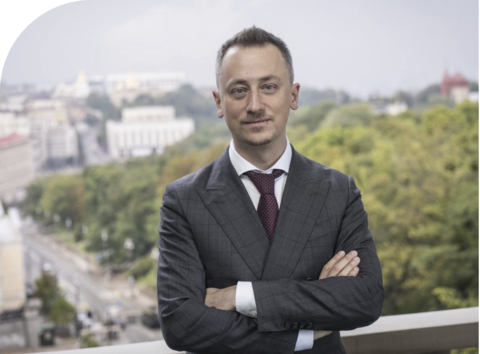
Oleksii Sobolev, Minister of Economy, Environment, and Agriculture of Ukraine
“Russia's invasion of Ukraine is causing irreparable damage to Ukraine’s biodiversity. Numerous plant and animal species, including rare ones, as well as their natural habitats, are suffering, threatening the very existence of these species. This impact extends to the natural steppes and coastal areas of southern Ukraine, as well as the wetlands of the north. For Ukraine’s post-war recovery, we need a comprehensive state policy that allows us to restore not only infrastructure but also ecosystems and wildlife. The Strategy for the Conservation of Biological Diversity of Ukraine and its accompanying Operational Action Plan are the tools that will help integrate conservation goals into all sectoral and regional policies and decisions for sustainable development”.

Auke Lootsma, Resident Representative of UNDP in Ukraine
“Mitigating the consequences of climate change, increasing resilience to climate risks, ensuring environmental safety, and conserving and restoring ecosystems is one of UNDP’s global priorities, including here in Ukraine.
We hope this strategy will lay a reliable foundation for conserving and restoring ecosystems and species, increasing the country's climate change resilience, promoting the sustainable management of natural resources, and supporting Ukraine in fulfilling its international environmental obligations. We’re convinced that nature restoration must be an integral part of Ukraine’s sustainable recovery”.

Roman Shakhmatenko, Team Leader of UNDP in Ukraine’s Energy and Environment Portfolio
“We are closing an important stage in the work on the national Biodiversity Strategy project for Ukraine. The action plan clearly defines the key steps: harmonizing Ukraine’s legislation with EU standards, integrating biodiversity conservation principles into state policy, and developing the network of protected areas, including the creation of new national nature parks, and so on. The adoption of the Biodiversity Conservation Strategy also opens new opportunities to attract international funding, grants, and credit resources.
It is also worth noting that in 2026 UNDP Ukraine started implementing the BIOFIN initiative, which already involves over 130 countries worldwide. The programme focuses on analysing financial needs in biodiversity conservation, identifying gaps, and developing solutions to mobilize additional resources. In Ukraine, the programme will support the financing of nature conservation projects, with a focus on long-term, sustainable, and flexible financial mechanisms. UNDP will continue to support Ukraine in its efforts to conserve and restore nature. It will also mobilize financial resources to provide technical assistance to the Government of Ukraine in implementing the Biodiversity Strategy”.
Related
content
content


