Locations
İşimi Yönetebiliyorum
What is the project about
“I Can Manage My Business” project aims to improve SMEs’ management skills, knowledge, attitudes and confidence to maximise the potential of their business for the benefit of their enterprises and that of the wider economy. It is also aimed to enhance financial literacy of SMEs, increase trust in the banking industry, using banking services, increase their sustainability and widen their vision in terms of market access.
The target group is selected SMEs with high growth potential in Turkey and provide them with the needed research data and support to access trainings, knowledge and guidance to become highly competitive business units under high quality management.
What has been the situation
SMEs are the vital engines of the economic growth and employment in Turkey. However, their potential is obstructed due to lack of management capacities in a variety of issues including access to finance, cash flow, use of technology and innovation, and also need of general guidance and support on regulatory and tax related issues specific to the operation of the company.
A small part of Turkish SMEs can display a rather fast growth performance beyond merely surviving. These SMEs contribute significantly to employment and economic growth in industries such as manufacturing, services and technology. Well performing SMEs not only result in higher growth with their own companies, but also contribute to wider development by delivering high quality goods and services as part of their greater value chain, as suppliers for large corporations.
With no doubt, technology, digitalization and new production models play a crucial part in the competitiveness of SMEs. Within the economic structures, it is observed that players of the ‘new economy’ are increasing their market share and value faster than the traditional players. Technology and digitization also have specific impacts on women’s entrepreneurship, as one of the players of the new economy, which needs further attention. The increasing share and impact of these new players also result in increasing skill and compensation differences between the labour force of traditional and ‘new economy’ sectors. The productivity focus increasingly shifts from labour to process and data. This makes SME capacity building ever more important and relevant.
What is our mission
UNDP’s Strategic Plan for 2018-2021 promotes dialogues with the private sector as a key development actor and call for deeper cooperation with private sector as emerging partners on shared development priorities. It also emphasizes the importance of substantially expanding and improving the scope, quality and outcome of the collaboration with the private sector. It highlights the aim to broaden and deepen responsible engagement with the private sector, working with Governments, to mobilize private sector capital for domestic investments in the Sustainable Development Goals in accordance with national development priorities.
Along with the Strategic Plan, UNDP introduced a Private Sector and Foundations Strategy for the Sustainable Development Goals 2016–2020, which defines how UNDP plans to engage with – and work on – sustainable development issues with the private sector and philanthropic foundations. The goal is to enable these actors to become transformative partners in implementing all Sustainable Development Goals (SDGs) in order to achieve UNDP’s vision of poverty eradication and a reduction in inequalities. The strategy aims to position UNDP as a partner of choice for the private sector and foundations in SDG implementation, while maximizing the impact of the private sector and philanthropy on sustainable development.
In addition, the 2018 Private Sector Global Strategy proposes the adoption of the SDGs as the main framework for private sector strategies and operations at all levels: Government, Investors, This Project addresses the priority for “Unlocking private finance for the SDGs and ensuring easy access to SDG-aligned investments: equity (corporate financing), debt (SDG bonds), blended financing (government/municipal projects)”
UNDP will focus on long term transformative relationships with the banking sector under Visa coordination to co-create development solutions based on shared value.
How are we doing this
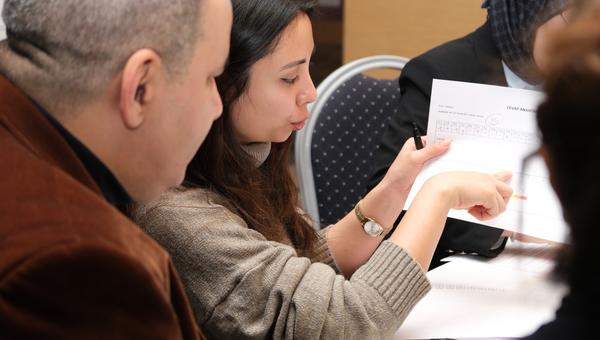
The Project aims to reach out to 3,000 high impact SMEs in 18 cities in 3 years through a phased programme. The participants will be identified by considering gender equality. While new start-ups are planned to be in the group of beneficiaries, the Project will consider the application of the model to prominent successful enterprises, as the need is deemed in future. The curriculum will be based on the following headings:[1]
- Financial discipline
- Digital literacy and digital marketing
- E-commerce and payments
The content of the curriculum is developed by Bogazici University. Additional academic support may be consulted to, depending on the needs. The trainings will be delivered, in accordance with the curriculum, by experienced and highly skilled trainers, who will be contracted as a part of the Project.
In this project, an innovation based training package is designed. The courses will include innovative business models, and will cover how SMEs can develop and implement these innovative business models in their activities. SMEs who receive trainings will implement the innovative approach as a business tool.
With the support of 22 banks and Visa Turkey, the project will benefit from the financial and technical input of banking sector and Visa to examine, analysis and understand the specific needs of the target SMEs and develop a capacity development module addressing those real needs.
TURKONFED, on the other hand, will utilize its in-house research capacity as a technical input and mobilize its country wide business networks to facilitate access to and increase engagement of beneficiary business entities. TURKONFED, through its 28 federations and 210 associations, has over 40.000 companies represented, making them the largest voluntary SME organization in Turkey. TURKONFED will carry out its activities in close cooperation with its member federations, as well as with member Turkish business organizations outside Turkey through the TURKONFED International Platform. TURKONFED will also ensure active participation of business women’s organizations within its network. Participation of women entrepreneurs to the trainings will be prioritized with utmost attention.
SMEs form the backbone of Turkey's economy and it is highly important for them to make the right moves for the sustainability of their business in highly competitive and fragile global economy. The two-tiered training program, designed to provide the tools to enable SMEs to survive especially in the economic turbulent times, will be conducted with a focus on two key points. The first point is that SMEs require to gain self-discipline, while the other is the need for achieving competitive advantages for sustainable success.
In this context, the first stage of the training program will consist of introductory courses in which the importance of these two points will be explained and awareness will be provided. In the second stage, it will be ensured that SMEs will gain the necessary equipment in the areas where training is provided.
The Project will also develop and offer online and hard copy tools and guidance materials including a training portal with following modules:
- Video trainings
- Regulatory updates
- Government subsidies
- Small business incentives
- Inspiring success stories and case studies
- Financial and other product offers
The training portal will be updated and enriched according to the needs assessments throughout the life cycle of the project.
The Strategy also includes development of a set of policy recommendations on capacity development needs of impactful SMEs targeting to trigger a policy change in line with the learnings of the Project.
How will Turkey benefit
This Project develops an inclusive business model to help SMEs develop skills, knowledge, attitudes and confidence to maximise the potential of their business for the benefit of their enterprises and that of the wider economy.
The Project aims to research on the capacity development needs of impactful SMEs with high growth potential in Turkey and provide them with the needed support to access trainings, knowledge and guidance to become highly competitive business units under high quality management. It will investigate on the identified issues to construct a robust capacity development module for improved management practices.
While the Project helps with increased competitiveness of the beneficiary SMEs, it is also projected to build trust in the banking industry, leading to higher financial inclusion and use of banking services.