

 Locations
Gender Equality

A global priority
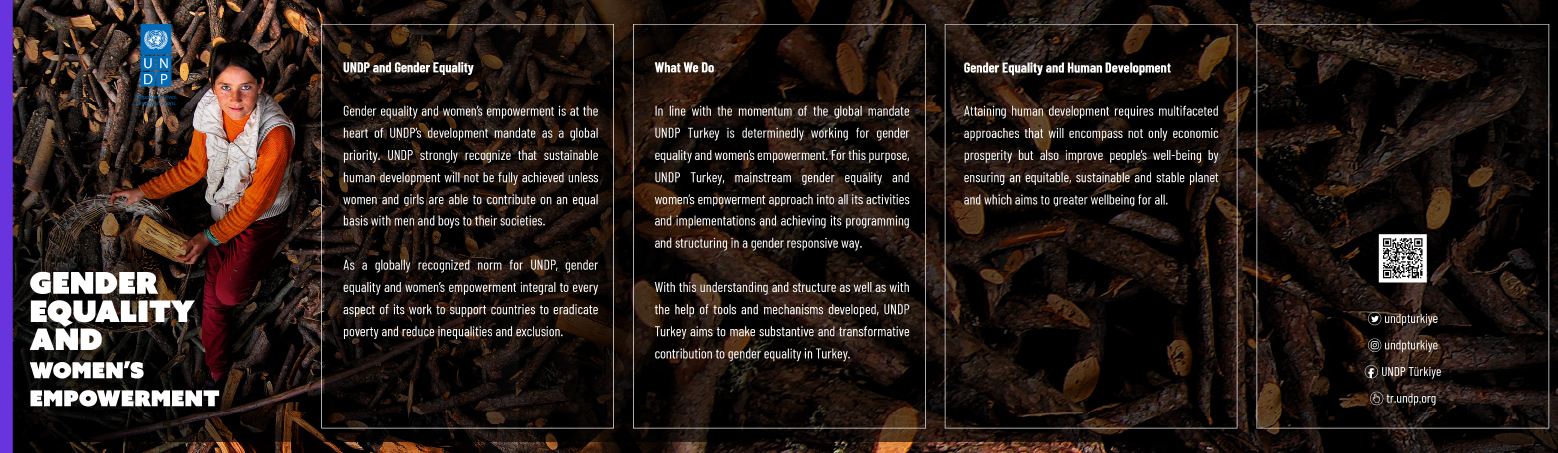
Gender equality and women’s empowerment is at the heart of UNDP’s development mandate as a global priority. UNDP strongly recognize that sustainable human development will not be fully achieved unless women and girls are able to contribute on an equal basis with men and boys to their societies. Attaining human development requires multifaceted approaches that will encompass not only economic prosperity but also improve people’s well-being by ensuring an equitable, sustainable and stable planet and which aims to greater wellbeing for all.
As a globally recognized norm for UNDP, gender equality and women’s empowerment integral to every aspect of its work to support countries to eradicate poverty and reduce inequalities and exclusion.
Along with those strategic documents Sustainable Development Goals also creates a strong perspective and sets norms for gender mainstreaming of the development agenda which reflects common needs and interests of the member states towards gender equality and women’s empowerment.
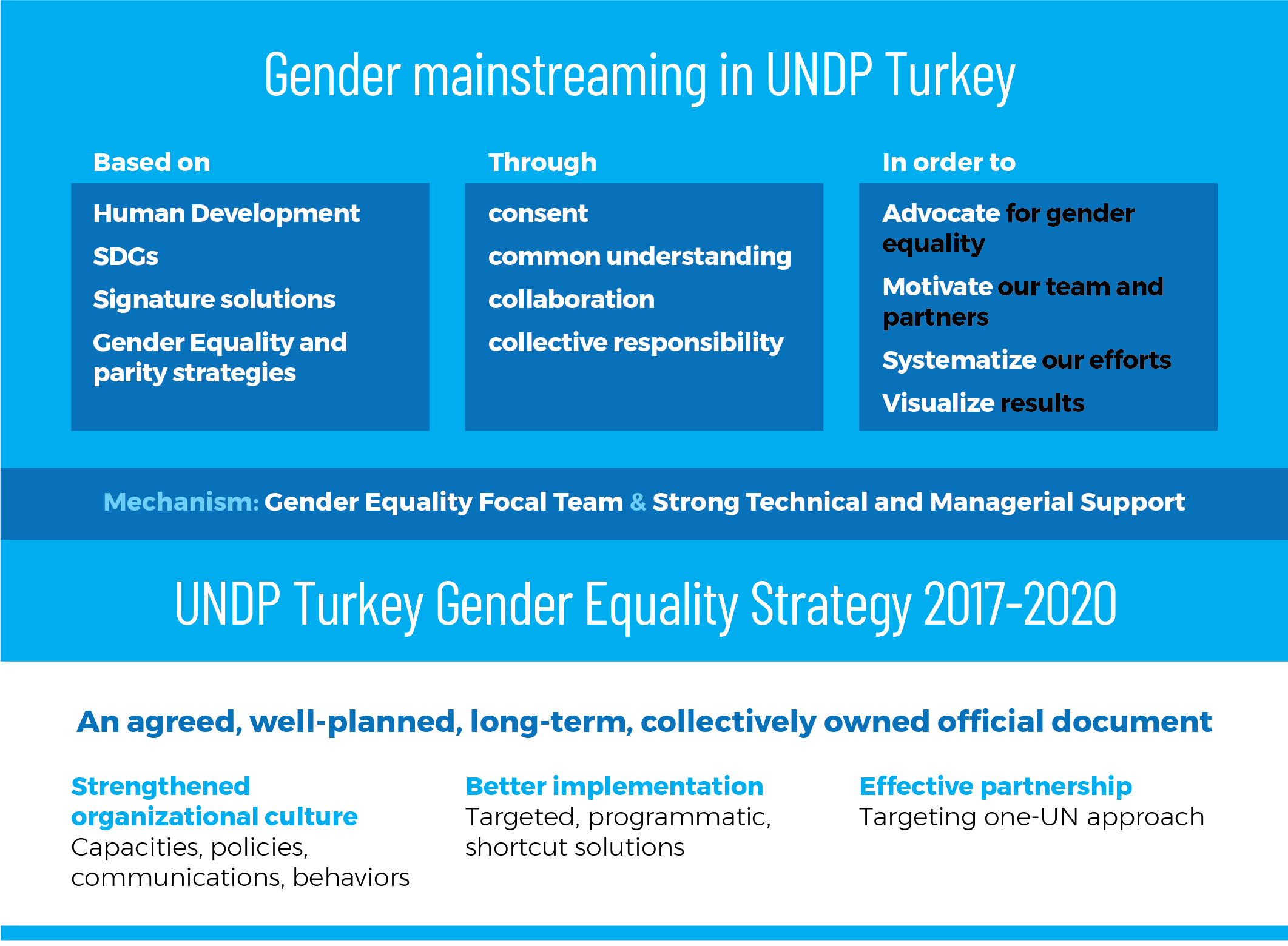
In line with the momentum of the global mandate UNDP Turkey is determinedly working for gender equality and women’s empowerment. For this purpose, UNDP Turkey CO, mainstream gender equality and women’s empowerment approach into all its activities and implementations and achieving its programming and structuring in a gender responsive way. As the output of this determination UNDP Turkey CO team collectively developed UNDP Turkey Gender Equality Strategy for the period of 2017-2020 to ensure that UNDP Turkey has the relevant and adequate capacity; well established system; and effective programme that would ensure the gender equality related interventions are met.
With this understanding and structure as well as with the help of tools and mechanisms developed, UNDP Turkey aims to make substantive and transformative contribution to gender equality in Turkey.
EquiTrack: Gender Parity Monitoring Dashboard
This dashboard provides an overview of gender parity trends within the Country Office, tracking key indicators such as overall gender balance, contract types, managerial representation, and age and tenure distribution. By visualizing these patterns, the dashboard aims to enhance transparency, promote dialogue across teams, and support continuous, evidence-based action towards a more inclusive and gender-balanced workplace.

General gender parity

Median Age of Women and Men

Gender Distribution by Organizational Status

Personnel Distribution in the Field and Office Based Positions by Gender
| Number of Contracts by Type | |||
| Row Labels | Female | Male | Grand Total |
| 2025-05 | 102 | 103 | 205 |
| FTA | 12 | 12 | 24 |
| D2 | 1 | 1 | |
| G3 | 1 | 1 | |
| G4 | 2 | 2 | |
| G6 | 1 | 1 | |
| NOA | 1 | 1 | |
| NOB | 9 | 6 | 15 |
| NOC | 1 | 1 | |
| NOD | 1 | 1 | |
| P5 | 1 | 1 | |
| Service | 90 | 91 | 181 |
| INTERN | 5 | 5 | |
| IPSA-10 | 1 | 1 | |
| IPSA-9 | 1 | 1 | |
| NPSA-10 | 3 | 22 | 25 |
| NPSA-11 | 2 | 4 | 6 |
| NPSA-4 | 15 | 12 | 27 |
| NPSA-5 | 13 | 10 | 23 |
| NPSA-6 | 2 | 2 | 4 |
| NPSA-7 | 19 | 8 | 27 |
| NPSA-8 | 9 | 8 | 17 |
| NPSA-9 | 21 | 24 | 45 |