
 Locations
Deaf trekking guides redefine Himalayan trails in Nepal
New paths in silence
April 29, 2026

Nepal attracts over a million trekkers each year. Yet its tourism industry has, before now, rarely catered to deaf or hard-of-hearing visitors.
Photo: UNDP Nepal
Two years ago, when Rajita Deula received a sudden request from a visiting group of deaf tourists to guide them around Kathmandu, she was not sure what to say.
She had never worked as a guide and had no training, but she did have one crucial skill; she could communicate with them in sign language, unlike any of the other available guides.
The visitors—travellers from Indonesia, the Philippines and Thailand—had met Rajita at a conference for the deaf and hard of hearing community, and were eager to experience Nepal’s culture and landscapes up close.
As none of the available professional guides could understand the group’s questions or explain in sign language, Rajita stepped in. A deaf Nepali herself, she agreed despite her uncertainty and lack of training.

“I knew my knowledge was limited, but I was determined to try. That moment sparked a new dream.”
In the months that followed, she guided several visiting delegations at the request of the National Federation of the Deaf Nepal (NDFN). When she later saw a Facebook post inviting deaf applicants for an official trekking guide training programme, she applied without hesitation.
A rare training opportunity
For the first time in Nepal’s trekking history, the Nepal Tourism Board and UNDP in partnership with NDFN and Nepal Academy of Tourism and Hotel Management (NATHM), launched a formal trekking-guide course specifically for deaf trainees.
Twenty-five participants, four women and 21 men, received instruction ranging from mountain safety and logistics to Nepal’s history, culture, geography and landscape. Instructors included mountaineers, rescue experts and medical professionals. Practical sessions covered first aid, gear handling, route planning, insurance and client care.


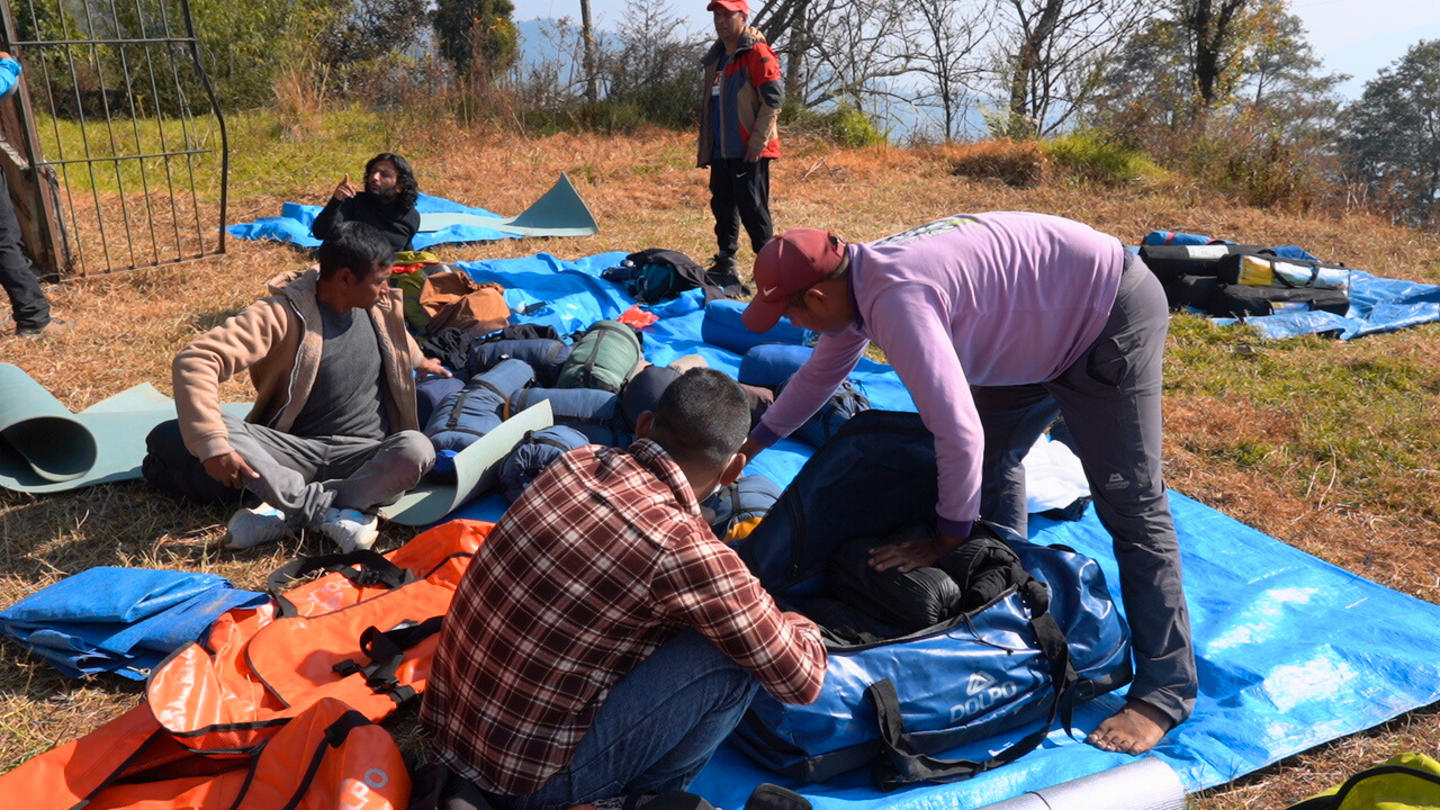


Trekking as a deaf guide requires unique communication techniques—visual cues, hand signals adapted for distance, pre-agreed gestures for emergencies and constant attention to the terrain. Sudden weather changes, falling rocks, avalanches or wildlife usually trigger auditory warnings, but deaf guides must read the environment differently. Many rely on vibrations, shadows and the reactions of companions, making teamwork and trust essential on every journey.

Photo: UNDP Nepal
“I’m now fully confident to work as a guide in any trekking area, from Muktinath to Annapurna Base Camp,” said Riha Maharjan, 29, whose story shows how far opportunities are expanding. Her husband and brother-in-law are also deaf, and the family’s love for trekking began when her husband started taking them to the highlands each year.
“That’s how I fell in love with trekking,” she said through sign language. “I have some foreign friends, and after this training, I want to take them to some popular trekking routes along Annapurna and Manaslu.”
Beyond guiding, Riha is pursuing a master’s degree in business studies, placed in the top 10 of Miss Deaf Universe 2024, and plans to start a tourism-related business in Kathmandu to stay active during the off-season. Her story is part of a growing movement to break barriers for deaf trekkers across Nepal.
Putting trekking careers within reach
A few trainees had previously worked on major trekking routes as porters or informal guides, but without an official certification, opportunities—especially in the Everest region—remained out of reach.
“I have been to all the major tourist destinations, but since porters from outside the districts aren’t allowed to work in the Everest region, I was looking forward to completing this training,” said Chop Prasad Poudel, a newly-certified trekking guide.

“Now, it’s our turn to shine as certified guides.”
Poudel, 32, works at a Kathmandu hotel during the low season and carries backpacks during peak months. He says deaf guides often face scepticism from hiring companies, who doubt their capabilities. For Poudel and many others, formal training and certification are helping break down these barriers, opening doors to new opportunities throughout Nepal’s major trekking routes.
Participants say the programme, one of the first of its kind designed specifically for deaf people, has given them confidence to pursue their dreams. Raj Bahadur Budha, 28, from Mugu district scaled a 15-metre climbing wall during training, raising his fists in triumph. Equipped with climbing gear and harness, he quickly descended.

“I have a dream to climb Mt Everest. After this trekking training, I’m aiming for big mountains.”
Opening paths for all
Nepal, home to 8 of the world’s 14 highest mountains and internationally renowned trekking routes, attracts over a million trekkers each year. Yet its tourism industry has rarely catered to deaf or hard-of-hearing visitors.
More than 430 million people live with disabling hearing loss around the world, representing a largely untapped market. To address this in Nepal, UNDP through the Sustainable Tourism Project, fully funded the partnership with the NDFN and NATHM, and launched the country’s first sign-language–based trekking-guide training this year.
“Our first-ever training proves that talent is universal and that Nepal’s tourism sector must be human-centred and inclusive. By connecting deaf guides with trekking and tour operators, if we can attract even a small batch of deaf tourists, it will create a meaningful boost for Nepal’s tourism,” said Deepak Raj Joshi, CEO of Nepal Tourism Board.
Ajaya Kumar Dhakal, principal at NATHM, explained that the enthusiasm among the first cohort has been remarkable. “They were more interested and active than ordinary trekking guides. Their interests demonstrate that deaf guides are ready to lead—not just on the trails, but in shaping a more inclusive and innovative future for Nepal’s tourism."
Related
content
content


