

 Locations
Mountains for Future Generations
July 20, 2026

Through the project "Mountains for Future Generations", the Mountaineering and Sports Association Visočnik from Han Pijesak organized a mountaineering school to encourage children and young people to spend more time in nature, develop practical outdoor skills, and embrace an active and healthy lifestyle.
Thirty primary school students from Han Pijesak strengthened their knowledge and skills in safe mountaineering, digital navigation, first aid, and the importance of protecting nature and cultural heritage through the project, which is funded by the European Union through the Regional Programme on Local Democracy in the Western Balkans 3 (ReLOaD3).
"Aware that children spend too much time in front of phone screens, we wanted to inspire them to spend more time outdoors. The mountaineering school offers new experiences that encourage young people to be active, develop a sense of responsibility, and discover how rewarding and inspiring time in nature can be," said Ana Jagodić Jovanović, Project Coordinator and member of the Mountaineering and Sports Association Visočnik.
Implemented over four months, the project combined classroom learning with practical field activities in the mountain areas surrounding Han Pijesak. As part of the educational programme, participants attended eight workshops covering the fundamentals of mountaineering, first aid, mine risk awareness, digital navigation, trail marking techniques, and the importance of conserving nature and cultural heritage.
Participants then put their newly acquired knowledge into practice through outdoor activities, gaining hands-on experience while building confidence, teamwork, and a stronger connection with the natural environment.
"What makes this project innovative is the way it combines traditional mountaineering with digital technology. Instead of relying solely on classroom instruction, participants use GPS devices and two-way radios to complete practical navigation exercises. This approach makes mountaineering more engaging for today's digital generation while also promoting greater safety in the mountains," said Ana.
She added that the participants showed great enthusiasm from the very first workshops.
"Even during the introductory theory sessions, we noticed a high level of interest among the students. Although a little shy at first, they were eager to talk about hiking trips with their parents and share their experiences. It showed us that they genuinely want to spend more time outdoors and learn through hands-on activities," Ana explained.
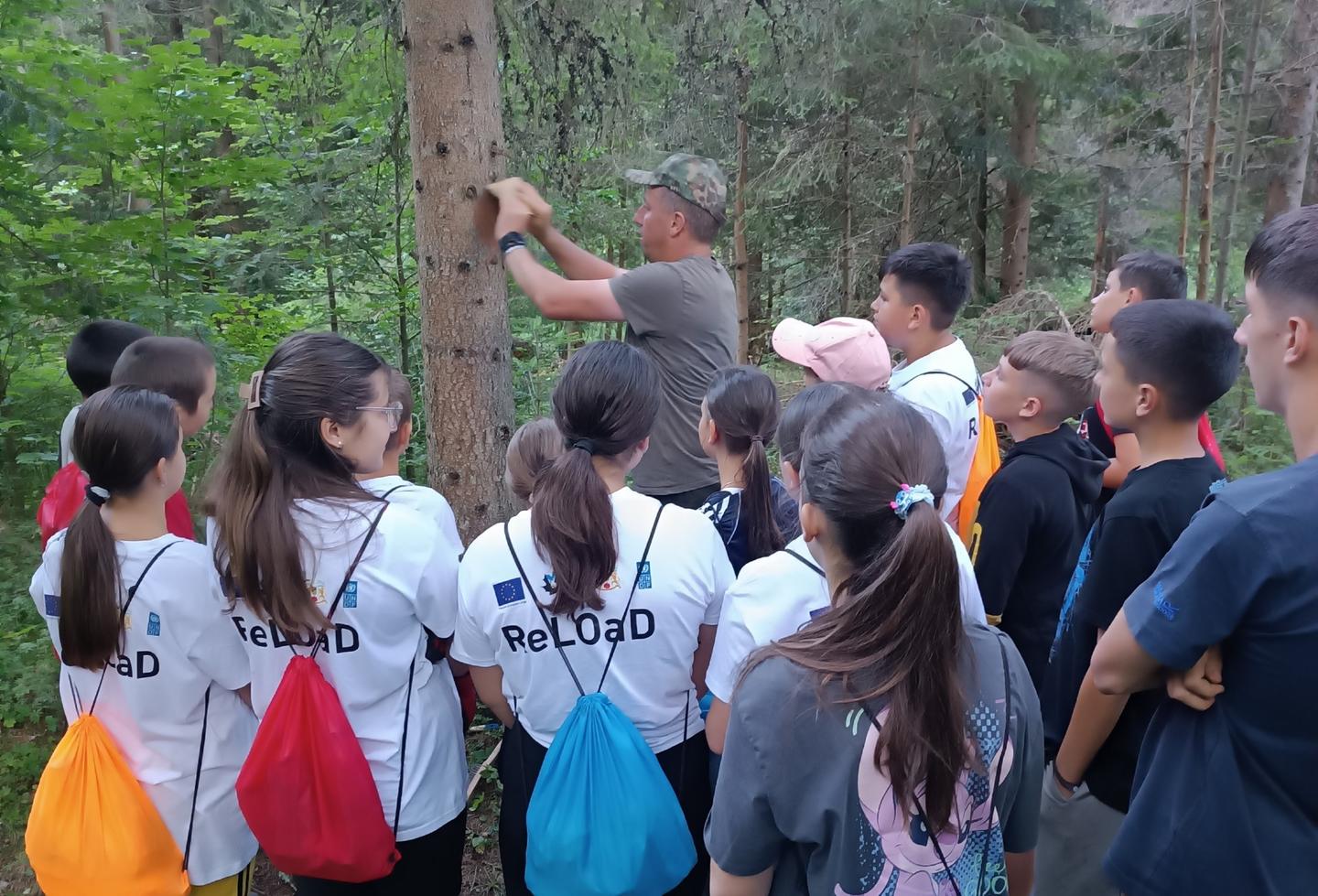
During field excursions, participants also took on different responsibilities within the hiking group. Petar, a sixth-grade student, was assigned the role of the 'sweep'—the last hiker in the group, responsible for ensuring that no one falls behind.
"I think the role of the 'sweep' is very important during a hike. It means looking out for others and making sure that even the slowest hiker stays with the group and reaches the destination safely," Petar said.
The project extended beyond mountaineering, becoming a journey through the history of Han Pijesak. After hiking through forest trails, participants visited Site 115, part of the historic narrow-gauge railway built during the Austro-Hungarian period and once travelled by the famous Ćiro steam train. For decades, the railway played a vital role in the area's economic and social development and remains closely linked to the history of the Karađorđević royal family, whose royal villa is located in Han Pijesak.
"This project is about much more than mountaineering. It is a lasting contribution to our local community. Our children have not only learned how to hike safely - they have connected the past and the future of our community through their own experiences, leaving a meaningful legacy on the trails that helped shape the history of Han Pijesak," Ana concluded.
The project "Mountains for Future Generations" is supported through the Regional Programme on Local Democracy in the Western Balkans 3 (ReLOaD3), funded by the European Union (EU) and implemented by the United Nations Development Programme (UNDP) in partnership with 14 municipalities and cities across Bosnia and Herzegovina, including the Municipality of Han Pijesak.
Related
content
content


