
 Locations
Acting early to change South Sudan’s trajectory
From first response to fresh starts
April 23, 2026

In South Sudan UNDP is working on closing the development gaps that so often leave communities stuck in prolonged displacement.
Photo: UNDP South Sudan

Wau, in Western Bahr el Ghazal, is a town where endurance sustains communities through crises, allowing them to adapt and foster long-term resilience. Where red earth carries the weight of displacement and return, and where daily life unfolds in the long shadow of crisis.
When I visited the town, I heard a message that was both simple and urgent. People are ready to move on. They want to return home safely. They want to earn a living. They want their children in school. They want to resolve disputes without violence. In short, they want a future, not just survival.
Humanitarian assistance remains necessary in South Sudan. It saves lives every day. But what I saw in Wau made one thing clear; if we want to reduce need, not just respond to it, we must invest earlier in recovery, alongside humanitarian action, not after it. That is how we prevent today’s crisis from becoming tomorrow’s status quo.

In Wau, in Western Bahr el Ghazal, endurance sustains communities through crises, allowing them to adapt and foster long-term resilience.
Photo: UNDP South Sudan

The families of Wau are ready to move home and to return home safely. They want to earn livings and put their children in school.
Photo: UNDP South Sudan
Bridging relief and recovery, early
In Western Bahr el Ghazal, UNDP is working at the intersection of humanitarian, development and peace efforts, deliberately closing the gap that so often leaves communities stuck in prolonged displacement.
We do this in partnership. Working with state authorities, humanitarian agencies, UN partners, civil society and community leaders, we are aligning efforts around a shared plan to help internally displaced people, refugees, returnees and host communities rebuild their lives.

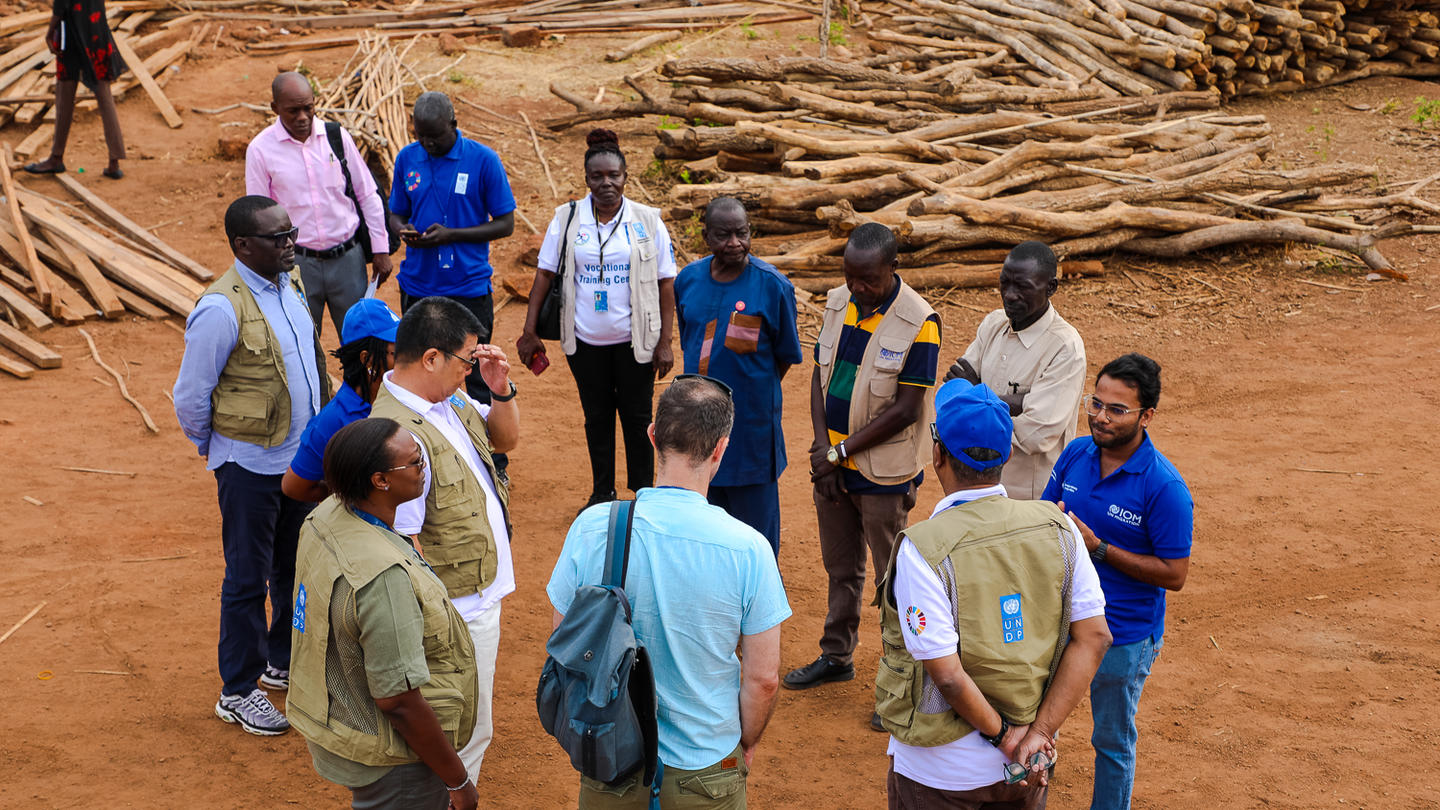

Through our leadership in Wau, we support the State Task Force on Durable Solutions focused on providing integrated, community- and area-based solutions, rather than traditional, fragmented sectoral assistance.
The bridge we create matters. The gap between emergency aid and longer-term development is where too many people fall through. It’s where displacement becomes protracted, where tensions rise and where opportunities to stabilize communities are missed.
What early recovery looks like in practice
This approach comes to life through concrete programmes. A returning family does not separate ‘livelihoods’ from ‘water and sanitation’ or ‘health.’ They need all of it, at once, to rebuild their lives.
That is why our Pathway to Community Reintegration initiative, supported by the Funding Windows, our mechanism for thematic, flexible financing that allows us to respond early and to to adapt quickly combines support for local governance, livelihoods, social cohesion, protection and climate-resilient infrastructure. Supported by Denmark, Luxembourg and the Republic of Korea, it functions not as separate projects, but as one integrated effort. It means local authorities are not bypassed, but strengthened to lead, plan, manage and deliver for and with their communities.

Launch of the Pathway to Community Reintegration initiative in South Sudan.
Photos: UNDP South Sudan
Alongside these interventions, we are investing in people’s potential. This is what early recovery looks like when it is done right; it meets urgent needs, but it also builds confidence, restores dignity and reduces the risk of future crisis.
With support from the African Development Bank, the Wau Integrated Business, Employment and Innovation Hub is now open, providing young people with digital skills, entrepreneurship support, job placement services and access to technology. It is a space where ideas turn into income and where youth begin to see a future at home.
Through our partnership with the Global Fund, we are also strengthening essential systems, such as the regional health warehouse in Wau that ensures life-saving supplies reach communities reliably.
And in a critical step toward restoring trust we have supported and handed over a Special Protection Unit to the state police, creating a safe, dedicated space for survivors of gender-based violence to seek justice.


Each of these investments responds to immediate needs. And together they pave a coherent pathway that helps communities move from dependence to self‑reliance.
Changing the dynamic on displacement
Western Bahr el Ghazal remains a place of displacement, hosting over 400,000 people who have fled conflict or returned from across borders. At the same time, humanitarian resources are under pressure.
This is exactly when early recovery matters most. Because every delay makes reintegration harder. Livelihoods weaken. Frustration grows. Small tensions can escalate into larger instability.

Resident Representative in South Sudan Mohamed Abchir inspects a partially reconstructed building in a resettlement camp.
Photo: UNDP South Sudan
But when we invest early, when we support people to rebuild while humanitarian assistance is still in place, we change the dynamic. And over time, the need for repeated emergency response is reduced.
This is the shift we are working to achieve.
A call for partnership that matches reality
UNDP brings a unique added value in South Sudan. We are working across the humanitarian–development–peace nexus, with the trust of government, the reach of the UN system and the ability to deliver integrated solutions at scale.
We stay engaged beyond the immediate crisis. We invest in systems, institutions and people. And we ensure that today’s response contributes to tomorrow’s stability.
But scaling the impact we see in Wau requires partners to invest differently.
Not instead of humanitarian aid, but alongside it. Earlier. More flexibly. And in ways that support integrated, locally-led solutions.
This work has now been enhanced in Wau because of UNDP’s Funding Windows. Instead of fragmenting support into narrow, short‑term projects, they enable integrated solutions that evolve as conditions change.
In practice, this flexibility is critical, and, in Wau, we are seeing what is possible when we invest earlier in recovery. Communities are stabilizing. Opportunities are emerging. Confidence is returning.

Humanitarian assistance in South Sudan saves lives every day. But it must also come alongside investment in early recovery.
Photo: UNDP South Sudan
Backing people to move forward
What stayed with me most from Wau was not the programmes. It was the determination of the people. They are already building their futures, often with very little. What they need is support that matches their ambition.
Our responsibility is clear—to ensure that early recovery efforts protect those gains and turn them into lasting progress to move from managing crisis to reducing it. And to stand with communities not only in their most difficult moments, but in their decision to move forward.
Related
content
content


