Locations
Author: Nozimakhon Ozmen
Responsibility, unity, and results: A new stage in the development of “Novshahar” makhalla
November 27, 2025

Photo: UNDP Uzbekistan
A few years ago, the “Novshahar” makhalla in the Angor district of Surkhandarya region looked very different. The streets were dusty, drinking water was limited in some areas, and electricity supply was unstable. Residents had long adapted to these challenges, but living with them was never a real answer.
At that time, the makhalla chairman, Erkin Gapparov, began working based on principle “If there is a problem, it must be solved.” He created not just a plan, but a clear mechanism and daily work schedule for the development of the makhalla.

Photo: UNDP Uzbekistan
Our training programs, organized within the “Integrated Rural Development” project, laid the foundation for a new stage in Erkin Gapparov’s work. During the trainings, participants were taught practical skills in community mobilization, analyzing problems, setting priorities, and creating a Community Development Plan. This plan, based on the real needs of the community and the voices of residents, provides a framework for addressing existing issues systematically.
Erkin Gapparov emphasizes the importance of the knowledge he gained: “The Community Development Plan ensures that every decision is now based on the needs of the residents. It has given me the ability to address problems systematically and to promote the sustainable development of the makhalla together with the community.”
House-to-house visits, surveys, and community meetings made it possible to develop a one-year practical plan for the makhalla. This process was not merely about collecting information, it also allowed residents’ real opinions to be heard and placed at the center of planning. During visits to each home, the daily life of families, the challenges they face, and the hopes they associate with upcoming changes were carefully examined.
Erkin Gapparov began his work as one of the members of the Initiative Group established within the project. Together with his team, he engaged residents in active dialogue and initiated a process of jointly finding solutions to the makhalla’s most pressing issues. The trainings we conducted became a turning point in his work. Through this experience, he gained skills in community mobilization, systematic planning, and a results-oriented approach.
“The knowledge I gained from the trainings allowed me to work effectively with people, listen to their opinions, and guide collective efforts in a unified direction,” he says.
“Achieving these results would have been difficult without UNDP’s support. The Initiative Group, the trainings, and the knowledge exchange showed us the way. Most importantly, this process brought people together,” said Erkin Gapparov.

Photo: UNDP Uzbekistan
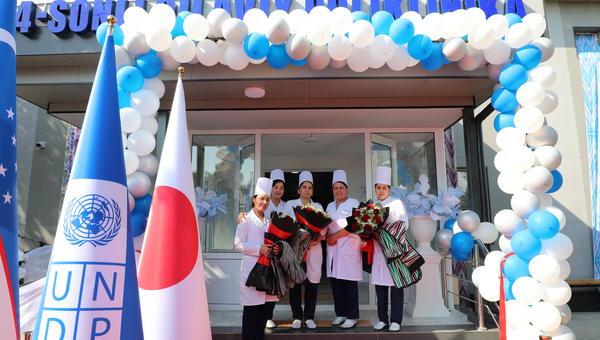
“Novshahar” has undergone significant improvements. The main streets have been paved, resolving the problems of mud in winter and dust in summer. Pedestrian pathways have been constructed, ensuring safe movement for both children and residents. Old wooden poles have been replaced with metal and concrete supports, making the electricity supply more reliable. The local kindergarten has been renovated, with additional groups opened to reduce waiting lists. These efforts go beyond simple repairs, they mark a crucial step toward establishing a durable infrastructure for the makhalla’s future.
Erkin Gapparov, together with his team, has now begun implementing the next important tasks for the makhalla. According to the plans, the project will lay 11 kilometers of new electrical networks, drill 3 artesian wells, and install 10.5 kilometers of water pipelines. In addition, the bridge connecting Taraqqiyot and Mahtumquli streets will be reconstructed, ensuring safer and more convenient movement throughout the area.
This program is not merely a list of upcoming tasks, it is clear and actionable plan for the makhalla’s future. Discussions have already begun, technical processes are underway, and most importantly, the team believes in its capabilities and in achieving tangible results.
“Novshahar” is not just a district undergoing renewal, it is a place where a culture of solidarity, responsibility, and collective decision-making is taking shape. Residents are becoming active participants in the development of their makhalla, standing at the center of every change.
“A makhalla is not just a place where we live, it is our home, only much larger. If it is orderly, prosperous, and harmonious, it means we are moving in the right direction,” concluded Erkin Gapparov.
***
This initiative was implemented under the joint project “Integrated Rural Development”, carried out by the Ministry of Economy and Finance of the Republic of Uzbekistan and UNDP, with financial support from the Islamic Development Bank.