Locations
Uzbekistan and UN Partners Advance Just Energy Transition through Strategic Foresight Workshop
September 11, 2025

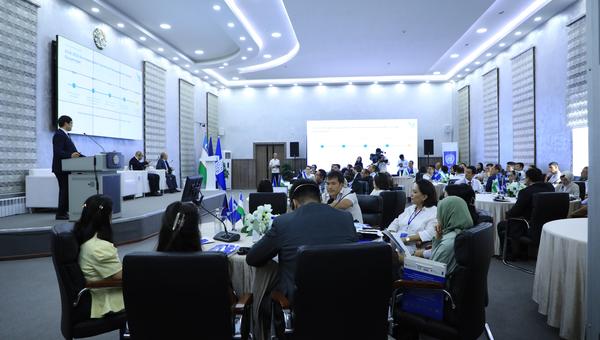
On 11 September the United Nations Development Programme (UNDP), under financial support of UN SDG Fund together with the United Nations Economic Commission for Europe (UNECE) and the International Labour Organization (ILO), in partnership with the Ministry of Economy and Finance and Ministry of Employment and Poverty Reduction of the Republic of Uzbekistan convened in Tashkent a Foresight Workshop on Just Energy Transition for Uzbekistan.
Progress and Challenges
Uzbekistan has set an ambitious target to increase the share of renewable energy sources to 54% by 2030; a shift expected to reduce greenhouse gas emissions by nearly 16 million tons and advance the country’s commitments under the Paris Agreement. This transformation is already creating new green jobs, with thousands of employment opportunities generated through renewable energy projects across the country.
At the same time, challenges remain. According to UNDP’s Multidimensional Poverty Index, 13% of the population lacks access to safe and adequate heating. Low-income households particularly female-headed households continue to face energy poverty, with energy costs consuming up to 87% of poor households’ income. Rising tariffs have further strained budgets, especially in regions such as Karakalpakstan and Khorezm, where vulnerabilities are compounded by the environmental crisis of the Aral Sea.
The strategic foresight is embedded in UNDP’s innovation agenda across 115 countries. In Uzbekistan, we introduced foresight practices in 2023 to support the Green Transition, applying the University of Houston’s internationally recognized framework


In her opening remarks, Ms. Akiko Fujii, UNDP Resident Representative in Uzbekistan, emphasized the importance of foresight in navigating uncertainty and designing resilient policies.
“A green transition is not only an environmental necessity but also an opportunity for Uzbekistan to upgrade its economy, increase resource efficiency, and ensure balanced growth across all social groups. UNDP stands ready to continue supporting this effort so that the benefits of clean energy reach all people, leaving no one behind.”
Ms. Sabine Machl, UN Resident Coordinator in Uzbekistan, underscored the constitutional right to a healthy environment and the Government’s commitment to green development:
“Uzbekistan’s Strategy for Transition to a Green Economy until 2030 sets a clear vision for expanding renewable energy, creating green jobs, and ensuring energy access for all. The UN is proud to support these efforts through vocational training, policy reform, and inclusive programming.”
Towards a Just Energy Transition Roadmap
The foresight workshop is a key step in the development of Uzbekistan’s Just Energy Transition Roadmap, which integrates principles of equity, inclusiveness, and resilience into national energy and climate policies, including the preparation of Uzbekistan’s forthcoming NDC 3.0.
Participants engaged in scenario exploration, visioning exercises, and policy co-design sessions to generate actionable recommendations that address institutional barriers, strengthen social protection, and expand decent work opportunities in the green economy.
Speaking on behalf of UNECE Mr. Michal Drabik, Economic Affairs Officer in the Sustainable Energy Division, observed that energy transition is already ongoing in many places all around the globe and that we are witnessing application of new green technologies as well as a significant turn towards improvements in energy efficiency. He underlined that for that process to go smoothly and in a well-orchestrated manner, developing forward-looking strategies that will build resilient energy systems ensuring access to clean and reliable energy for all is of crucial importance to every State as it will determine its security and competitiveness on global markets in the years to come. In that context Mr. Drabik also reminded that such strategy needs to take into consideration the social aspect of the energy transition and provide for inclusiveness and fairness of the process, in order to succeed and ensure sustainability of the proposed solutions.
Building on that Dr Cristina Martinez, Senior Specialist, Enterprise Development and Green Jobs, DWT Eastern Europe & Central Asia, ILO Regional Office for Europe and Central Asia, highlighted the need for social dialogue as a key instrument in promoting and achieving decent work, inclusive development and social cohesion.


“Social dialogue through National Tripartite Commission is crucial for designing and implementing national economic, social and labour policies. National tripartite social dialogue brings together government, workers and employers to discuss public policies, laws and other decision-making that affect the social partners. Employers’ and workers’ organizations are fundamental for accelerating climate action and governments need to prioritize the role of sustainable enterprises as engines of just transition processes and decent work creation. It is important for governments, workers, and employers to integrate climate finance, gender, health, migration, education and skills development dimensions into just transition and climate frameworks through an inclusive, evidence-based approach”.
The event brought together more than 70 participants, including representatives from government ministries, the National Tripartite Commission, employers’ and workers’ organizations, academia, civil society, youth, and women leaders, reflecting a diverse and inclusive approach to shaping Uzbekistan’s green future.
The United Nations agencies and partners encouraged the Government of Uzbekistan to prioritize the protection of vulnerable households during water and energy tariff reforms, supported by enhanced data collection, adoption of a long-term decarbonization strategy, and strengthened regional energy cooperation.
The outcomes of the workshop will inform the finalization of Uzbekistan’s Just Energy Transition Roadmap and contribute to broader climate and development strategies.
This joint programme is supported by the Joint SDG Fund. We sincerely appreciate the contributions from the European Union and the governments of Belgium, Denmark, Germany, Ireland, Italy, Luxembourg, Monaco, the Netherlands, Norway, Poland, Portugal, Republic of Korea, Saudi Arabia, Spain, Sweden, and Switzerland in accelerating progress towards the SDGs