

 Locations
UNDP and the Government of Uzbekistan convene national consultation to integrate gender and social inclusion into climate policy
May 7, 2025

Tashkent, 7 May 2025 – The Ministry of Ecology, Environmental Protection and Climate Change of the Republic of Uzbekistan, together with the United Nations Development Programme (UNDP), hosted a consultation on Gender and Social Inclusion in Climate and Nature Advocacy. The event was held as part of the UNDP Climate Promise – Phase 2 project, which supports the Government in developing updated climate goals (Nationally Determined Contribution or NDC 3.0). The consultation also comes in the lead-up to the 10th anniversary of the Paris Agreement on Climate Action.
The event brought together representatives from government, UN agencies, development partners, and civil society—especially women’s and environmental organizations—to ensure that diverse voices across society help shape Uzbekistan’s climate and nature agenda.

“The development of NDC 3.0 is not just a technical process—it’s an opportunity to shape a truly inclusive climate policy that reflects the voices and needs of all groups in society. Inclusion is not only a matter of fairness, but also of effectiveness and sustainability.”— Sayyora Abdullayeva, Ministry of Ecology, Environmental Protection and Climate Change of Uzbekistan.
Women, persons with disabilities, youth, and rural communities are often on the frontlines of climate change, facing disproportionate risks due to existing social and economic inequalities. Yet a recent review of Uzbekistan’s second NDC reveals that gender equality and social inclusion remain underrepresented in national climate strategies.
The consultation emphasized the need for a systems-thinking approach—one that addresses environmental challenges while integrating the voices, needs, and expertise of those most affected.
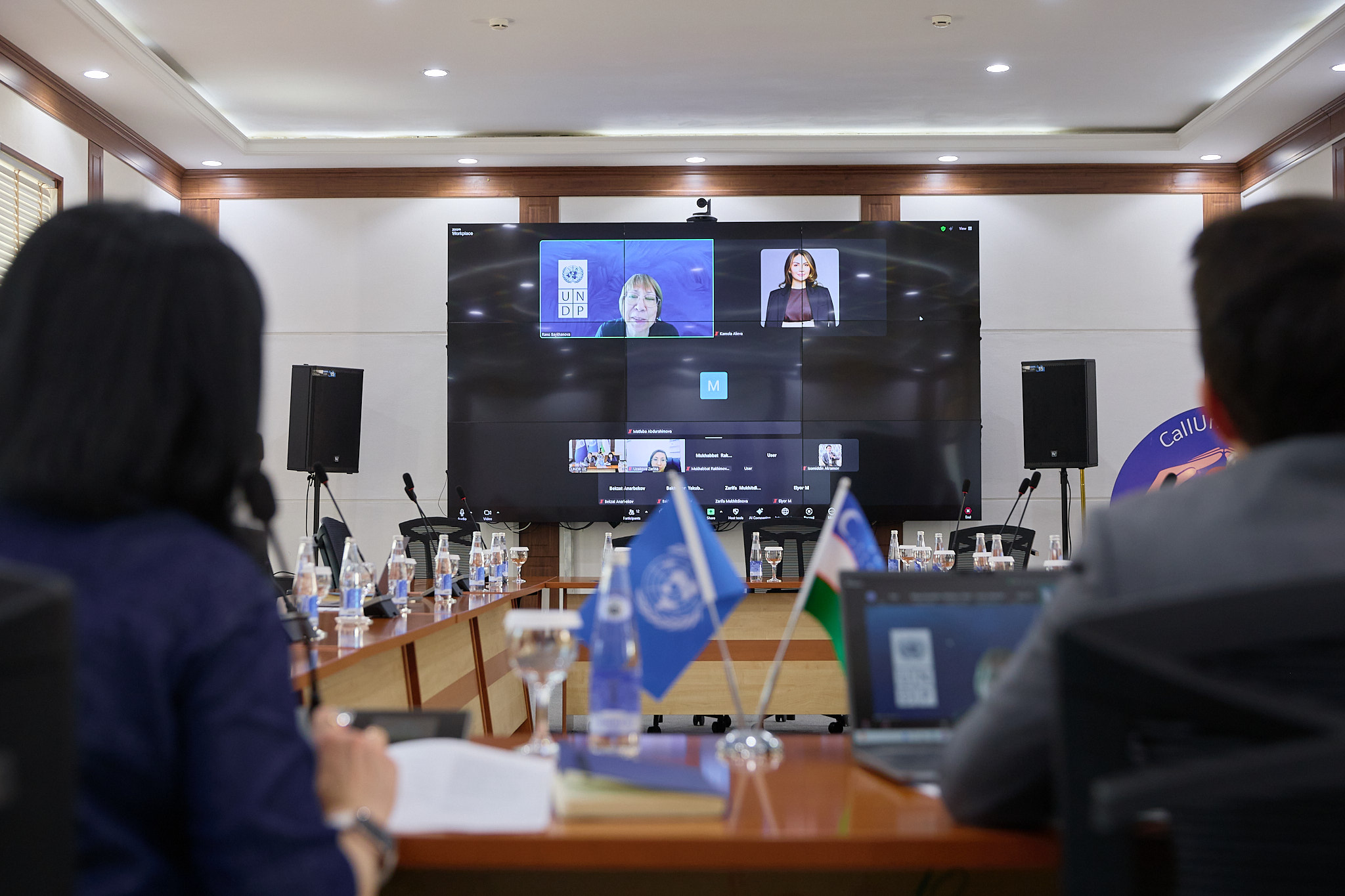
“Climate change is now everyone’s business,” said UNDP expert Rano Baykhanova. “From reducing emissions in the energy sector to transforming agriculture, preserving biodiversity, and combating desertification, inclusive climate policies that connect gender, food systems, and ecosystems demonstrate how deeply these challenges—and solutions—are interlinked.”
Civil society representatives—including women’s groups and environmental NGOs—had the opportunity to engage directly with government officials, share ideas, and raise questions on how climate policies can be made more inclusive and community-driven.

“An equally important priority is developing and using gender-sensitive and inclusive indicators to track progress in reducing inequalities and closing gender gaps in climate action,” said Kamola Alieva, Gender Specialist. “To do this effectively, women must be involved at every step of decision-making. Without their input, we cannot ensure that climate efforts are genuinely inclusive and equitable.”
Following the consultation, UNDP will compile the feedback and recommendations shared—particularly from women’s organizations, youth groups, and environmental NGOs—into a summary report. This will be formally submitted to the Government of Uzbekistan to inform the country’s updated Nationally Determined Contribution (NDC 3.0), helping ensure that climate commitments are rooted in inclusion, equity, and local realities.
This work was made possible through generous contributions from the Governments of Denmark, Luxembourg and the Republic of Korea, via the Funding Windows. As UNDP’s primary mechanism for flexible and pooled thematic funding, the Funding Windows enable UNDP to respond swiftly and comprehensively to needs and emerging challenges across the world.

Uzbekistan is expected to adopt its renewed Nationally Determined Contribution (NDC 3.0) by 1 June 2025, ahead of its planned presentation at the UN Climate Change Conference (COP30) in Brazil in November 2025.
Uzbekistan became a signatory to the United Nations Framework Convention on Climate Change (UNFCCC) in 1993 and ratified the Paris Agreement in 2018. It submitted its first NDC in 2017 (with a 10% reduction target), followed by an updated version in 2021 (with a 35% reduction target), reflecting increased ambition and a stronger focus on adaptation. NDC 3.0 represents a critical next step—aiming to deepen climate ambition while fully integrating gender and social inclusion into national climate policy.
This work was made possible through generous contributions from the Governments of Denmark, Luxembourg and the Republic of Korea, via the Funding Windows. As UNDP’s primary mechanism for flexible and pooled thematic funding, the Funding Windows enable UNDP to respond swiftly and comprehensively to needs and emerging challenges across the world.


