Locations
UNDP and CERR host a validation workshop on climate-resilient agriculture in Uzbekistan's Aral Sea region
June 26, 2025

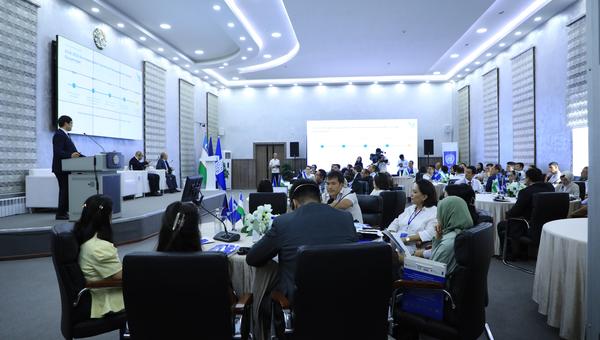
Tashkent, Uzbekistan - June 5, 2025 - UNDP in Uzbekistan, in partnership with the Center for Economic Research and Reforms (CERR), convened a validation workshop today in Tashkent. The event brought together national and international stakeholders to discuss and validate the findings of a comprehensive study on climate-smart agriculture, value chain and rural livelihoods in the Aral Sea Region with a focus on climate adaptation strategies.
The workshop was held under the UNDP–FAO co-led Scaling up Climate Ambition on Land Use and Agriculture through Nationally Determined Contributions and National Adaptation Plans (SCALA) programme. The initiative is generously funded by Germany’s Federal Ministry for the Environment, Climate Action, Nature Conservation and Nuclear Safety (BMUKN) through its International Climate Initiative (IKI).
The workshop showcased evidence-based analyses and strategic recommendations to support Uzbekistan’s climate adaptation efforts in agriculture, with a particular focus on the Aral Sea Region, which is one of the regions most severely impacted by climate change and water scarcity. The study, grounded in extensive field surveys across 10 districts, captured farmers’ perspectives, production challenges, and opportunities for implementing climate-smart agricultural practices.
The event brought together over 20 participants, including representatives from national government agencies, local authorities, international development partners, research institutions, commercial banks, and farmer associations. Discussions centered on key issues such as sustainable water management, soil salinization, crop diversification, value chain development, and strengthening support systems for climate resilience in agriculture, including potential avenues for private sector engagement.
"Today’s event underscores the importance of inclusive dialogue and data-driven planning in advancing climate-resilient agriculture in the Aral Sea region,"noted a UNDP representative.

The workshop also spotlighted promising climate-resilient crops—such as sesame, mung beans, licorice root, and grapes—as potential investment opportunities for the private sector. In addition, policy options were discussed to enhance rural livelihoods, food security, and environmental sustainability.
The validated findings and recommendations will inform national policy development and investment priorities, aligning with Uzbekistan’s Sustainable Development Goals and its international climate commitments.
Under the SCALA programme, Uzbekistan received targeted support through its Private Sector Engagement Facility to strengthen collaboration between the public and private sectors in advancing climate-resilient agriculture. This initiative helped pinpoint viable crops, such as sesame and mung beans, and informed strategies to attract private sector financing for adaptation solutions in the Aral Sea region.
For more information on SCALA in Uzbekistan, visit here: https://www.adaptation-undp.org/projects/scala-uzbekistan