Locations
ECODATA Platform Launches in Uzbekistan to Digitize Biodiversity and Protected Area Management
July 28, 2026

TASHKENT, UZBEKISTAN – July 28 – On World Nature Conservation Day, Uzbekistan officially launched ECODATA, Electronic Geoinformation Database for biodiversity and protected natural areas. The platform is a product of the Aral Sea Wetlands project, which is implemented by the National Committee for Ecology and Climate Change together with the United Nations Development Programme (UNDP) and funded by the Global Environment Facility (GEF).
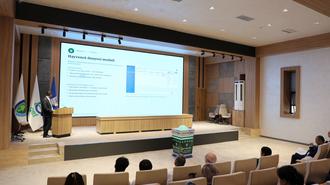
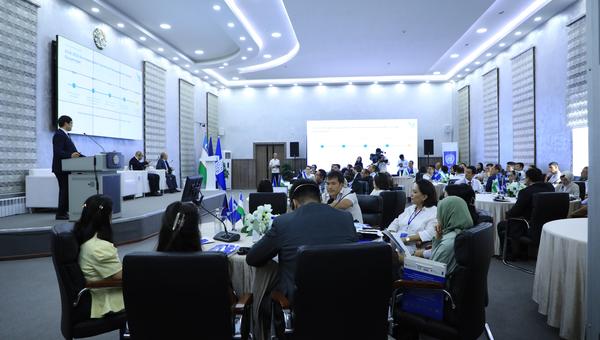
The launch ceremony took place at the Research Center for Ecology and Environment of Central Asia at Green University. The event brought together representatives from the National Committee for Ecology and Climate Change, UNDP, Green University, the scientific community, international organizations, development partners, and the media.
"The launch of ECODATA on World Nature Conservation Day is symbolic, reminding us that environmental protection requires not only ecological responsibility but also modern tools," said Jusipbek Kazbekov, Deputy Chairman of the National Committee for Ecology and Climate Change of the Republic of Uzbekistan. "Today, digital technologies allow us to see natural processes much more accurately... ECODATA is designed to turn environmental data into a practical tool for the decision makers, scientists, specialists, international partners, and society. Effective nature conservation begins with reliable data."
Designed to consolidate fragmented environmental data into a unified system, ECODATA creates a modern information foundation for the study, monitoring, and conservation of the country's natural heritage. It operates on the principle of "data → analysis → decision," moving beyond simple data storage to enable the tracking of changes over time, comparison of regional indicators, and monitoring of specific species and territories.
Previously, environmental information was stored in various formats, from paper journals to separate spreadsheets, complicating data comparison and long-term analysis. ECODATA centralizes information on animals, plants, protected areas, forests, water bodies, and pastures into a single digital space. The platform currently includes 7 main modules and over 60 related tables, covering all 12 regions of Uzbekistan and the Republic of Karakalpakstan.


Key features of ECODATA include a comprehensive biodiversity database managing data on Uzbekistan's animal and plant life, such as population numbers, distribution, and conservation status for Red Book species. It also consolidates geographical, ecological, and economic data for state reserves, national parks, and wildlife sanctuaries to streamline protected area management. To support field operations, a mobile module allows specialists to collect data with GPS coordinates and photos without an internet connection, synchronizing with the central database once restored.
Furthermore, the platform encourages academia by allowing researchers and the public to submit nature observations. It features a resource management quota module to help calculate science-based limits for activities like hunting or fishing, and integrates with the national portal my.gov.uz to digitize administrative processes like registering plant nurseries.
"Scientific organizations will be able to upload their research and monitoring results directly into the system, creating a cumulative data archive," added Akiko Fujii, UNDP Resident Representative in Uzbekistan. "This will make it possible to analyze changes in the numbers and distribution of species over several years... ECODATA also creates an information basis for Uzbekistan to fulfill its international obligations in the field of nature conservation."
Future plans for the platform include expanding the mobile application, enhancing GIS integration, developing analytical tools to assess the impact of climate change, and integrating with international information systems.