

 Locations
Well-administered buildings start with engaged residents and trained administrators
June 16, 2026

In every building, there are shared concerns that bring people to the same table - whether it is a roof that needs repair, a basement that requires maintenance, or an important decision about the future of the building. Although joint investments are often on the agenda, issues related to the community of residents and common spaces remain central. After all, an apartment building or residential complex is about communication and solidarity.
For Nelly Vizitiu, who manages three apartment buildings in Chișinău municipality, this responsibility means 288 apartments, more than 500 residents, and just as many expectations, questions, and problems to address. She says she took over the management of the buildings together with “people’s worries”, but also with the desire to change things for the better.
“I was glad to hear the experiences of other administrators, because many of the problems we face are common. Every resident is different, and you need to know how to communicate with each of them. Trainings like these help us better understand the law, budgets, and how we can manage our buildings more efficiently,” says Nelly Vizitiu.
Building Administrators’ School, with graduates from 14 cities and towns
To support homeowners’ associations, the Building Administrators’ School was organized.
The capacity development programme was carried out by UNDP Moldova, in partnership with the Ministry of Infrastructure and Regional Development, the Regional Development Agencies Centre, North, South and Chișinău, and the National Centre for Sustainable Energy, with financial support from the Government of Denmark.
This year, more than 170 apartment building administrators, members of homeowners' association boards, accountants, representatives of local public authorities, and residents from several regions of the Republic of Moldova took part in the series of practical trainings. The sessions brought together representatives from 14 localities: Chișinău, Bălți, Drochia, Florești, Ialoveni, Ungheni, Nisporeni, Hîncești, Anenii Noi, Cimișlia, Leova, Cahul, Ștefan Vodă and Căușeni.
Participants learned more about the effective organization and functioning of homeowners’ associations, the role of administrators in managing multi-storey residential buildings, the administration of budgets and repair funds, the organization of general assemblies, and transparent decision-making.
“Through the Building Administrators’ School, we contributed to the development of better-trained administrators and stronger homeowners’ associations. The training workshops held in the north of the country provided participants with practical tools for the efficient and sustainable management of the associations, while also facilitating access to investments that can help improve residents’ living conditions,” noted Maria Prisacari, Director of the Regional Development Agency North.


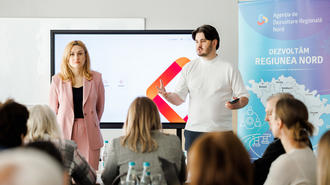


The basics of apartment buildings’ administration
Good management of the housing stock depends largely on the competencies of administrators, says Mariana Efros, Head of the Directorate for Policies and Regulations in the Field of Spatial Planning, Urban Planning, Construction, and Housing at the Ministry of Infrastructure and Regional Development
“To have a well-managed, well-developed and comfortable housing stock for all residents, it is important to have competent administrators. These competencies can be acquired through trainings, courses, and information sessions,” says Mariana Efros.
For some participants, the training was the first step towards understanding how a building can move from informal administration to a more organized form of management.
“I came to the seminar to see what we can do and whether we should establish an association. A well-informed person is well prepared. The purpose of these trainings is to inform people about reforms, new laws, and how we can act more correctly and more conveniently,” said Adrian Vasiliță, an apartment building administrator from Ialoveni town.
For building administrators, the sessions were an opportunity to discuss the importance of general assemblies, budget approval, communication with residents, the establishment of repair funds, and other relevant issues.
“The work of an administrator requires a lot of time, communication, and patience. It is important to explain to people why homeowners’ associations are needed and what benefits they bring. The seminar provided us with useful information both from a legal perspective and in terms of communication with residents,” said Lilia Rotaru, an apartment building administrator from Hîncești city.


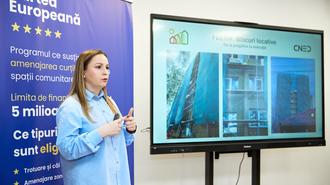


Homeowners’ associations as catalysts for energy efficiency projects
The Building Administrators’ School also focused on preparing associations to access financing for energy efficiency projects and to accelerate the transition towards more sustainable housing. The necessary steps for making proposals eligible were explained.
Participants also discussed how planned interventions at building level can reduce costs for residents and ensure better quality works.
“Building Administrators’ School contributes to the development of proactive administrators who are able to translate energy efficiency principles into concrete solutions for residents: lower energy consumption, reduced bills, increased comfort, and more sustainable buildings. Through this programme, we invest in the competencies of those who manage the housing stock and contribute to the development of more responsible communities,” said Valeria Șevciuc, Head of the Application Reception and Processing Section within the National Centre for Sustainable Energy.
There are more than 5,000 homeowners’ associations in the Republic of Moldova. However, only some of them have the legal status required to access financial support programmes for the energy renovation of apartment buildings.
“For a resident, energy efficiency works can be costly if carried out individually. However, when financing is available and works are organized at building level, with a verified company, costs decrease significantly, while the quality of interventions can be much better,” said Andrei Achie, administrator of a homeowners’ association from Anenii Noi town.
“The increased interest shown by participants confirms the need for such trainings and their relevance for the development of better-organized communities, capable of making use of available financing opportunities for the modernization and energy efficiency of residential buildings,” said Nicolae Hristov, Director of the Regional Development Agency South.


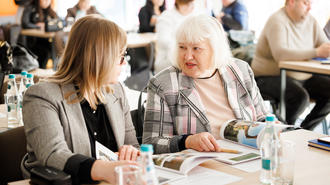


The Building Administrators’ School continues the efforts previously initiated by UNDP Moldova and its partners to strengthen the capacities of homeowners’ associations. In autumn 2025, more than 500 representatives of homeowners’ associations participated in a national training programme organized by UNDP Moldova and Green City Lab, in partnership with the National Centre for Sustainable Energy, with financial support from the Government of Denmark.
With the support of UNDP and the European Union, energy audits were conducted for 25 apartment buildings in Bălți, Chișinău, Strășeni, and Ceadîr-Lunga. Thanks to funding provided by the Government of Denmark, another 25 buildings are receiving support for energy audits.
Over time, UNDP and its partners have supported large-scale initiatives to promote energy efficiency in residential buildings in the Republic of Moldova. Together with the European Union, UNDP contributed to the testing and institutionalization of programmes such as Green Home and “Rabla for Household Appliances” Programme.
In partnership with the Global Environment Facility and the European Union, UNDP also contributed to the modernization of heating systems in ten apartment buildings in Chișinău and Bălți municipalities. As a result, more than 750 families now pay up to 30% less for heating and benefit from centralized hot water.


