

 Locations
From Scroll to Action: How Lebanese Youth Are Pushing Back Against Hate and Misinformation
February 18, 2026

As misinformation and hate speech deepen social tensions in Lebanon, young media students are stepping into an unlikely role—fact-checkers, ethical storytellers, and defenders of accuracy in a fragile information landscape.
In Lebanon’s divided media environment, misinformation travels fast—often faster than facts. In 2025, fifty young Lebanese media students were asked to do something rarely expected of youth: slow the spread of falsehoods and take responsibility for how stories shape trust, tension, and social cohesion.
The year-long initiative, launched by the United Nations Development Programme (UNDP) in partnership with the Dawaer Foundation and supported by the German Government through KfW Development Bank, framed media literacy not as a technical skill, but as a tool for prevention, accountability, and peacebuilding.
The training strengthened my critical thinking, especially when it comes to social media contentZainab Noureddine, participant
Training for a High-Stakes Environment
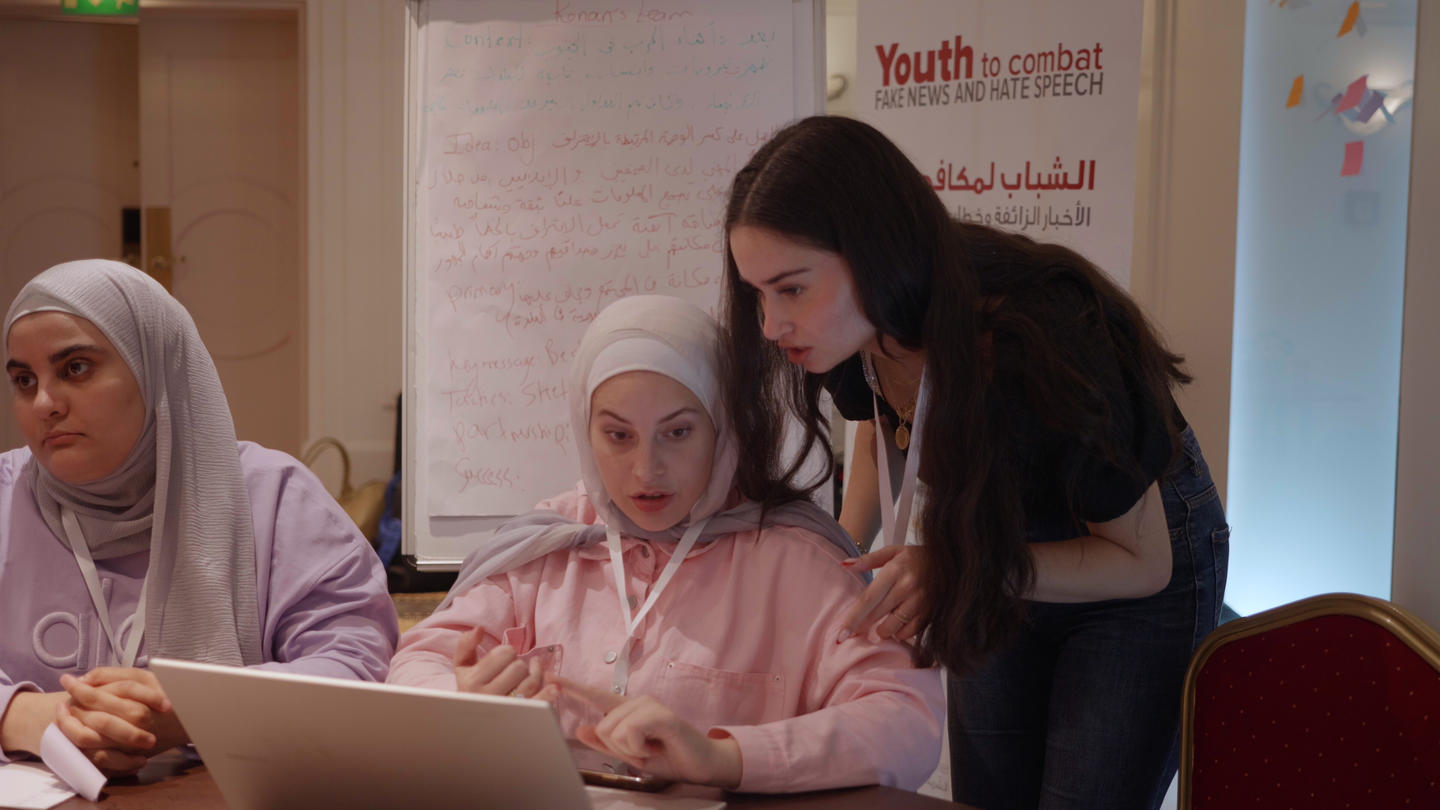
Participants came from across Lebanon, bringing different political views, regional identities, and media habits. Through intensive workshops, they examined how misinformation is manufactured, amplified, and monetized—and how algorithms reward outrage over accuracy.
Fact-checking tools were paired with conflict-sensitive reporting, pushing participants to interrogate language, framing, and assumptions.
“This year has been one of the most impactful years for me,” said Zainab Noureddine (23). “The training strengthened my critical thinking, especially when it comes to social media content.”
For many, verification became instinctive.
“I no longer take news as true simply because it comes from a trusted source,” explained Amal Nasrallah. “Verification became part of how I think—about news, and about everything.”
Others highlighted how the training reshaped daily habits.
“Even outside working hours, I return to original sources,” said Inass Kashat. “With manipulated images and fabricated audio becoming common, I now know how to detect misinformation—especially in times of conflict.”




Producing Media That Does Not Divide
Learning quickly turned into practice. Using mobile journalism techniques, participants produced more than 40 video reports for Salam wa Kalam, a digital platform promoting inclusive and peace-oriented narratives.
Reporting from Tripoli, the Bekaa, and beyond, the youth focused on lived realities rather than sensational headlines—choosing nuance over polarization.
“Mobile journalism changed how I see stories,” said Zeinab Hussein. “I learned that filming is not just capturing images—it’s understanding people, angles, and responsibility.”
For many, this was the first time their work was held to professional editorial standards.
“It stopped being about visibility,” one participant reflected. “It became about responsibility.”
With manipulated images and fabricated audio becoming common, I now know how to detect misinformation—especially in times of conflictInass Kashat, participant
Climate Narratives That Strengthen Resilience
Recognizing the growing impact of climate misinformation, the programme expanded into climate reporting and fact-checking. Fifteen participants received specialized training.
For Joyce Horkos (23), the shift was transformative.
“Climate change stopped being a slogan,” she said. “I began to see it in daily life—from the food we eat to the farmers near our homes.”
Reem Al Khatib (27) described how the training changed her perspective.
“We learned to distinguish between general environmental issues and climate change, and to question companies that claim to be ‘green’,” she said. “This will affect my work and my daily life.”
Joyce’s video story later won the Best Climate Change Storytelling Award, highlighting how accurate, human-centered narratives can strengthen resilience rather than fear.
From Training to Opportunity
The programme translated directly into real-world pathways. Several participants secured internships with international media outlets, including Agence France-Presse (AFP), while others joined national initiatives such as the UNDP-supported Sawab fact-checking platform.
Zainab Noureddine credits the programme with shaping her career direction.
“Winning a training opportunity with AFP was an exceptional experience,” she said. “It confirmed that this field truly aligns with who I am.”
Others took their skills into independent spaces. Ali Khalaf (21) applied ethical storytelling to his own digital platform, while Vanessa Kallas (24) emphasized the responsibility that comes with visibility.
“As a journalist, the programme strengthened my sense of responsibility to be a voice against fake news and hate speech,” Vanessa said. “It also helped me tell the stories of marginalized communities with dignity and accuracy.”
A Network Beyond the Workshops
Today, the programme’s impact extends far beyond its duration. Participants are training peers, educating families, and carrying ethical reporting practices into newsrooms and communities.
“I now share what I’ve learned with my family and my town,” Zainab said. “Countering misinformation starts close to home.”
As part of UNDP Lebanon’s broader peacebuilding and prevention efforts, and with continued support from Germany through KfW, more than 180 students nationwide have now been trained—forming a new generation of media actors equipped not to reproduce misinformation, but to resist it.
Related
content
content


