

 Locations
Association “Nijemi krik” shows that ilness is not the end
June 22, 2026

Association "Nijemi krik"
In addition to their illness, oncology and chronic disease patients often face social isolation, lack of support, and a daily life in which their needs go unnoticed.
One of them is Hasnija from Kalesija, a woman who, after being diagnosed with cancer, had to find the strength to live a new way of life. Two years ago, when she learned she had this disease, her life changed completely. Her days were reduced to long stays in the hospital on daily basis, receiving therapies, and medical examinations. Despite the uncertainty of what each new day would bring, Hasnija decided to bravely face her illness and joined the “Nijemi krik” Association in order to bring joy back into her life.
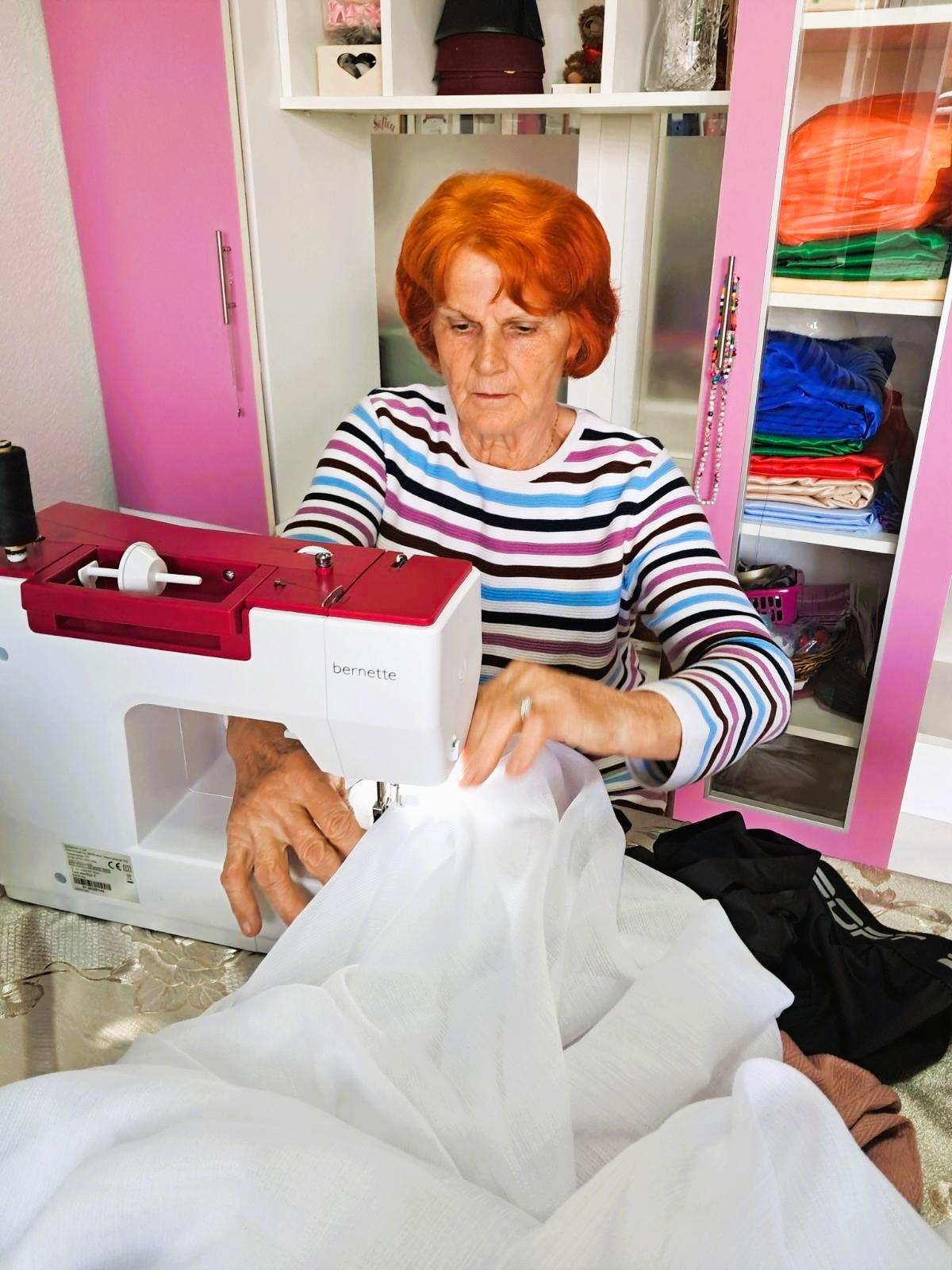
Photo: Sewing workshop
„Every Thursday we have sewing workshops. And we all truly look forward to that day. We laugh, we hang out. During those two hours, we forget about the illness, about everyday life and our reality," says Hasnija.
Her story is not unique. Many women who struggle with difficult diagnoses often remain invisible to society. After they finish the examinations and therapies, they are left to their own devices, without opportunities for socializing, support and activities that would help them forget the burden of the disease at least for a while.
The "Nijemi krik" Association from Kalesija wants to change that.
Since 2013, they have been working to help women diagnosed with cancer and other malignant diseases in their fight against the disease.
With the project "Through work, we overcome illness", which was financially supported by the European Union through the Regional Program on Local Democracy in the Western Balkans 3 - ReLOaD3, they want to improve support for women and, through creative workshops of sewing, socializing and mutual support, provide them with a space where they are not defined by their diagnosis. Here, they are friends, colleagues, mentors and support for each other.
Nezira is also one of the members of the Association. She has been dealing with a number of health problems for years: she is a heart patient, diabetic, asthmatic and has diagnosis of rheumatoid arthritis. At the sewing workshops, she finds what she needs most, which is a sense of belonging.
"I'm happy that there are workshops like this. It's an opportunity to help each other, involve new members and socialize. All this gives us strength and hope for a new day. It shows us that the disease is not the end," said Nezira.
Senada Aščić, representative of the "Silent Scream" Association, points out that the association gathers more than 70 women who have diagnosis of cancer or other chronic diseases.
"About 30 women regularly attend the trainings. Unfortunately, a large number of them are unable to attend activities due to their illnesses and the difficult therapies they undergo. Society often does not recognize them or their needs. That is why projects like this are extremely important. They show women, who are on the margins of society, that they are equal members of the community, but also that they can be useful and active in the environment in which they live," says Senada.
Two hours a week may not seem like much to some. But for Hasnija, Nezira and dozens of other women, those two hours mean a break from illness, a place where smiles are shared instead of worries and where the feeling of not being alone returns. As they say, very often the greatest help is not medicine, but a hand of support, a conversation and the knowledge that, despite everything, life still has its beautiful moments.
The ReLOaD3 program in Bosnia and Herzegovina is funded by the European Union and implemented by the United Nations Development Program (UNDP) in partnership with 14 municipalities and cities, including the Municipality of Kalesija.
Related
content
content


