

 Locations
A new project, supported by CDRI and UNDP, aimed at enhancing the disaster resilience of critical urban infrastructure systems in Thimphu, Phuentsholing, and Samste.
Flood-resilient urban infrastructure to be mainstreamed across three cities in Bhutan
September 30, 2025
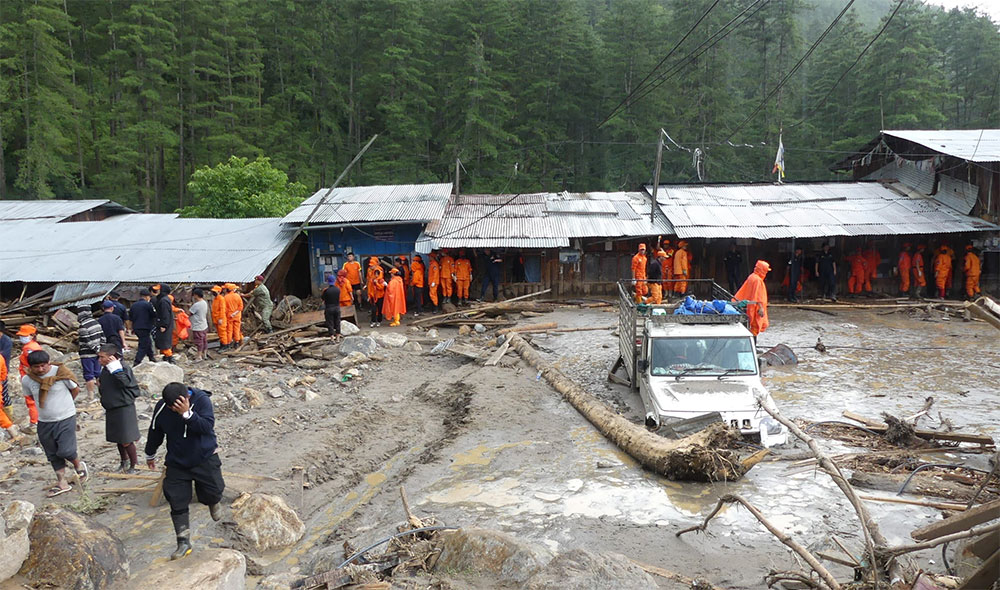
In the aftermath of a major flash flood that tore through Dechencholing community in Thimphu last summer. Bhutan is increasingly seeing floods and other climate-induced disasters as climate change intensifies.
30 September 2025, Thimphu: In a significant step towards enhancing urban flood resilience, Bhutan has launched a new project, a collaboration between the Royal Government of Bhutan and UNDP with support from the Coalition for Disaster Resilient Infrastructure (CDRI).
Led by the Department of Local Governance and Disaster Management (DLDGM), the project will strengthen the flood resilience of critical urban infrastructure in three cities: Thimphu, Phuentsholing and Samtse— home to over a quarter of Bhutan’s population.

From left to right: Karma Galay, Director General of DLGDM, Fadhil Bakeer Marker, UNDP Deputy Resident Representative and Pema, Exceutive Secretary of Phuentsholing Municipality
UNDP/Dechen Wangmo
This project is not only about safeguarding urban infrastructure; it is about protecting lives, livelihoods, and building liveable cities that are inclusive, sustainable and resilient. These cities will benefit from upgraded flood forecasting and early warning systems to manage climate-related emergencies. Their municipalities will have trained personnel, including city planners, engineers, disaster risk management officials and urban managers, to design, build and manage disaster-resilient infrastructure. They will also have enhanced capacity to promote inclusive planning with the municipal officials trained in gender-responsive and disability-inclusive infrastructure design.
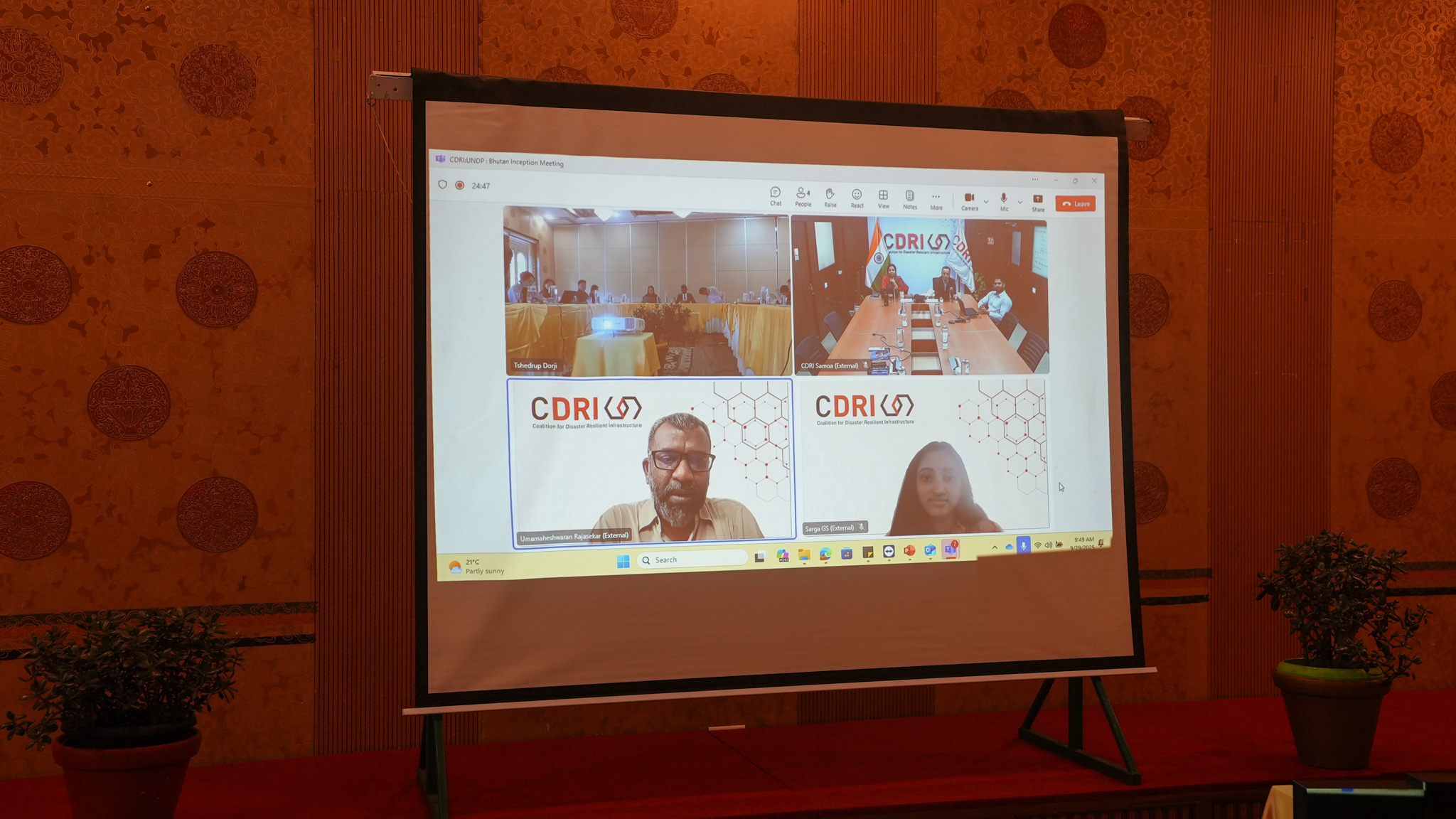
Dr. Umamaheshwaran Rajasekar, Head of CDRI’s Urban Programme and team joined the project inception meeting, held on 29 September 2025, remotely.
UNDP/Dechen Wangmo
A strategic investment in resilience
According to the Global Assessment Report on Disaster Risk Reduction (GAR) 2025, by the United Nations Office for Disaster Risk Reduction (UNDRR), every dollar invested in disaster risk reduction can save up to 3 to 15 dollars in future recovery costs.
With $640,000 in funding from CDRI’s Urban Infrastructure Resilience Program (UIRP), funded through the Infrastructure Resilience Accelerator Fund (IRAF), the project will strengthen the risk-informed planning, data-driven decision-making processes and early warning system for critical urban services (storm water system, urban infrastructure design, monitoring and operation and green urban open spaces) in Thimphu, Phuentsholing and Samtse.
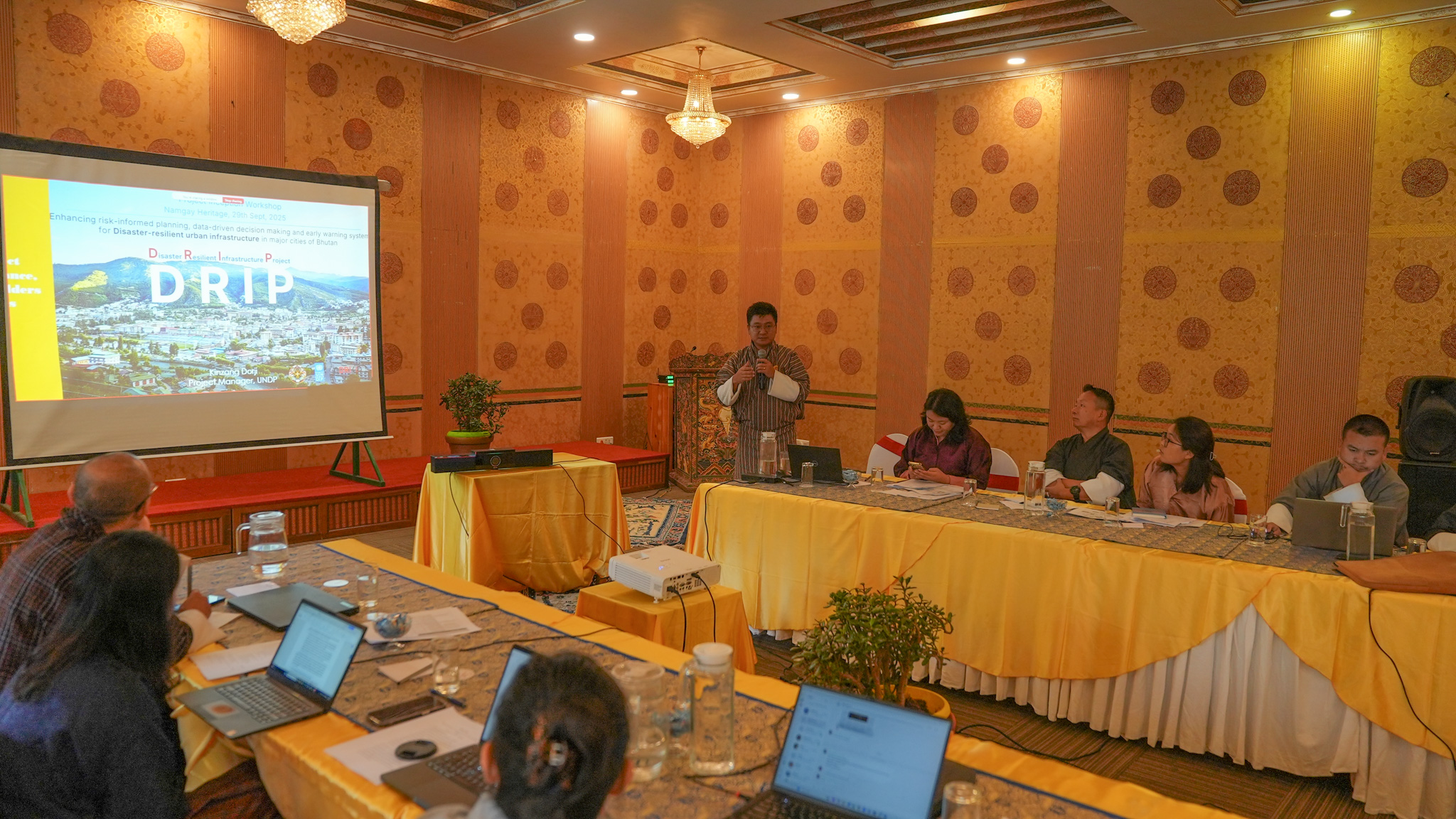
UNDP/Dechen Wangmo
At the project’s inception meeting held on 29 September 2025 in Thimphu, marking the start of project implementation, Director General Karma Galay of DLGDM thanked the CDRI and UNDP for their partnership. He highlighted the urgent need for Bhutan’s urban centres to be equipped with the tools and knowledge to manage growing disaster risks. “Our cities, originally planned for much smaller populations, are now under increasing stress, not only from climate-induced events, but also from rapid urbanisation and shifting socio-economic demands. That is why the project's focus on risk-informed planning, early warning systems and data-driven decision-making is not just relevant, it is essential.”
Dr. Umamaheshwaran Rajasekar, Head of CDRI’s Urban Programme, noted, “As the first UIRP project in a landlocked developing country within the high mountain region, this initiative marks a significant milestone. We hope it will inspire further efforts to build resilient and sustainable cities across the region.”
UNDP’s Deputy Resident Representative Fadhil Bakeer Marker described the initiative as a timely and strategic investment. “UNDP will work hand-in-hand with the project partners, communities and municipalities of three cities to ensure real impact on the ground. We are also committed to advancing gender and disability inclusion in infrastructure resilience so that no one is left behind.”
Bhutan is among the five countries (Bhutan, Brazil, Honduras, India, and Sri Lanka) to receive funding under the first Call for Proposals of CDRI’s Urban Infrastructure Resilience Program under the Infrastructure Resilience Accelerator Fund (IRAF), funded by the Government of India.
For media enquiries, please contact:
Ms. Dechen Wangmo, Communications and Partnerships Analyst, UNDP Bhutan; E-mail: dechen.wangmo@undp.org.
About DLGDM:
The DLGDM is the national coordinating agency for disaster management, working to strengthen national capabilities for prevention and response to disasters.
About CDRI:
CDRI is a global coalition dedicated to enhancing the resilience of infrastructure systems to climate and disaster risks. With 60 Members, it includes national governments, international organisations, and businesses collaborating to share knowledge, conduct research, and invest in disaster-resilient infrastructure. Members benefit from access to global expertise, funding, technical support, research opportunities, innovative solutions, and international best practices.
Coalition for Disaster Resilient Infrastructure, an International organisation recognised by the Government of India, is headquartered in New Delhi, India. The Prime Minister of India officially launched CDRI during the 2019 UN Climate Action Summit.
About UNDP:
UNDP is the leading United Nations organisation fighting to end the injustice of poverty, inequality, and climate change. In Bhutan, UNDP has been partnering with the Royal Government of Bhutan and its people since 1973 to advance sustainable, inclusive, and resilient development. Tapping into our broad network of experts and partners in 170 countries, we help Bhutan to accelerate its development results through innovation, digitalisation, development financing, partnerships, cutting-edge global knowledge, and technical expertise.
Related
content
content


