

 Locations
Empowering Communities Through Sustainable Infrastructure and Local Partnerships
UNDP Resident Representative Visits Climate-Resilient Sanitation Facility at Oelkaem School in Oé-Cusse
June 12, 2025

Photo session with UNDP Timor-Leste Resident Representative, Ms. Katyna Argueta, alongside students of Oelkaem School, local authorities, and community members of Suco Taeboco, Posto Administrativo Pantemakasar, Special Administrative Region of Oé-Cusse Ambeno (RAEOA).
Julio Guterres/UNDP Timor-leste
Oé-Cusse, 2 June 2025 - The United Nations Development Programme (UNDP) Resident Representative in Timor-Leste, Ms. Katyna Argueta, visited a rehabilitated school sanitation facility in Pantemakasar, Suco Taeboco, located in the Special Administrative Region of Oé-Cusse Ambeno (RAEOA). This visit is part of the UNDP’s Community Infrastructure for Resilience Project (CIREP), funded by the Government of Japan.
The CIREP project aims to strengthen the resilience of rural communities by enhancing access to basic services, including education, health, water, and sanitation. Since March 2025, the project has been implementing 11 construction schemes across four municipalities. Five of these are in Oé-Cusse, including four school sanitation facilities in Suco Bobocase (Bobola), Bobometo, Taeboco (Oelkaem), and Lelaufe, and one rainwater harvesting system in Suco Bobocase (Bobomanat).
During her visit to Oelkaem School in Suco Taeboco, Ms. Argueta observed the newly refurbished sanitation facility, which includes gender-separated latrines and a water supply system designed to promote climate resilience and environmental sustainability.
“We are very grateful for the UNDP’s visit and support,” said Mr. Mateus Naz, Chief of Suco Taeboco. “We would like to extend our sincere appreciation to the Government of Japan and UNDP for this vital infrastructure that responds to the community’s needs and improves our economic and living conditions. Through the Community Employment Programme, many in our community have gained job opportunities, which has significantly contributed to our local economy. We hope UNDP continues its support in other areas such as infrastructure, education, and access to information, particularly as Suco Taeboco remains a remote area with limited accessibility.”

UNDP Timor-Leste Resident Representative, Ms. Katyna Argueta, accompanied by the Chief of Suco Taeboco, Mr. Mateus Nas, school teachers and coordinator, representatives from the RAEOA Education Authority, and other relevant stakeholders, during the visit to the rehabilitated sanitation facility and newly installed water tank at Oelkaem School.
Julio Guterres/UNDP Timor-Leste
Ms. Emerenciana Maria Tanec, a teacher at Oelkaem School, noted: “The rehabilitated sanitation facility enables us to maintain a safe and clean environment for students.” The refurbishment is expected to benefit 433 primary and secondary students, including 214 female students.
As part of its commitment to empowering local communities, the project also provided short-term employment opportunities through the Community Employment Programme. In Suco Taeboco, 464 individuals - 54% of whom were women - received basic vocational training and practical work experience, helping to strengthen sustainable livelihoods.
“This initiative provided real opportunities for vulnerable women to participate and contribute meaningfully,” said Ms. Paulina Sana, a beneficiary of the Community Employment Programme. “The collaboration between community members and suco authorities has been positive, and the impact is directly felt in our daily lives.”

Ms. Paulina Sana, a beneficiary of the Community Employment Programme in Suco Taeboco, shares her experience during the visit, highlighting how the initiative created meaningful opportunities for vulnerable women and strengthened community collaboration.
Julio Guterres/ UNDP Timor-Leste
Ms. Argueta emphasized the significance of the community’s involvement: “We deeply appreciate the participation of local communities, especially the active involvement of many women. This project is a result of strong partnerships between the Government of Japan, the Government of Timor-Leste, and UNDP. Ultimately, it is the communities themselves who are at the heart of this initiative, and they are its primary beneficiaries.”
By August 2025, a total of 25,340 individuals - comprising 12,768 females across 6,118 households in Oé-Cusse - are expected to benefit from the five ongoing construction projects, with a total investment of approximately US$149,366.72. Looking ahead, the project will implement 15 construction schemes in Oé-Cusse by 2027, with an estimated cost of US$532,172.10.
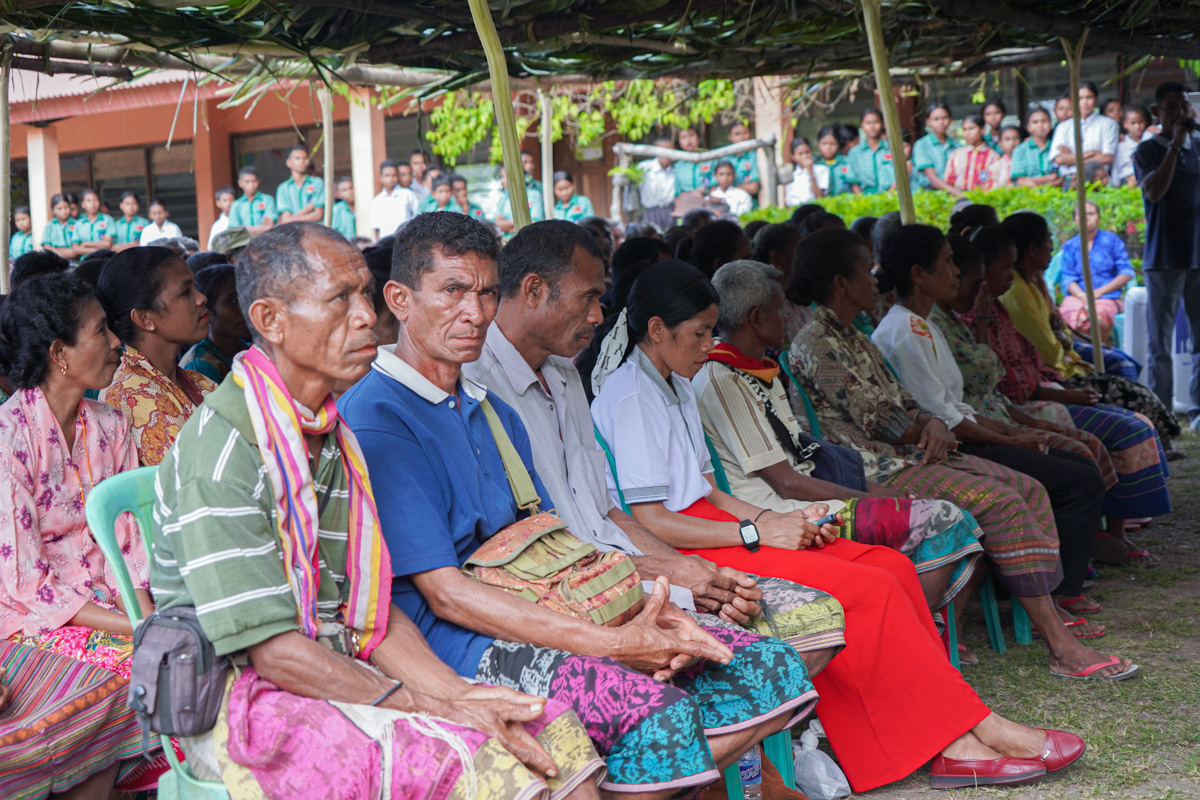
Community members of Suco Taeboco - including women and men - actively participating in a dialogue session with UNDP at Oelkaem School, Posto Administrativo Pante Makasar. The engagement reflects strong local ownership and collaboration at the heart of the CIREP initiative.
Julio Guterres/ UNDP Timor-leste
About the UNDP-CIREP Project
The Community Infrastructure for Resilience Project (CIREP) (2023–2027) strengthens rural resilience by improving community infrastructure and expanding access to essential services in education, health, water, and sanitation. With financial support of US$5 million from the Government of Japan, the project will implement 46 new or rehabilitated community infrastructures in Bobonaro, Ermera, Liquiça, and RAEOA (Oé-Cusse).
Related
content
content


