

 Locations
More than minerals: How Singida’s women are building safer future from the ground up
April 20, 2026

A shared moment at the close of the training, bringing together partners, facilitators, and participants committed to safer and more responsible small‑scale mining in Singida.
For years, Eva Ngoma mined gypsum in the pits of Singida, keenly aware of the risks she took every day. Like many women in the region’s artisanal mining sector, she often worked with unstable ground underfoot and the threat of heavy, unsupported debris overhead.
“I used to see it as a cost to bring down the debris from up there,” Eva admits. “But from the training, I have understood that it is better if I reduce that debris so that I can mine safely.”
Eva’s story captures the life-or-death realities that have long defined small-scale mining in central Tanzania. While the sector is a backbone of the local economy—providing vital income for women and youth—it has also been a world of unstable pits, inadequate equipment, and limited knowledge.
But the new chapter is being written. On 16 - 17 April 2026, a hands-on training workshop, “Building Skills for Safe and Profitable Mining,” brought together 78 women and young miners lke Eva. Organized by UNDP, the Mining Commission of Tanzania, and the Singida Regional Administration, the event was more than just a workshop – it was marked a significant step forward in addressing long‑standing challenges facing the sector such as unsafe working conditions, limited technical capacity, low income returns, and barriers to formalization—while placing women and youth at the center of sustainable and safe livelihood.
“Small‑scale mining plays an important role in Singida’s economy, but this work must never put human lives at risk,” commented Halima Dendego, Regional Commissioner of Singida “Improving safety, health and environmental practices at mining sites is not optional—it is a responsibility we all share.”
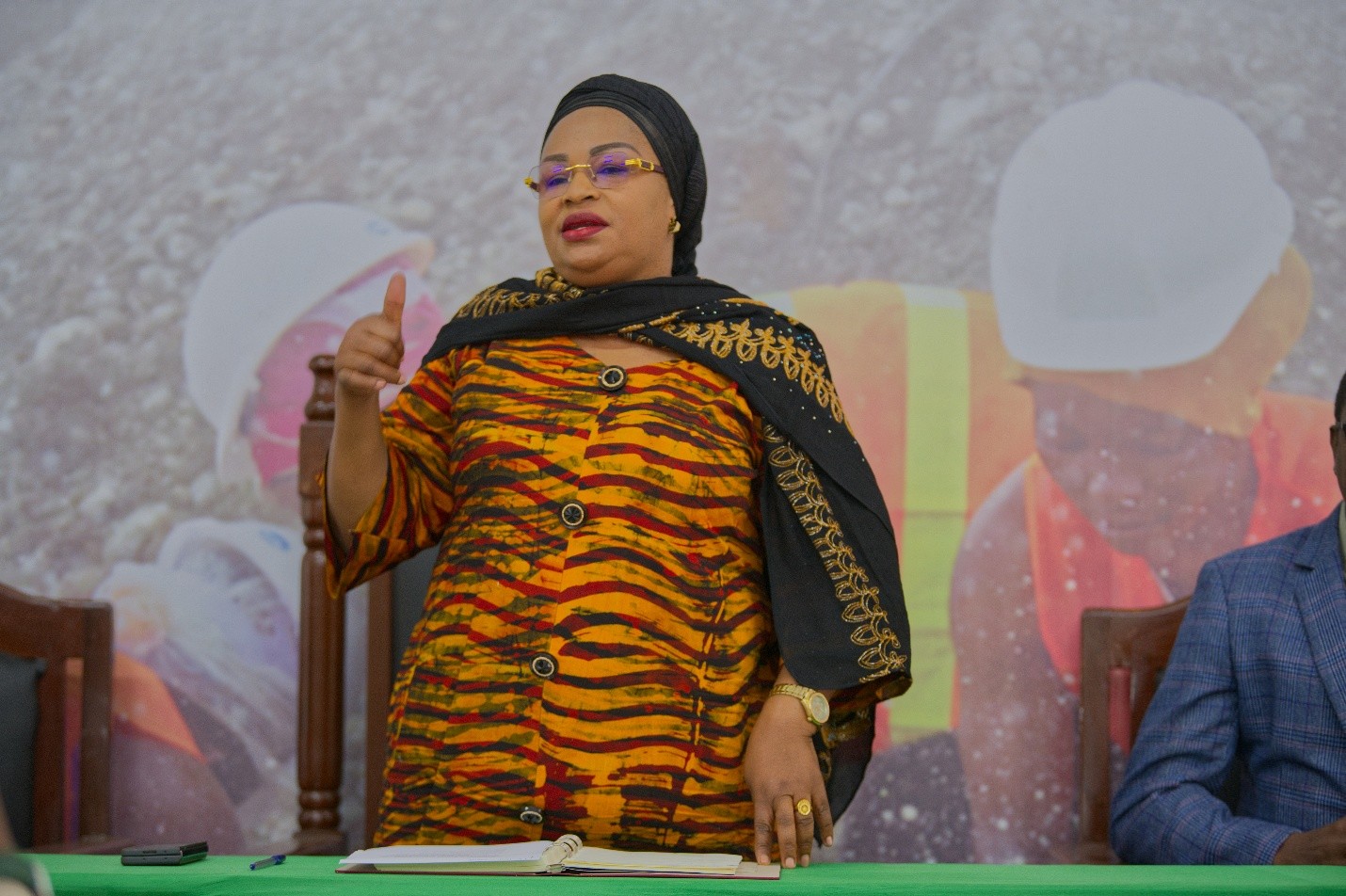
Singida Regional Commissioner Halima Dendego delivering key remarks on safety, skills, and responsible small‑scale mining during the training workshop in Singida.
From risky pits to life saving skills
The two‑day training was designed to directly respond to these realities.

Eng. Lameck Maduhu highlighting the critical link between mine safety, environmental protection, and economic stability during the Singida training workshop.
On the first day, participants practiced using proper Personal Protective Equipment (PPE), formany , this was the first time they had ever handled a hard hat or safety gloves. Led by local engineers, they learned to identify hazards, design safer excavation slopes and administer first aid for common mining injuries.
“The main topic we discussed is regarding the strengthening of safety, health, and the environment in their mining areas. As we know, mining activities take place in environments with many hazards, and many accidents have been occurring in those areas, costing people's lives and sometimes halting mining operations, which leads to economic stagnation because of those activities stopping,” Mining Engineer and Inspector of Mines and Explosives from the Singida Regional Mining Office, Eng. Lameck Maduhu said.
For women, who are often concentrated in the most grueling and least-rewarded tasks like crushing stones, the training provided a rare, supportive space to discuss workplace risks.

Participant engagement during group discussions focused on mine safety and responsible practices.
Perhaps most transformative was the hands‑on ore identification session. Using locally sourced mineral samples, participants practiced simple visual and physical tests to distinguish valuable gypsum, kaolin and limestone from waste rock. This knowledge is power – it gives miners the confidence to negotiate better prices and reduces their exploitation by middlemen.
Building businesses, not just digging
Safety was just the starting point. The second day focused on turning mining into a sustainable business. Licensing officers from the Mining Commission demystified the formalization process, walking participants step-by-step through applications for licenses and environmental compliance.
Equally the training addressed a key barrier for women: access to finance and cooperative formation. Participants explored how to form cooperatives and develop simple business plans to access loans from local banks, SACCOs and Village Community Banks (VICOBA). The impact was immediate, with several groups-initiated discussions to register as formal cooperative – a first step toward collective bargaining power and shared prosperity.
Crucially, the training addressed a key barrier for women: access to finance. Participants explored how to form cooperatives and develop simple business plans to access loans from local community banks. The impact was immediate, with several groups beginning discussions to register as a formal cooperative—a first step toward collective bargaining power and shared prosperity.
The workshop also created a space for honest dialogue about the unique challenges women face. Participants spoke openly about being excluded from higher-value roles and decision-making, despite contributing immense labor.
"These challenges are not due to lack of ability," one group concluded, "but are shaped by social norms and unequal access to resources."
By identifying these structural barriers, the women and men in the workshop began to chart a new course—one where mining sites are not just safer, but also more equitable and inclusive. For women like Eva Ngoma, the training was not just about learning to remove debris from a pit; it was about removing the obstacles that have stood in the way of their safety, their profit, and their power for far too long.
Related
content
content


