

 Locations
Youth Igniting a Growth Revolution
Event Report: TICAD9 Thematic Event - Creativity and Entrepreneurship
September 18, 2025

At a Glance
The session “Creativity and Entrepreneurship” was held on August 20, 2025, in Yokohama as an official thematic event of the nineth Tokyo International Conference on African Development (TICAD9). Recognizing that over 60% of Africa’s population is under 25, the discussion highlighted both the barriers and opportunities for African and Japanese youth to drive change through creativity and entrepreneurship. It also emphasized that Japanese universities are innovating and advancing creative expression, research, and early stage and startup businesses. This event gathered intellectuals, student entrepreneurs, cultural creators, and innovation leaders from Africa and Japan, along with 145 participants, to explore the collaboration for inclusive growth, market linkages, and youth empowerment.
Speakers:
Ahunna Eziakonwa, UN ASG / UNDP Director of the Regional Bureau for Africa
Patoranking, UNDP Goodwill Ambassador for Africa
Ms. Natalie Jabangwe, CEO timbuktoo Africa Innovation Foundation
Mr. Shoma Kato, 3rd-year Ph.D. student in Multidisciplinary Sciences, The University of Tokyo
Mr. Takuro Hamada, 1st-year Master’s student in Chemistry & Biotechnology, The University of Tokyo
Ms. Stephina T. Warner, Director of the UniPod (University Innovation Pod) Liberia
Dr. Lawrence Nderu, Founder of JHUB Africa, Innovation hub at JKUAT in Kenya
Ms. Korty EO, Filmmaker / Founder of Any Production
Mr. Olufikayo Adeola, Cofounder of Kugali Media
Mr. Sam Onyemelukwe, Senior Vice President of Global Business Development, Trace Africa
Ms. Aoi Narita, Sega Sammy Holdings
Mr. Jimmy M. Muteba, Co-founder and CEO of Moodswing
Ms. Fatou Haidara, Deputy Director-General and the Managing Director of the Directorate of Global Partnerships and External Relations, UNIDO
Moderators:
Ms. Folly Bah Thibault, Journalist / Education Advocate Commentary
Mr. Satoshi Shinada, Co-founder and General Partner, Kepple Africa Ventures
Opening
Opening remarks were delivered by Ahunna Eziakonwa, UN ASG / UNDP Director of the Regional Bureau for Africa, who highlighted Africa’s demographic advantage as a “demographic superpower.” She emphasized that youth innovation and entrepreneurship should be central and highlighted the dual power of research-driven innovation and creative industries, with young people transforming academic knowledge into market-ready solutions. She called to support and amplify spaces where young creativity and entrepreneurship can thrive.

Ahunna Eziakonwa, UN ASG / UNDP Director of the Regional Bureau for Africa, delivering opening remarks
Another remark was delivered by Patoranking, UNDP Goodwill Ambassador for Africa and one of Africa’s most multifaceted artists in Africa, pointing out that Africa’s youth are not just the future but are already shaping the present by turning challenges into opportunities. He concluded with three stimulating messages: innovation knows no borders, creativity grows through collaboration, and the future belongs to those bold enough to shape it.
Knowledge in Action: Innovation from Campus to Market
Ms. Stephina T. Warner, Director of the UniPod (University Innovation Pod) Liberia, shared that UniPod serves as one-stop hub that cuts across all pillars of innovation: academia, business or entrepreneurship, and policy advocacy. To strengthen connections with government, UniPod engages officials and key stakeholders to interact with innovators and refine their ideas through initiatives like tech summits. She also underscored that African and Japan can collaborate through complementary strengths by noting that Africa has a young population which brings entrepreneurship and innovation opportunities, while Japan is advanced in technology as well as rich innovation ecosystems and funds.
Next, Dr. Lawrence Nderu, Founder of JHUB Africa, Innovation hub at JKUAT in Kenya, emphasized the need to reform university education through partnerships between academia and industry to address real-world problems. As examples, he pointed to innovation hubs and curricula co-developed with industry to bridge the gap between academic learning and societal needs.
Ms. Natalie Jabangwe, CEO timbuktoo Africa Innovation Foundation, emphasized Africa’s economic growth is primarily driven by small and medium enterprises and intentional investment in startups is essential for Africa’s future. On cross-border initiatives, she expressed optimism that regional partnerships are crucial for helping African startups expand beyond local markets with initiatives like timbuktoo providing access to new markets, networks, and policy support to help them scale globally.

Ms. Stephina T. Warner, Mr. Shoma Kato, Ms. Natalie Jabangwe, and Ms. Folly Bah Thibault
The discussion turned to AI where Dr. Nderu highlighted its potential not only to improve public services in Africa but also to create opportunities for startups and youth, which also requires investment in infrastructure. Building on this, Ms. Jabangwe noted that AI will be a cross-cutting vertical, addressing fundamental needs such as affordable internet access must come first as many in Africa cannot sustain AI based solutions.
When asked about policymakers' involvement, Ms. Jabangwe expressed her positive perspectives about Africa’s evolving policy environment, noting that younger generations are entering government and demanding accountability, which is leading to more proactive and positive government involvement.
Mr. Shoma Kato, 3rd-year Ph.D. student in Multidisciplinary Sciences at the University of Tokyo, shared that his motivation to bridge research and business came from uncertainty about the real-world impact of his work and noted that the University of Tokyo provides a strong support system for entrepreneurship like the AYSEP program. He also observed that the generational gap is narrowing as young people take more control with the increased cross-generational communication.
Mr. Takuro Hamada, 1st-year Master’s student in Chemistry & Biotechnology at the University of Tokyo, identified insufficient infrastructure as a major barrier to his business and stressed the need for building the necessary facilities, organized infrastructure, transportation, and financial support for startup growth, emphasizing that funding should be structured in a mutually beneficial way.
To conclude the first part of the session, Mr. Satoshi Shinada, Co-founder and General Partner, Kepple Africa Ventures, compared the Japanese and African startup ecosystems, explaining that Japanese founders often have strong academic backgrounds but lack exposure to real-world problems, while African founders face many challenges but need more entrepreneurial tools and support due to limited job opportunities.
Creative Futures: Africa Unmuted in the Global Economy
At the beginning of the second section, each panelist gave lightening talks. Ms. Korty EO, Filmmaker / Founder of Any Production, described Africa as one of the world’s fastest-growing media markets, with talented creators in film, music, and fashion. She emphasized that investing in African creativity is not charity, but a valuable investment with significant potential for global impact.
Mr. Olufikayo Adeola, Cofounder of Kugali Media, shared that the company was founded by fans of comics who wanted to showcase African stories through art and animation. He positioned Africa as the next frontier for global storytelling by mentioning that their first comic project gained wide attention and led to their breakthrough partnership with Disney on Iwaju, Disney’s first external collaboration of this kind.
Next, Mr. Sam Onyemelukwe, Senior Vice President of Global Business Development, Trace Africa, shared his personal journey from aspiring artist to business leader, where he found his true strengths, highlighting the dramatic rise of African music and culture on the world stage and how young Africans now see real opportunities to become global superstars.

Mr. Satoshi Shinada, Ms. Aoi Narita, Mr. Jimmy M. Muteba, Mr. Olufikayo Adeola, Ms. Korty EO, and Mr. Sam Onyemelukwe
The session then moved into a panel discussion. Mr. Jimmy M. Muteba, Co-founder and CEO of Moodswing, introduced his AI-powered music and communication startup that helps labels, artists, and producers turn their music into revenue by integrating it into real-time conversations. Using AI-driven mood detection, Moodswing enhances communication by tailoring background music to match users’ mood or marketing goals. He discussed the financial difficulties musicians face, which have driven them to be more independent and creative in monetizing their work.
Ms. Aoi Narita, Sega Sammy Holdings, shared how her passion for promoting African arts in Japan began with her first encounter with African music, which sparked her curiosity about Afrobeats. She also highlighted the differences between concert experiences in Nigeria and Japan, especially in audience engagement and merchandise sales, in which she sees significant opportunities to introduce new revenue models from Japan to grow Africa’s music industry. Mr. Muteba added that Japan’s strong enthusiasm for merchandise is not common in many African countries. In response, Mr. Onyemelukwe emphasized the potential for collaboration between Japanese companies and African startups, especially in developing fandom and merchandise sectors.
When asked about how to convince investors, Mr. Muteba noted that attracting investment for creative and cultural startups in Africa is challenging, as most investors prioritize large fintech deals. He stressed the importance of building networks and participating in programs like timbuktoo to access funding and opportunities. In response, Mr. Adeola emphasized the need to demonstrate how creative projects can generate multiple revenue streams like video games, merchandise, and books since investors are mainly interested in profitability. Ms. Korty EO added that in the creative industry, investors focus less on ideas and more on a creator’s ability to execute and deliver high-quality work, making it essential to showcase capability.
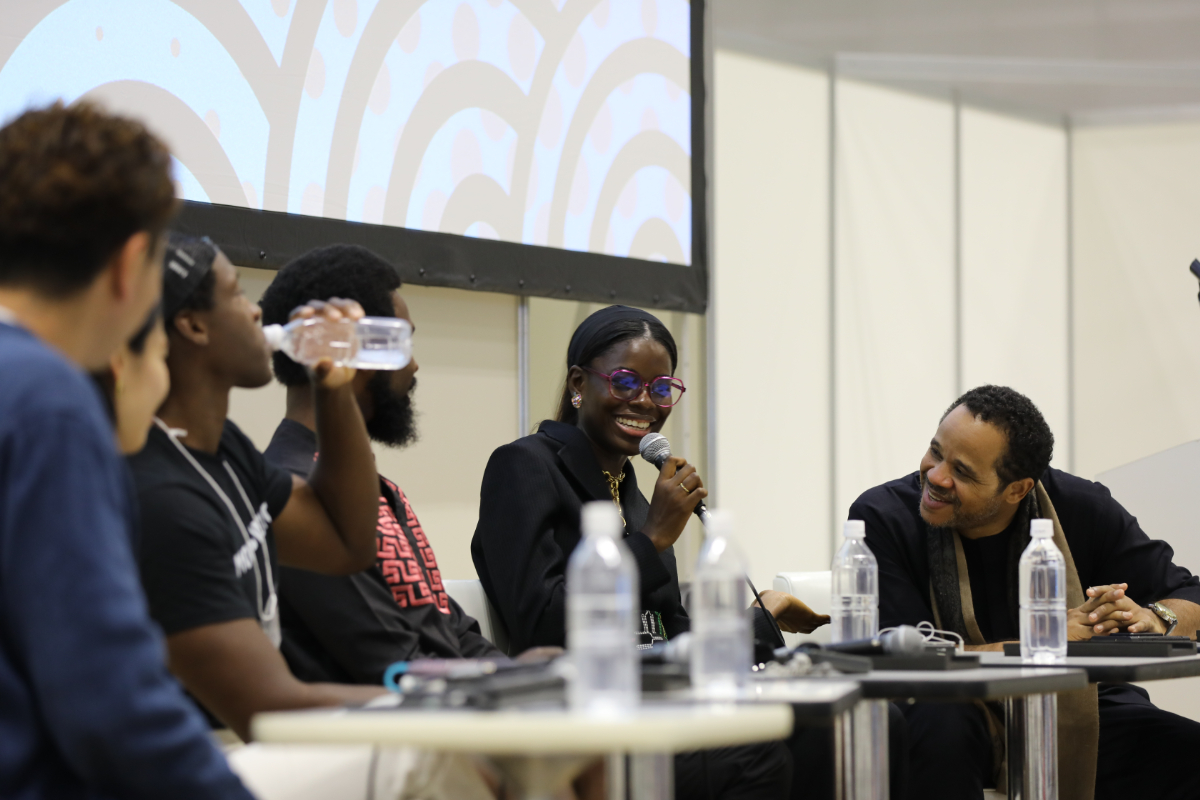
Ms. Korty EO, sharing her ideas
Closing
In her closing remarks, Ms. Fatou Haidara, Deputy Director-General and the Managing Director of the Directorate of Global Partnerships and External Relations, UNIDO, emphasized the importance of supporting Africa’s youth and entrepreneurs by drawing on her experience as a young minister in Mali. She stressed that fostering entrepreneurship, creativity, and partnerships is essential for the continent’s development and called for more collaboration to provide financing, capacity building, and networking for young entrepreneurs.
To conclude, this session explored how the innovation and creative industries led by youth would foster inclusive growth. The speakers with diverse backgrounds recognized that the strengths of both Africa and Japan can complement each other to tackle shared challenges. Particularly, the discussion highlighted the potential for the cross-continental exchange, where African youth bring creativity and urgency, while Japanese universities and companies bring infrastructure, technology, and new markets, demonstrating that Africa-Japan partnerships can work as a bridge to transform creativity into sustainable development.
Date/Time: 13:30-16:00 JST, August 20, 2025
Location: Pacifico Yokohama, Exhibition Hall D
Format: Hybrid (In-person:74, Online:71)
Language: English, Japanese, French
Co-Organizers: UNDP, UNIDO, University of Tokyo, Keizai Doyukai
Related
content
content


