

 Locations
Responding to climate-induced loss and damage
August 15, 2025
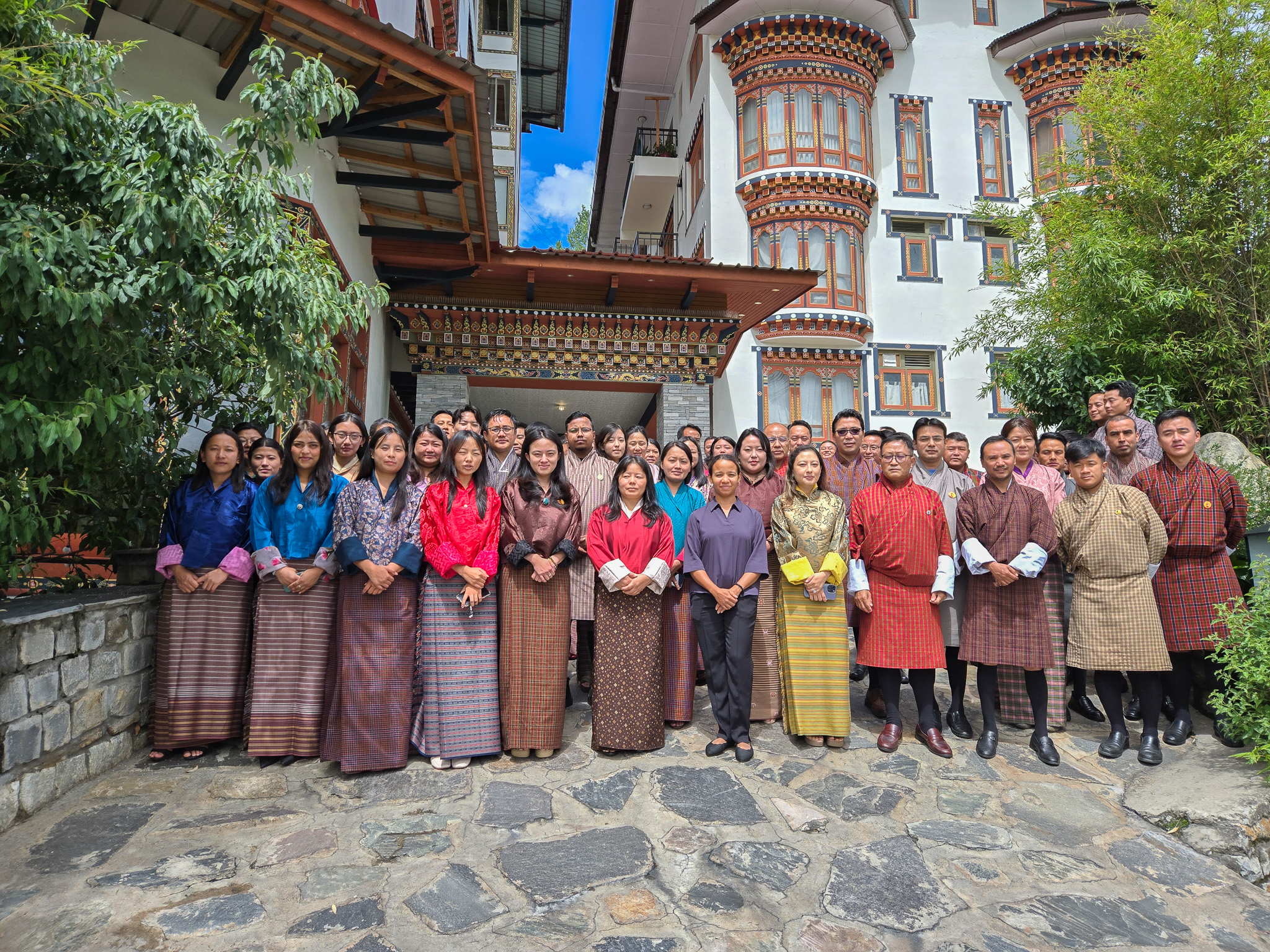
Over 70 stakeholders from across Bhutan gathered in Thimphu for the National Workshop on Climate-Induced Loss and Damage, hosted by DECC and UNDP Bhutan.
Thimphu, Bhutan
A landmark three-day National Stakeholder Workshop on Climate-Induced Loss and Damage (L&D) concluded in Thimphu today, bringing together over 70 participants from across Bhutan. Jointly organised by the Department of Environment and Climate Change (DECC) and UNDP Bhutan, the workshop marked an important step towards developing Bhutan’s national readiness for addressing climate-induced loss and damage.

Participants engage in group discussions during the National Workshop on Climate-Induced Loss and Damage, exchanging ideas on governance, financing, and policy integration to shape Bhutan’s national readiness.
Defining Loss and Damage for Bhutan
Participants engaged in conceptual sessions to contextualise Loss and Damage for Bhutan, leading to the drafting of a national definition. This included identifying distinctive “L&D signatures”—a combination of climate-induced impacts and hazards shaped by Bhutan’s unique geography and development context.
Establishing Governance and Coordination
A significant outcome of the workshop was the creation of a national L&D Task Force. The Task Force, guided by a proposed Terms of Reference, will coordinate sectoral inputs, oversee data and information systems, and support the integration of Loss and Damage into national policies and plans.
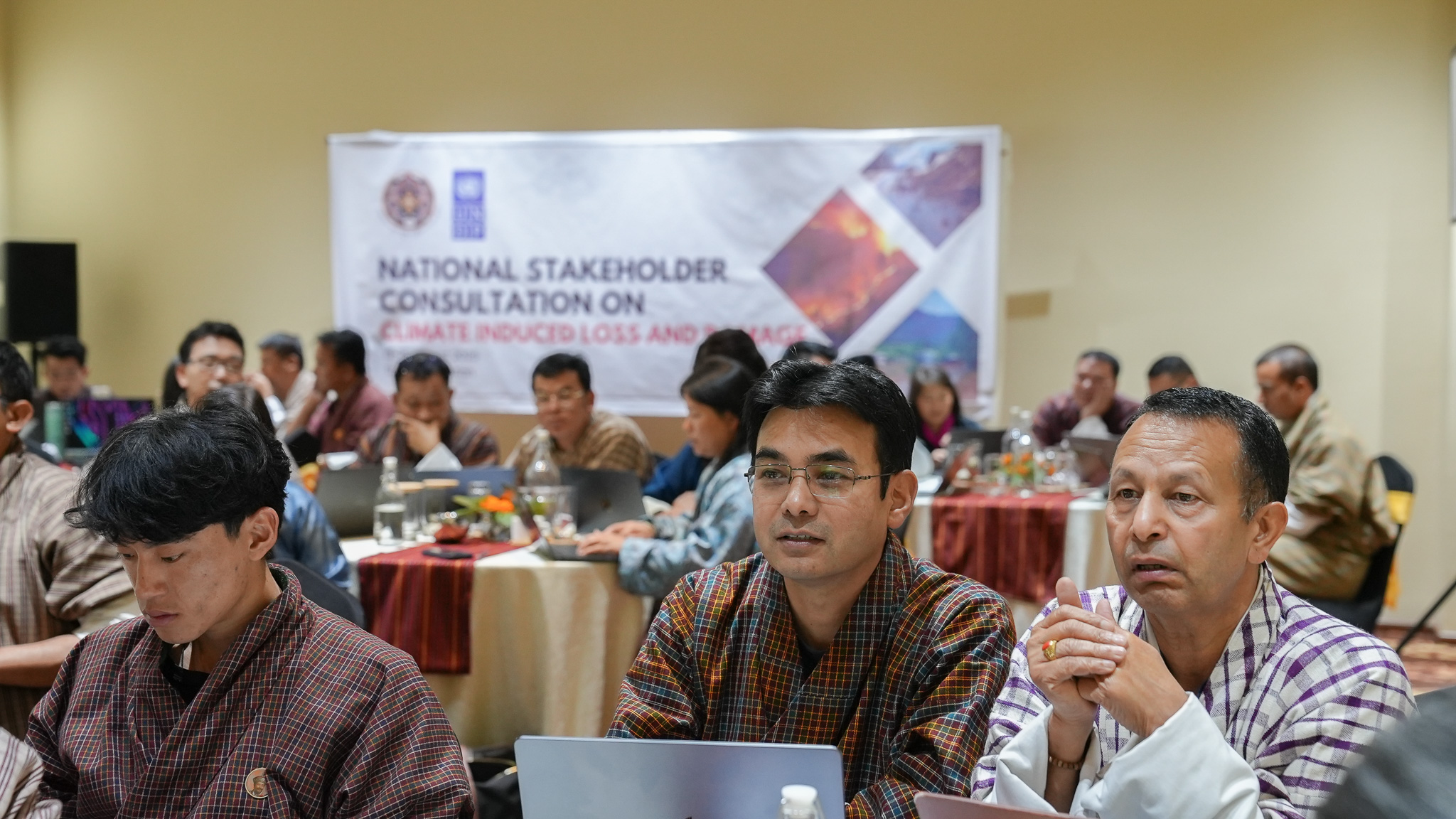
Engaged in dialogue, participants explore strategies for integrating Loss and Damage into sectoral plans and policies during a breakout session.
Exploring Global Finance Mechanisms
The workshop also introduced participants to global support channels, including the Fund for Responding to Loss and Damage (FRLD) and the Santiago Network on Loss and Damage (SNLD). Discussions centred on how Bhutan could access these mechanisms through appropriate modalities, eligibility criteria, and project concept development.
Integrating L&D into Policies and Plans
Stakeholders examined opportunities to embed L&D into Bhutan’s climate and development policies, including Disaster Risk Reduction (DRR) strategies, Nationally Determined Contributions (NDCs), and adaptation plans. Institutional mapping exercises highlighted mandates, gaps, and entry points across agencies such as the Ministry of Energy and Natural Resources, the Ministry of Agriculture and Livestock, the Ministry of Infrastructure and Transport, National Centre for Hydrology and Meteorology.

Kelly, lead facilitator, guides a session during the National Workshop on Climate-Induced Loss and Damage, helping participants navigate key concepts and readiness for Bhutan’s national approach.
Building Capacity and Developing Pipelines
Through hands-on exercises, participants strengthened their technical knowledge of global frameworks and indicators for measuring L&D. Sector representatives also identified challenges and opportunities for institutional readiness. The final day focused on identifying priority sectors, interventions, and early-stage project pipelines to access global L&D funding mechanisms.
“The excellent outcomes of this workshop testify to Bhutan’s readiness and commitment to mobilise resources to address escalating climate-induced loss and damage through an inclusive, country-owned, bottom-up process,” said Kelly Dorkenoo, International Expert on Loss and Damage and facilitator of the workshop.

Netra Sharma, Project Coordinator for NDC 3.0, contributes to discussions on aligning Loss and Damage with Bhutan’s national climate priorities.
Towards a National Framework on Loss and Damage
The workshop reinforced the importance of inclusive engagement, with contributions from central agencies, CSOs, local governments, and the private sector. It sets the stage for Bhutan’s ongoing national L&D assessment and future framework, positioning the country to mobilise international resources and strengthen resilience. A major milestone identified is the integration of Loss and Damage into Bhutan’s third Nationally Determined Contribution (NDC 3.0), underscoring the nation’s commitment to climate justice and resilience.

As the workshop concludes, participants reflect on key outcomes and chart a collective path forward to strengthen Bhutan’s resilience to climate-induced loss and damage.
The DECC and UNDP Bhutan will continue working closely with the Task Force and partners to advance this agenda and ensure Bhutan is prepared to respond to the growing impacts of climate change.
For more information, please contact:
Sonam Y Rabgye, sonam.rabgye@undp.org | Strategic Planning and Partnerships Specialist | UNDP Bhutan
Langa Dorji, langadorji@moenr.gov.bt | Deputy. Chief Environment Officer, Department of Environment and Climate Change (DECC), Ministry of Energy & Natural Resources


