

 Locations
Japan, UNDP aid Caloocan in improving waste management and reduction
September 28, 2023
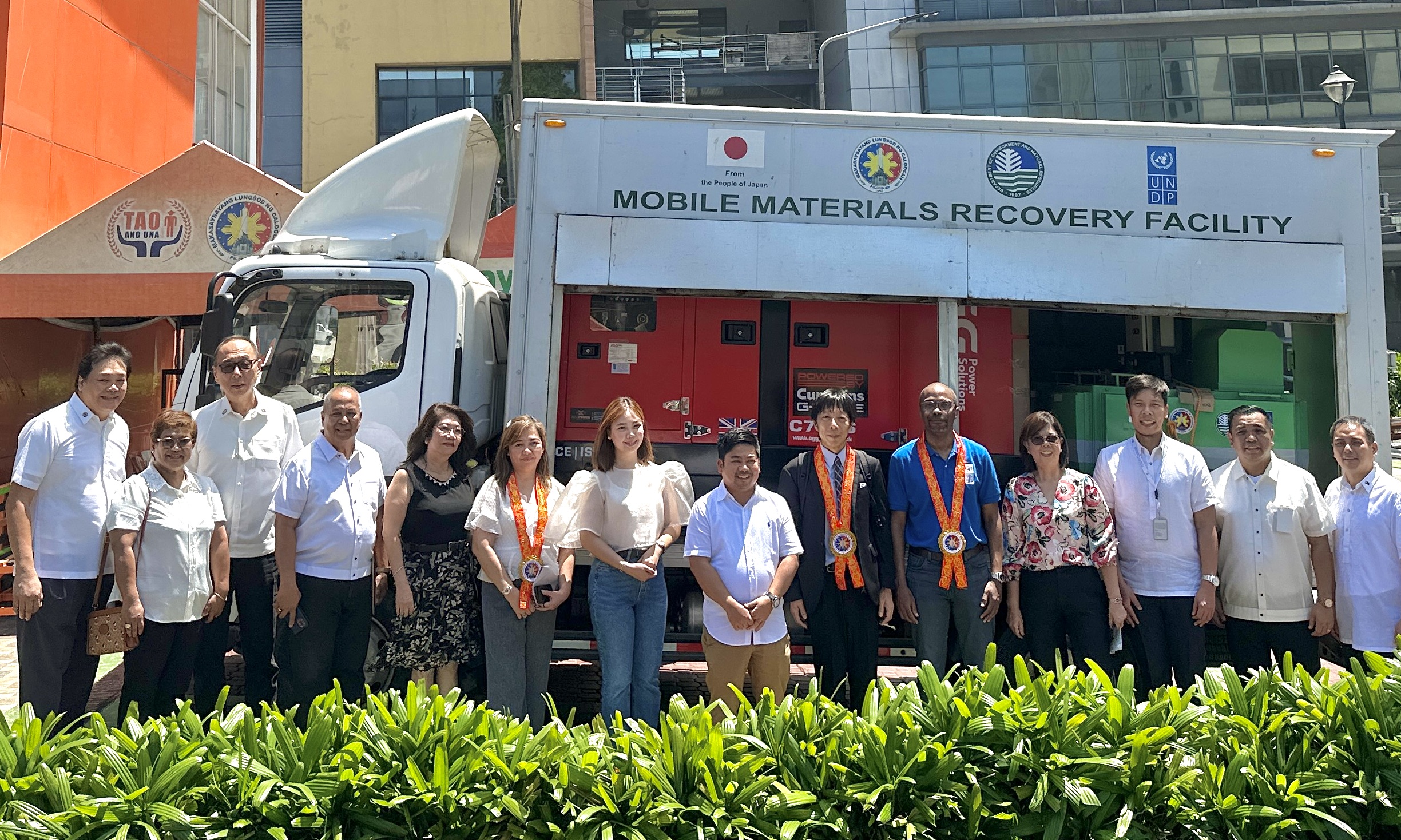
Caloocan City – The United Nations Development Programme (UNDP) in the Philippines handed over a mobile Materials Recovery Facility (MRF) and Plastic Melter to the local government of Caloocan City to support their efforts to transition towards sustainability and circular economy.
The mobile MRF – equipped with a multi-purpose shredder, glass pulverizer, and generator set – and the Plastic Melter will help communities in Caloocan City to recycle and process plastic and glass waste into useful items such as school chairs and waste bins.
This is part of the assistance provided to the city under the Accelerating Nationally Determined Contributions through Circular Economy in Cities (ACE) Project. The ACE Project is a collaboration between UNDP Philippines and the Department of Environment and Natural Resources (DENR), with support from the Government of Japan.
Mayor Dale “Along” Malapitan, speaking on behalf of the city, expressed his heartfelt gratitude to UNDP Philippines, DENR, and the Government of Japan for their invaluable partnership and support. He also emphasized the importance of the equipment for the communities on a larger scale. “These are more than just equipment; they are the embodiment of our collective efforts, hard work, and determination,” Mayor Malapitan noted.
In his message, UNDP Philippines Deputy Resident Representative Edwine Carrie said that the MRF and the Plastic Melter “would aid the city in adopting the best practices in waste management and circular economy. With this equipment, Caloocan citizens, mga batang Kankaloo, can play a more active role in maximizing technologies for the betterment of the city and its communities.”
Caloocan, a highly urbanized city with an area of over 5,000 hectares and 188 barangays, stands to gain immensely from these state-of-the-art facilities as it accelerates its transition to a circular economy.
"Amid the lack of land in Metro Manila for waste recovery facilities, a mobile Materials Recovery Facility--coupled with a plastic melter—can bring segregation, opportunities for recycling plastic and glass waste, even in smaller barangays and communities,” added Carrie.
The Plastic Melter will not only contribute to the reduction of single-use plastic waste in the city, but also facilitate the transformation of these waste materials into reusable items such as school chairs, flowerpots, and more. Meanwhile, the MRF will also help the barangays in Caloocan City to have convenient access to recycling and reduce their waste.
As a staunch supporter of circular economy, the Government of Japan expressed its optimism regarding this milestone. "Coupled with appropriate policies, programs, and proper education of the communities, I believe that technologies like these will be a great tool for the City Government of Caloocan in implementing viable solutions to address the concerns on wastes and eventually shift to circular economy,” noted Embassy of Japan First Secretary Jumpei Tachikawa.
DENR Undersecretary. Analiza Teh, a resident of Caloocan City, looks positively at this development. “I am looking forward to witnessing the results and benefits, not only in achieving the country’s contribution in addressing the impacts of climate change, but to a greater extent with co-benefits to the economy, job creation, and the environment,” she said.
Apart from Caloocan, the ACE Project also provided similar equipment to Pasig and Quezon City, and is set to conduct a handover to the local governments of Cotabato and Manila. These initiatives are seen to catalyze the transition to a circular economy among the cities’ constituents, thus prolonging the life cycle of products and enhancing waste management solutions.
ABOUT THE ACE PROJECT
The project aims to support the Nationally Determined Contribution by enabling and accelerating the country’s transition to circular economy, with demonstrations in key cities. By doing so, it will help the country achieve economic, social, and environmental goals, while also grasping the potential for substantial and accelerated reductions in GHG emissions across all sectors, while also supporting recovery from the pandemic.
The project is consistent with the Climate Promise work plan in the Philippines which aimed among others, at a better-informed public about the NDC, improve support to its implementation and raise ambition. The Project will fully support the NDC Implementation Plan, which was supported by UNDP’s Climate Promise.
###
For more information about this program, please contact Cheska Peralta (Communications Analyst, UNDP-ACE Project) at ma.francesca.peralta@undp.org or through (+63917)-550-0331.


