

 Locations
Lebanon
MSME Level
Beirut-wide Insights
In this section, vulnerability is assessed from the micro, small, and medium sized enterprise (MSME) perspective.
MSMEs multi-vulnerbility analysis
To answer the question of which MSMEs are most vulnerable and where they exist within the city, we use the multidimensional vulnerability index to assess intersectional vulnerabilities at the MSME level, and then aggregate to the neighborhood level. The dataset derives from the socio-economic impact assessment (SEIA) that was conducted after the blast.
Multidimensional Vulnerability Index Neighborhood Scores
Fig 6.a MSME Multidimensional Vulnerability Index Neighborhood Scores
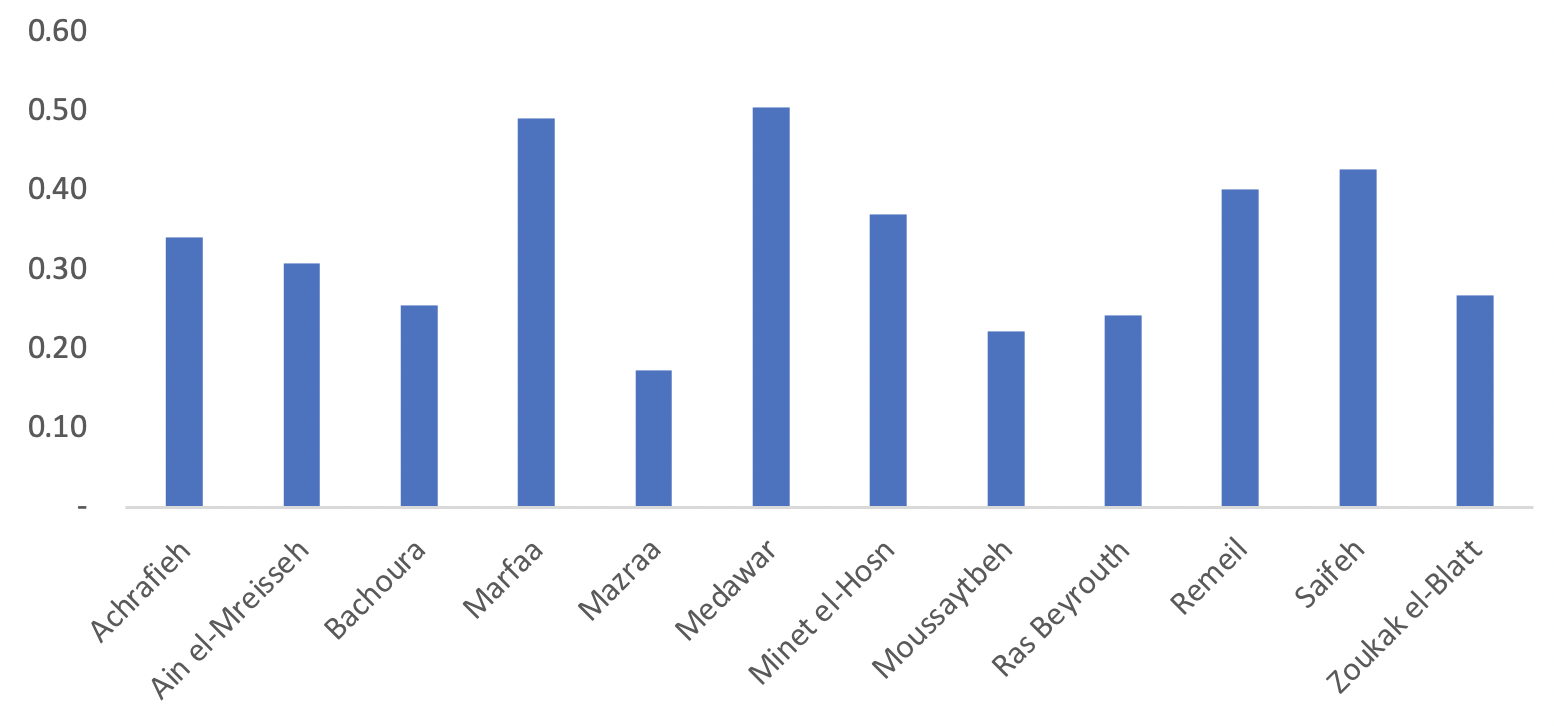
Figure 6.b Multidimensional vulnerability MSME scores for Beirut neighborhoods
As two historically deprived neighborhoods that also happen to be close to the blast site, Marfaa and Medawar have the highest MSME MVI score indicating a high level of deprivation and significant blast impact among businesses in those areas. Achrafieh and Saifeh are also near the blast site, with a low MVI score despite having a high portion of businesses that are vulnerable (see Table 6.a below). The intensity of vulnerability, which is a measure of the portion of indicators that the average MSME experiences deprivation, is lower for businesses in those Achrafieh and Saifeh so although there are a high portion of vulnerable MSMEs, the overall score is relatively low.
Considering MVI score is useful as a summary measure, however it is also important to consider its two components, namely percentage of vulnerable MSMEs in the neighborhood and average intensity of vulnerability for vulnerable MSMEs, in addition to the size of the neighborhood. The official Beirut neighborhoods that are used for this study do not have equal population distribution; e.g. Achrafieh has a population of 83,000 while Medawar has a population of 11,000. Assuming that the number of MSMEs is somewhat proportional to the population, the lower percentage of vulnerable MSMEs for Achrafieh actually refers to a higher number of vulnerable MSMEs than Medawar because of Achrafieh’s larger population size. The Leave No One Behind value system stipulates that the most vulnerable must be supported first; prioritizing the most vulnerable neighborhoods is one way to begin to achieve this goal, however finding the most vulnerable families across all neighborhoods would be a less efficient, but potentially more impactful way to help the most vulnerable first.
Neighborhood | MVI score | Percentage of Vulnerable MSMEs | Intensity of Vulnerability | Sample size |
Achrafieh | 0.34 | 68% | 51% | 1540 |
Ain el-Mreisseh | 0.31 | 58% | 53% | 46 |
Bachoura | 0.25 | 58% | 44% | 234 |
Marfaa | 0.49 | 84% | 58% | 58 |
Mazraa | 0.17 | 36% | 48% | 564 |
Medawar | 0.51 | 86% | 59% | 313 |
Minet el-Hosn | 0.37 | 71% | 52% | 52 |
Moussaytbeh | 0.22 | 49% | 45% | 388 |
Ras Beyrouth | 0.24 | 53% | 46% | 170 |
Remeil | 0.40 | 75% | 53% | 620 |
Saifeh | 0.43 | 78% | 55% | 97 |
Zoukak el-Blatt | 0.27 | 56% | 48% | 277 |
Table 6.a Multidimensional vulnerability score, proportion of vulnerable MSMEs, and intensity of vulnerability at the neighborhood level
Exposure, Sensitivity, Adaptive Capacity
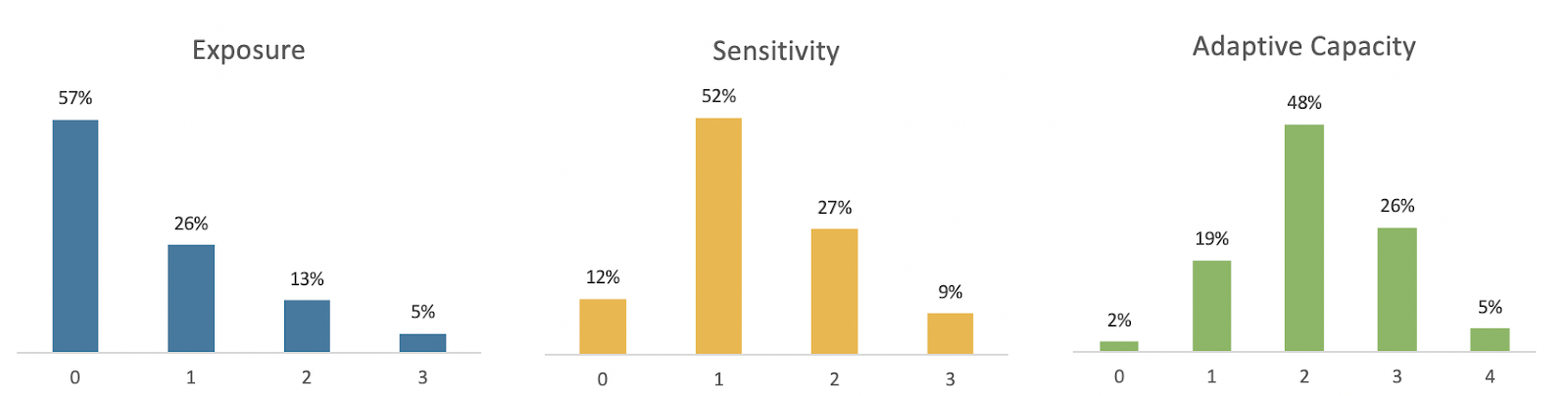
Fig 6.b Breakdown of the scores across the components
The multidimensional vulnerability index for MSMEs is a composite of indicators on exposure, sensitivity, and adaptive capacity. While the overall score is useful to understand which neighborhoods have the highest levels of multidimensional vulnerability, the breakdown of the scores across the components allows us to understand what deprivations are driving vulnerability.
MSMEs MVI
Dimension | Indicator | Source | Deprived if… | Weight |
Exposure | Did the explosion of the port have a direct impact on your business operations: | SEIA - MSME - 10 | Any yes | 1 / 9 |
As a result of the explosion, your business now lacks sufficient access to:/Electricity | SEIA - MSME - 15 | Yes | 1 / 9 | |
As a result of the explosion, your business now lacks sufficient access to:/Water | SEIA - MSME - 15 | Yes | 1 / 9 | |
Sensitivity | How has the explosion affected your business premises? | SEIA - MSME - 9 | Structural damage or total loss | 1 / 9 |
How has the explosion impacted the personnel of your business: | SEIA - MSME - 14 | Serious injury or life lost | 1 / 9 | |
If your business is still operating, do you think there is a risk that it will permanently shut down because of the explosion, and if so, when could this closure occur? | SEIA - MSME - 23 | Any yes | 1 / 9 | |
Adaptive capacity | What type of assistance have you received for your business? (select all that applies) | SEIA - MSME - 20 | No assistance received | 1 / 12 |
You expect to rehabilitate your business by relying on: Your own fund | SEIA - MSME - 22 | Yes | 1 / 12 | |
You immediately need the following assistance, Financial resources for working capital and raw materials | SEIA - MSME - 24 | Yes | 1 / 12 | |
You immediately need the following assistance, Repairing/rebuilding my businesses premises | SEIA - MSME - 24 | Yes | 1 / 12 |
Table 6.b Exposure, Sensitivity, Adaptive Capacity components and their calculation
The above figures show a frequency distribution of the proportion of indicators, per dimension. For example, under the exposure dimension, 57% of MSMEs are not deprived across any of the indicators, while 26% are deprived in 1 / 3 of the exposure indicators.
The distribution across the three indicators shows that businesses tend to be more deprived in the sensitivity dimension and the adaptive capacity dimension, when compared to the exposure dimension. In terms of overall multidimensional vulnerability, on average across all neighborhoods, the exposure dimension accounts for 22% of the MVI score, while the sensitivity dimension accounts for 38%, and the adaptive capacity dimension accounts for 40% of the score. This suggests that the main deprivations faced by businesses in Beirut, in order of impact, are related to adaptive capacity, sensitivity, and then finally exposure.
Exposure
While the results indicate that the exposure dimension contributes the least to overall multidimensional vulnerability, there are still significant vulnerabilities that are evident when considering the sub-dimension indicators.
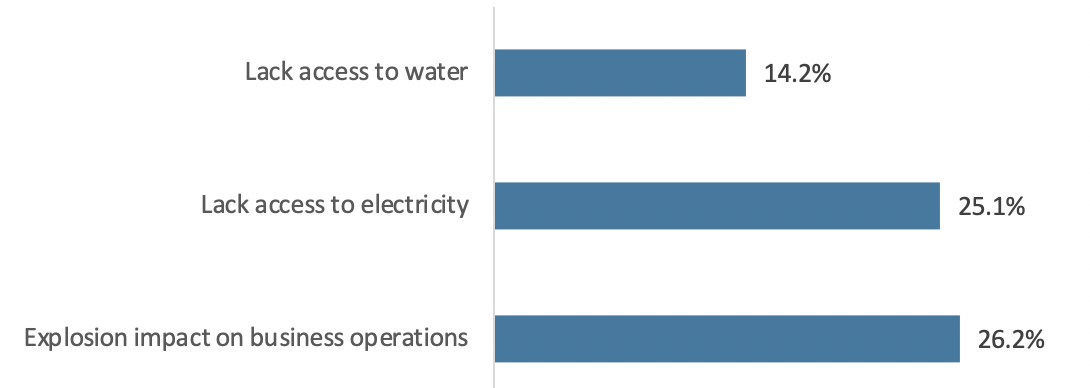
Fig 6.c Sub-dimension indicators breakdown
Key findings
- The port explosion impacted the operations of more than a quarter of businesses. The impact faced by businesses range from reliance on the port for import or export to damaged premises or relocation of clientele.
- 25% of MSMEs lack access to electricity. While power supply issues have existed for many years in Lebanon, the impact of this vulnerability is intensified when coupled with other vulnerabilities. For example, businesses facing reduced revenue from sales and increased costs due to repairs may be unable to afford private electricity supply.
Sensitivity
The sensitivity dimension of the MVI measures how much of an impact a disaster could or did have on businesses. Existing vulnerabilities make a business more sensitive to a shock, which could be the August 4th explosion, but could also be the currency crisis or the COVID crisis. These shocks could cause deprivations and could make businesses increasingly vulnerable to shocks. The higher the number of deprivations across indicators, the more multidimensionally vulnerable a business is to shocks.
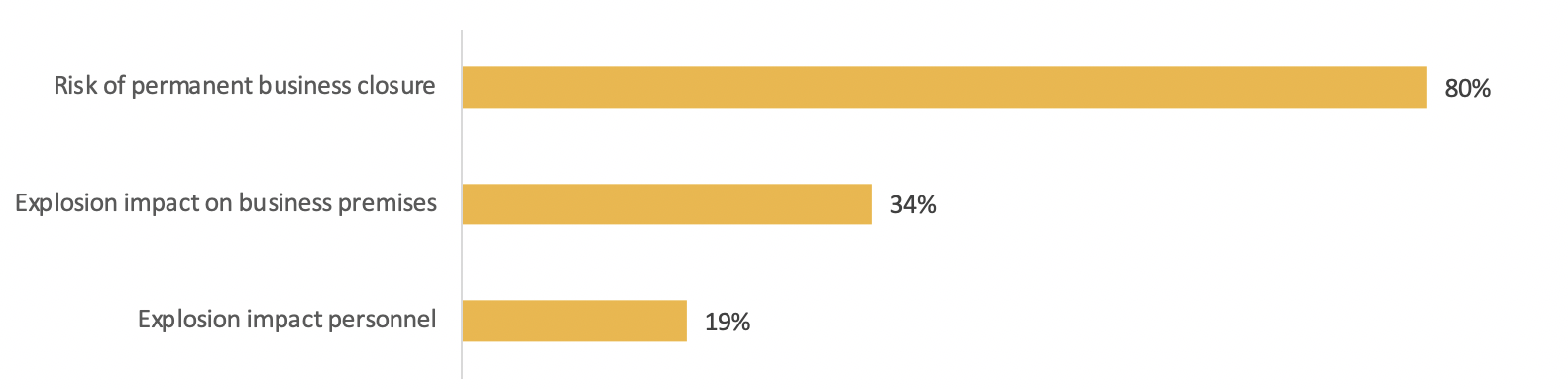
Fig 6.d Breakdown of explosion impact on business indicators
Key findings
- 80% of businesses are closed or face risk of permanent business closure. The compounded vulnerabilities businesses faced pre-explosion led to an overall level of vulnerability that made businesses very susceptible to shocks such as the Beirut explosion.
- The explosion caused physical damage to one in three businesses. Premises damage causes further vulnerabilities for MSMEs because they likely have to bear the cost of repair, while potentially losing sales from an inability to operate fully.
Adaptive Capacity
Finally, adaptive capacity assesses the ability of businesses to recover from a shock. This is measured by understanding the extent of assistance received by businesses, which is an indicator of their support networks, and the level of support they require.
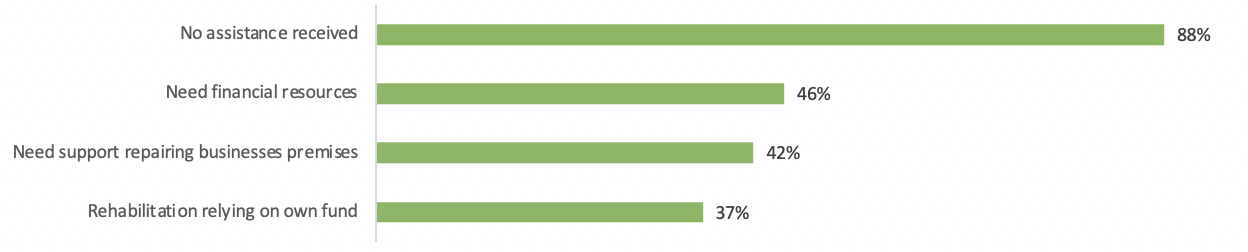
Fig 6.e Breakdown of adaptive capacity of business indicators
Key findings
- Within weeks of the explosion, 88% of businesses did not receive any assistance. Over time, this figure likely changed as aid was mobilized, however it is still significant to note that the vast majority of businesses did not receive any assistance in the most critical time period.
- Approximately half of MSMEs require financial resources for working capital and raw materials. Requiring financial support for the operational functioning of businesses indicates that MSMEs do not have sufficient revenue flow to sustain their typical business models.
- More than one third of MSMEs are rehabilitating their businesses by relying on their own funds.