

 Locations
Keeping the Lights On for Justice in Lebanon
July 3, 2026

As electricity cuts became part of daily life in Lebanon, the country’s Justice Palaces faced growing challenges in maintaining essential services.
Court hearings, administrative procedures, and legal services were increasingly disrupted by power outages and rising fuel costs, placing additional pressure on institutions that thousands of people rely on every day.
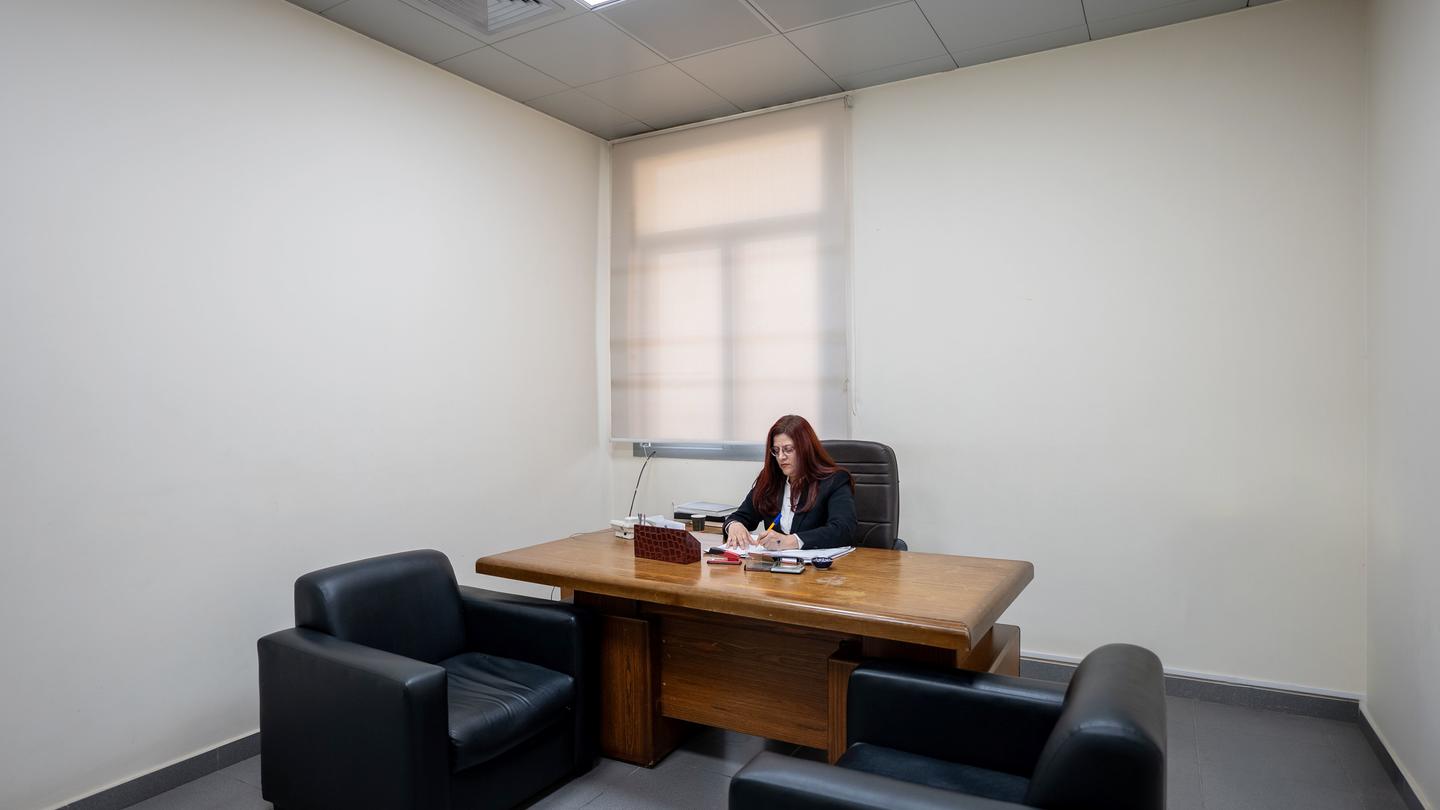
“In the past, power outages meant delays and postponed sessions. Now, even when electricity cuts hit outside, our work continues inside the Justice Palace,” says a lawyer in North Lebanon. “That certainty has made a real difference for both professionals and the people seeking justice.”
Every day, more than 2,500 people—including judges, lawyers, legal staff, public employees, and citizens—pass through Justice Palaces across Lebanon. From attending hearings and submitting legal documents to accessing administrative services, they depend on these institutions to function efficiently and predictably.
Yet years of electricity shortages often disrupted routine operations. Before the intervention, Justice Palaces relied largely on Electricité du Liban (EDL) supply and diesel generators, leaving daily work vulnerable to outages and interruptions. Lighting, computers, printers, service counters, and other essential equipment could not always operate reliably, affecting the pace of judicial and administrative work. For staff and visitors alike, uncertainty became part of everyday operations. To help address these challenges, the European Union funded the installation of solar energy systems in Justice Palaces across Lebanon, implemented by the United Nations Development Programme (UNDP) in partnership with the Ministry of Justice.
The initiative began with energy assessments in Justice Palaces in Baabda, Metn, Tripoli, Saida, Zahle, Nabatieh, and Keserwan. Based on the findings, solar energy systems, battery storage units, and energy-efficiency upgrades were installed to ensure that Justice Palaces could continue operating even during power cuts.




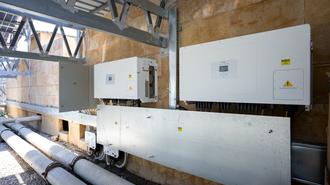


The initiative began with energy assessments in Justice Palaces in Baabda, Metn, Tripoli, Saida, Zahle, Nabatieh, and Keserwan. Based on the findings, solar energy systems, battery storage units, and energy-efficiency upgrades were installed to ensure that Justice Palaces could continue operating even during power cuts.
The works were carried out in close coordination with the Ministry of Justice and building managers to avoid disrupting daily operations. Staff were also trained to operate and maintain the new systems, helping ensure their long-term sustainability. The goal was to ensure that citizens can access justice services without interruption, regardless of power shortages.
Today, the results are visible across the participating Justice Palaces. A significant share of electricity demand is now covered by renewable energy, ranging from 65% to 90% in Nabatieh, Saida, Zahle, Baabda, and Jounieh, and reaching 20% in Tripoli. This has substantially reduced dependence on diesel generators and the national grid, while improving the reliability and continuity of judicial services.
“The installation of solar PV systems and the implementation of energy efficiency measures have made a tangible difference in the daily work of judges and staff,” says Nidal Shamseddine, First President at the Court of Appeal of North Lebanon. “Judges are now able to hold hearings, and staff are able to process documents and serve citizens without the constant disruptions caused by power outages. This has led to an overall improvement in efficiency and strengthened citizens’ trust.”
Beyond improving daily operations, the initiative is also generating significant financial and environmental benefits. By reducing dependence on fuel-powered generators, the upgrades are expected to save nearly USD 300,000 annually—resources that can be redirected towards essential public services. At the same time, the systems are expected to reduce greenhouse gas emissions by approximately 780 tonnes of carbon dioxide each year.
By strengthening the energy resilience of Justice Palaces across Lebanon, the initiative is helping safeguard access to justice—one of the most essential public services—while reinforcing public trust in the institutions that deliver it, regardless of what happens on the national grid.
Related
content
content


