

 Locations
Before the Winds Rise: How UNDP is working to prepare the Caribbean for the next hurricane
April 7, 2026

Hurricane Melissa destroyed thousands of homes in Jamaica and Cuba, as well as causing the loss of necessities due to flooding. In the photo, a mother and her daughter return from fetching drinking water to spend the night in the community of El Cobre in Santiago de Cuba.
The 2025 hurricane season in the Caribbean once again reminded us of the need to prepare for hurricanes in the region.
In Jamaica alone, Hurricane Melissa left 36% of homes in the western part of the country destroyed and produced 4.8 million tons of debris that blocked roads, schools, hospitals, markets, and communities. In Cuba, more than two million people suffered losses of material goods. In the region, some 75 people died because of the hurricane’s impacts, according to the United Nations Office for the Coordination of Humanitarian Affairs (OCHA).
For several years, UNDP has identified the Caribbean as a priority subregion for focusing its crisis prevention and response efforts. As part of its emphasis on anticipation and preparedness, the organization has launched the Hurricane Preparedness Mechanism. During 2025, disaster preparedness capacities were strengthened in eight countries, ensuring that key development areas relevant to crisis response are better prepared to anticipate, respond to, and recover more quickly and efficiently.
Through this mechanism, initiatives emerged related to information management (Honduras, Colombia, and the Dominican Republic), prevention and recovery techniques (Cuba and Belize), economic reactivation after crises with an emphasis on micro and small enterprises (Jamaica-Bahamas), and the development of strategic alliances with civil society organizations for the implementation of recovery processes (Barbados and the Dominican Republic).
Explore in these country stories some of the experiences promoted by the Hurricane Preparedness Support Mechanism, as well as the work of the UNDP Disaster Risk Reduction and Recovery team in Latin America and the Caribbean. As part of these efforts, in this new season, starting in June 2026, we will have strengthened capabilities.
Honduras: A georeferencing tool is being used to promote public policies with a gender and risk management focus

"As a sector, we have a specific place in the community that we go to when an emergency occurs. We can focus on the women who are part of our network, and, in this way, we alert them so they can get to safety," says Janet Zuniga, Vice President of the Women's Network in the Calán, Honduras.
To promote preparedness, anticipation, and recovery processes in the face of disasters, the United Nations Development Programme (UNDP) has worked with national and local governments on multidimensional public policies with a strong focus on gender, which address risk management and strengthen social protection.
In 2025, UNDP presented the results of the georeferenced mapping process of the supply and demand of care services in Villanueva.
The mapping included a quality assessment of a sample of existing care centers. Data mining, administrative records, and fieldwork were combined to identify needs, centers providing care for families, and their capacity: daycare centers, nursing homes, centers offering accommodation, or some type of day care support. This process was carried out in collaboration with COPECO (the Honduran Permanent Contingency Commission) to incorporate the information into the country's risk and vulnerability maps.
Read more of this story here: Con herramienta de georreferenciación se promueven políticas públicas con enfoque de género y gestión del riesgo | Programa De Las Naciones Unidas Para El Desarrollo


Dominican Republic and Colombia: Generating critical information to support early recovery after disasters

Rapidly analyzing crisis-affected areas, identifying vulnerable populations, supporting coordinated interventions in the first 72 hours after an event, and facilitating data-driven decisions to prioritize recovery actions are some of the functionalities for which UNDP trained institutions in the Dominican Republic.
UNDP Colombia provided this training based on its guide to drone operation for disaster risk management, which it developed from its experience in Providencia following Hurricane Iota in 2020 and subsequent preparedness and anticipation programs related to wildfires, El Niño 2023 and hurricanes in 2024 and 2025.
More than 20 institutions that make up the Geospatial Information Team for Risk Management and Disaster Response (EIGEO), part of the National Integrated Information System (SINI) conducted a post-disaster simulation using Hurricane Fiona's passage through Sabana de la Mar as a case study.
Based on this South-South cooperation between Colombia and the Dominican Republic, a StoryMap was prepared that presents a multi-temporal geospatial analysis between 2022 and 2025. Using drone images, satellite data, population information and open cartography, it is possible to observe how the recovery is materializing in the territory.
Read more of this story here: República Dominicana fortalece capacidades para generar información crítica de apoyo a la recuperación temprana tras desastres


Belize: Belize strengthens hurricane preparedness with an inclusive and resilient approach

As hurricanes intensify and extreme hydrometeorological events become more frequent, the cascading effects on agriculture, especially cattle and small livestock, threaten the productivity and livelihoods of the Belizean population, including indigenous communities in southern Belize.
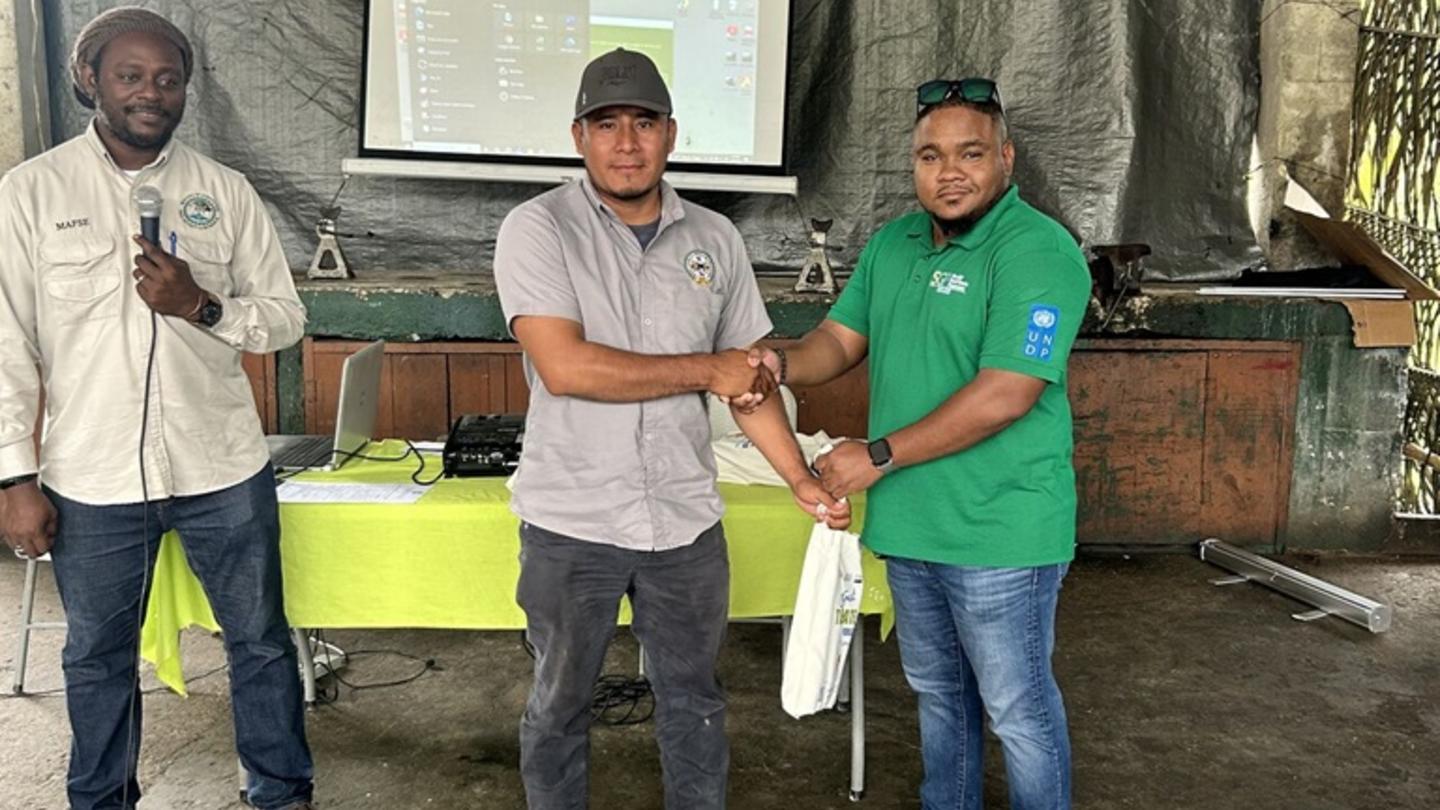
The United Nations Development Programme (UNDP), in partnership with the Ministry of Agriculture and the Department of Human Services, is promoting a comprehensive hurricane preparedness mechanism that benefits both the agricultural sector and residential care facilities.
In the agricultural sector, 40 livestock businesses in the Toledo district—including three led by women—participated in training on resilient livestock management and veterinary health protocols for storms and diseases. Additionally, technology packages for livestock management were distributed, and progress is being made on the rehabilitation of the central holding pen, a key component for reducing risks from extreme weather events. This follows the impact of recent hurricanes such as Lisa, which affected more than 900 farmers in 93 communities, increasing food insecurity.
At the same time, 133 people in residential care facilities, such as the Dorothy Menzies Child Care Center and the Mile 14 Group Home, are benefiting from gender-sensitive plans that include protocols for privacy, menstrual hygiene, and accessibility. Staff will receive training in trauma-informed care, child protection, and inclusive supervision, while specific tools and guidelines are being developed to strengthen the response.
With these measures, Belize is moving towards more equitable and effective preparedness, integrating climate change adaptation, risk management, and social protection to safeguard lives and livelihoods in the face of increasing hurricanes in the region.


Guatemala: Integrating Data Systems for More Effective Risk Management

Guatemala is one of the countries most exposed to disasters in the region. Floods, landslides, droughts, and other climate events affect thousands of households each year, many of them living in poverty. Until now, risk management and social protection operated separately, making it difficult to identify in advance families in need for urgent support.
The United Nations Development Programme (UNDP) presented the Community Resilience Ecosystem Model (CRE), which innovatively combines natural hazard information (SECONRED) with socioeconomic vulnerability (SER) data.
The integration of these sources enabled the creation of a multi-hazard community preparedness ecosystem that, for the first time in Guatemala, offers a comprehensive territorial view of the households most exposed to emergencies and their located.
The MERC (Community-Based Risk and Comprehensive Risk Management System) represents a turning point in risk management. For the first time, there is a tool that allows for anticipating the impacts of emergencies and activating aid before vulnerable families suffer losses. This preventive approach contrasts with the reactive model that has prevailed for decades.
Explore more here: SECONRED, MIDES y PNUD impulsan un modelo de resiliencia comunitaria y Protección Social Adaptativa (PSA) ante desastres
Jamaica: Loss and Damage Financing with an Emphasis on MSMEs

The United Nations Development Programme (UNDP) Multi-Country Office in Jamaica is ready to partner with the governments of Jamaica and the Bahamas to secure greater resilience and financing for disaster recovery, including the provision of technical assistance on loss and damage.
“MSMEs are too important to national economic well-being, services, and local livelihoods to go bankrupt or suffer prolonged closures after a disaster. We must redouble our efforts to prevent and minimize losses and damage to MSMEs and related community livelihoods and ensure their role in early recovery,” stated UNDP Resident Representative Dr. Kishan Khoday.
In response to Hurricane Melissa, the HPSM supported the activation of debris removal programs, livelihood reactivation initiatives, solar energy projects, and recovery governance, facilitating the mobilization of USD 2 million.
Explore more here:
“With our feet on the ground”: Hurricane-resilient reconstruction techniques using local materials

For Leydi and Manuel, watching the roof of their new home take shape was a mixture of anticipation and curiosity. By combining clay and other local materials, their future home became an experimental space that can help drive the construction of resilient housing for thousands of people affected by hurricanes.
“The house we live in now is next to a ceiba tree, and every time branches fall due to some event, part of the roof breaks”, explain the owners of the newly constructed home.
This action is part of a training program for housing sector stakeholders in construction techniques, carried out in the province of Artemisa, using locally available materials as an alternative to strengthen capacities for the resilient construction and reconstruction of housing.
The initiative arose from a collaboration between the United Nations Development Programme (UNDP) and the government of Artemisa, with the participation of the Provincial Housing Directorate, as part of the Hurricane Preparedness Mechanism promoted by the UNDP in Latin America and the Caribbean and the organization's Crisis Bureau.
In the aftermath of Hurricane Melissa, the HPSM facilitated the activation of a USD 1.2 million anticipatory action program for the provision of emergency shelter, which contributed to the creation of safe housing and basic necessities for people after the hurricane and ensured energy access in vital centers.
Explore more here: “Con los pies en la tierra”: técnicas de reconstrucción resilientes ante huracanes con materiales locales


