
 Locations
What the Aral Sea can teach us about human security
Beyond the disappearing lake
August 21, 2026

For years, toxic dust from Uzbekistan's exposed Aral Sea was a threat without a coordinated response.
Photo: UNDP Uzbekistan


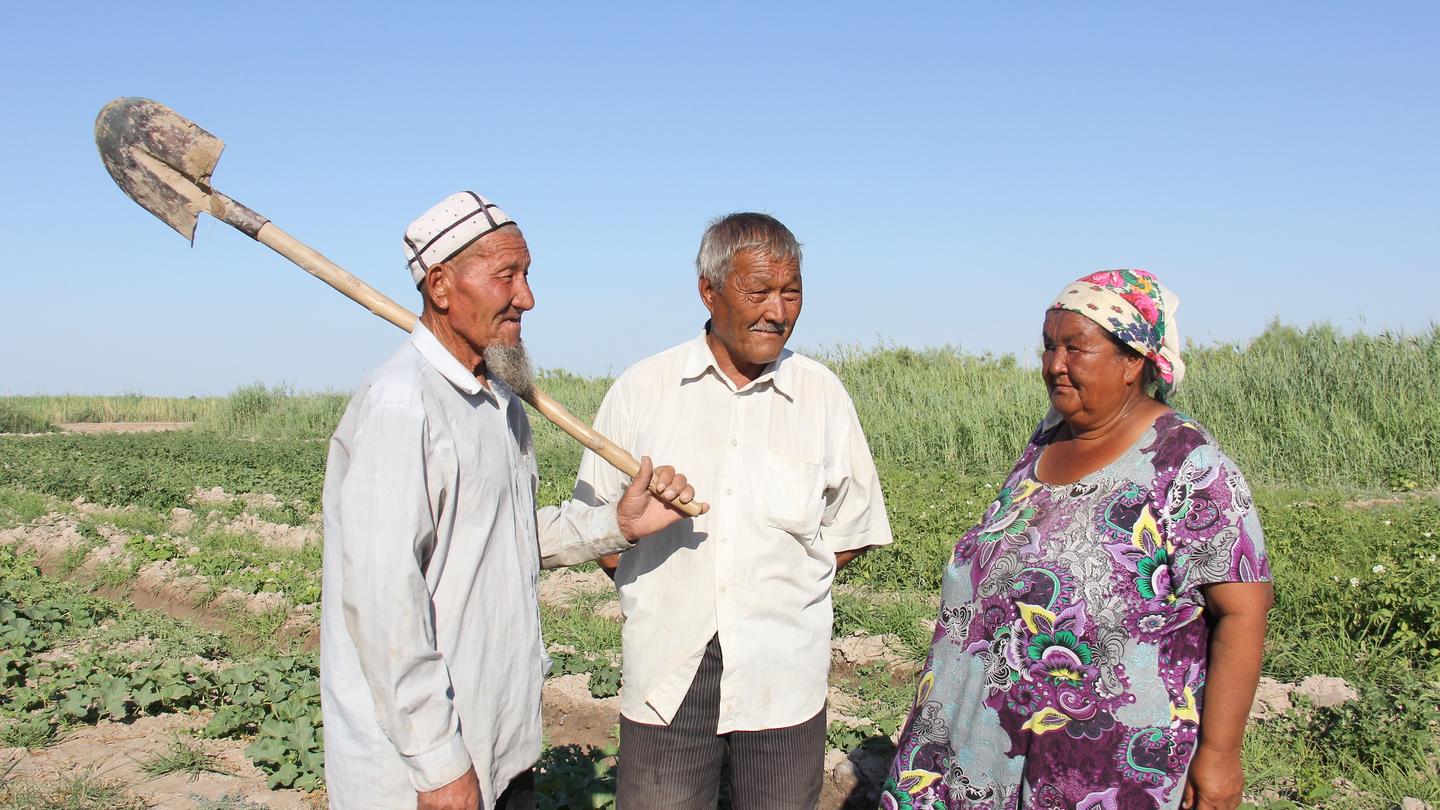
Kostruba is a remote community in western Uzbekistan, 280 kilometres from the nearest city. Here, a community leader who has served his neighbours for 24 years describes the Aral Sea crisis through the lens of its impact on his family.
“We have been drinking this water our whole lives,” he says. “Because there is no alternative.”
His words capture something that statistics alone cannot. The Aral Sea did not simply disappear. It took with it many of the conditions people need to live safely, earn a living, protect their health and look to the future with dignity.
That is why the crisis calls for a human security response, one that starts not with institutions, but with the daily challenges faced by people and communities. This is the approach long promoted by Japan: placing people at the centre of development and combining protection from critical threats with the ability to shape their own future.
Across Central Asia, environmental degradation, water scarcity and economic exclusion are increasingly interconnected. The Aral Sea, straddling Uzbekistan and Kazakhstan, is a stark reminder of what happens when these risks converge. No single sector or country can address them alone.
For UNDP, this understanding has shaped nearly a decade of work in Karakalpakstan, the republic at the heart of Uzbekistan’s Aral Sea region.
The results are visible. Communities that spent decades without safe drinking water now have it. Land long considered too saline to farm is productive again. A rural health facility that had been closed for seven years is once again serving patients. Women in remote districts are running businesses and reaching new markets.
These are not isolated project results. Together, they show what human security looks like in practice; protecting people’s lives, livelihoods and dignity while expanding their choices and opportunities.
The challenges remain immense. Toxic dust from the exposed seabed contributes to serious health problems. Degraded soil limits agricultural productivity. Unsafe water spreads disease. Limited economic opportunities constrain the futures of women and young people.
These problems have common roots and reinforce one another. The Aral Sea crisis is not an ecological crisis alone. It is also a human and development crisis.
Responding to it requires asking a different question; not which sector a problem belongs to, but what people and communities need to live in safety and dignity.
Three interconnected initiatives under the UNDP Aral Sea Programme show what this means in practice.



Starting with communities
A Japan-funded project supporting climate-resilient agriculture and social infrastructure began not with technical specifications, but with communities themselves.
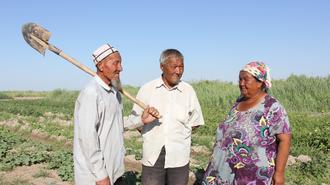
Through community development plans residents identified their own vulnerabilities and priorities before interventions were designed. People affected by the crisis helped define what security meant in their own lives.
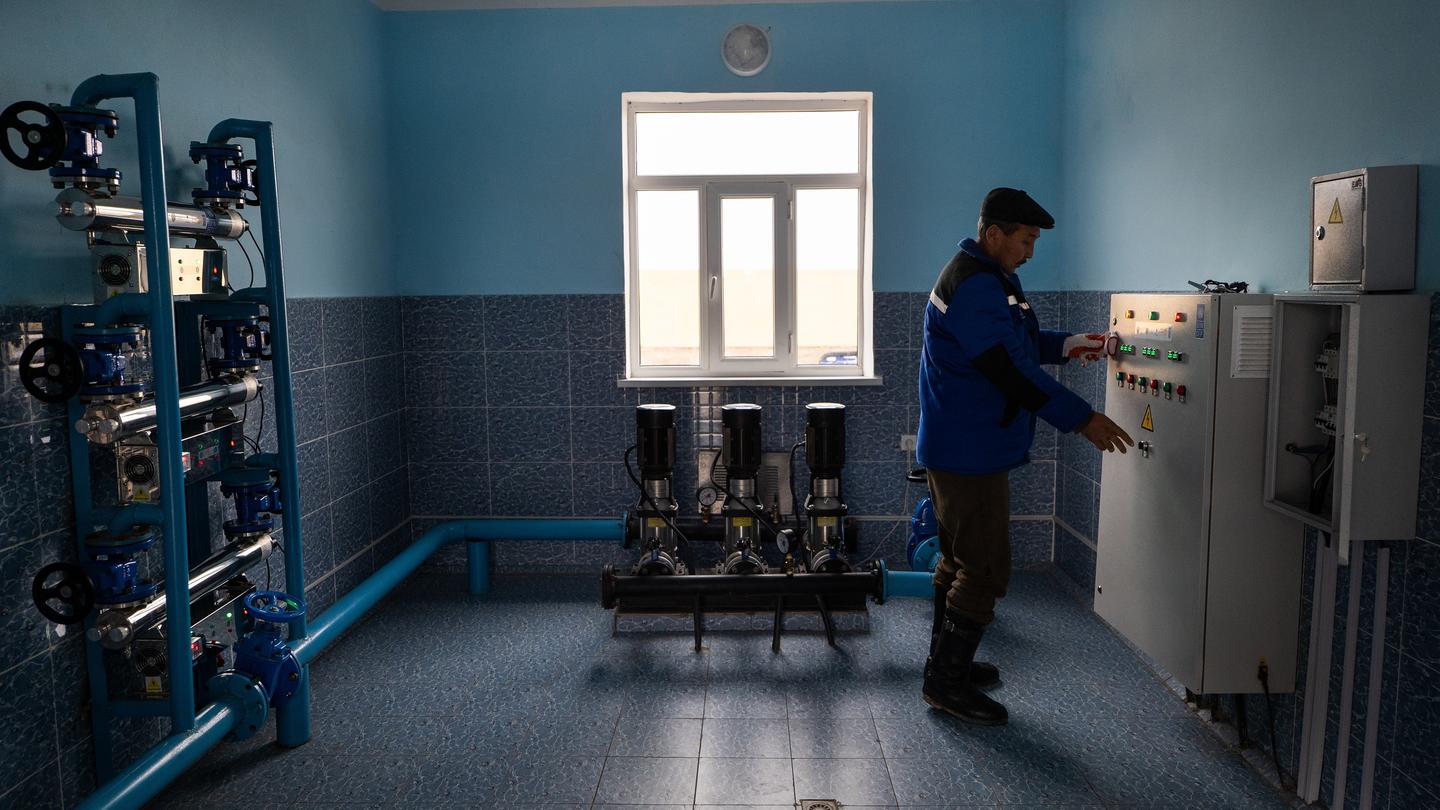
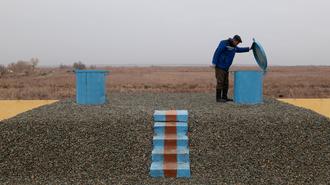
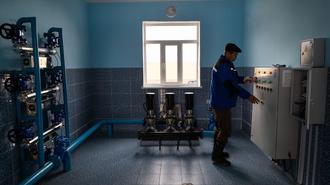
When communities identified safe drinking water as their foremost priority, infrastructure investment followed. When unreliable electricity became a barrier to education and livelihoods during harsh winters, a stable energy supply became the next priority.
Work initially planned for 15 communities expanded to 31 after neighbouring communities saw the results.
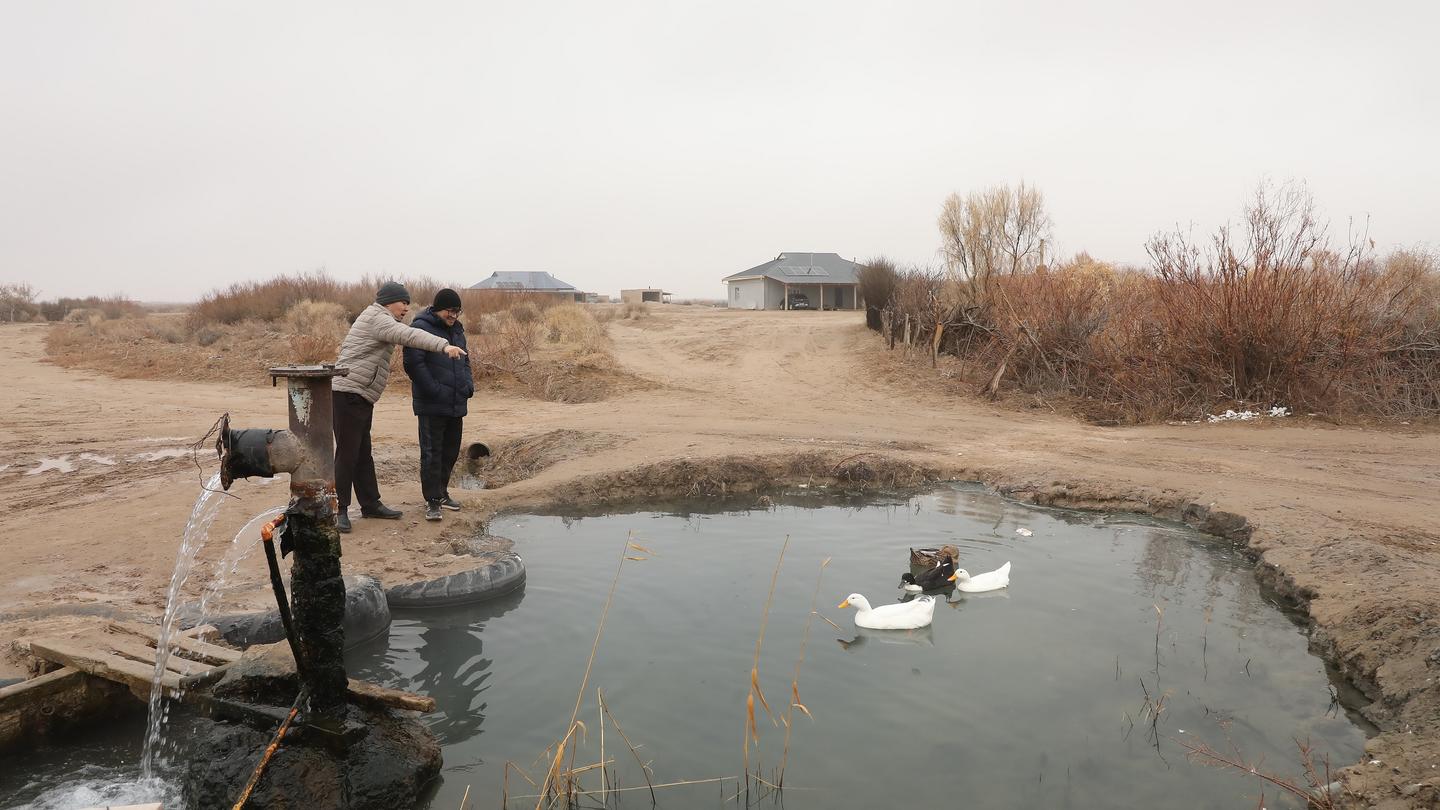
The same project introduced climate-resilient agriculture. In Kegeyli district, solar power now purifies saline drainage water for crop irrigation and supports aquaculture. It has reduced water consumption by 90 to 95 percent, tackling water scarcity while supporting food production and incomes.
From environmental data to coordinated action
Community-driven solutions also need institutions capable of supporting them.

Through community development plans residents identified their own vulnerabilities and priorities before interventions were designed.
Photo: UNDP Uzbekistan

Aral Sea environmental data has become a shared resource for more coordinated, evidence-based decisions.
Photo: UNDP Uzbekistan
A parallel initiative, implemented by UNDP with funding from the UN Multi-Partner Human Security Trust Fund for the Aral Sea Region of Uzbekistan, focused on environmental monitoring and ecosystem restoration.
For years, toxic dust from the exposed seabed was a threat without a coordinated response. Environmental agencies monitored it, health institutions treated its consequences, and agriculture bore its costs, without shared information or coordinated mechanisms.
Today, 37 air-quality monitoring stations embedded in Uzbekistan’s national monitoring network enable real-time data exchange among environmental, health and agriculture institutions. Environmental data has become a shared resource for more coordinated, evidence-based decisions.
At the same time, ecosystem restoration is tackling one of the environmental roots of the crisis. Through UNDP’s Green Aral Sea crowdfunding platform, 915,840 salt- and drought-tolerant trees have been planted across 763.9 hectares of exposed seabed.
These landscapes are also beginning to show their potential for climate finance and private-sector engagement, including opportunities linked to carbon markets as Uzbekistan advances its Nationally Determined Contributions under the Paris Agreement.
Creating livelihoods that last
Restoring ecosystems and strengthening institutions are essential. But resilience also depends on whether people can earn a living and build a future.
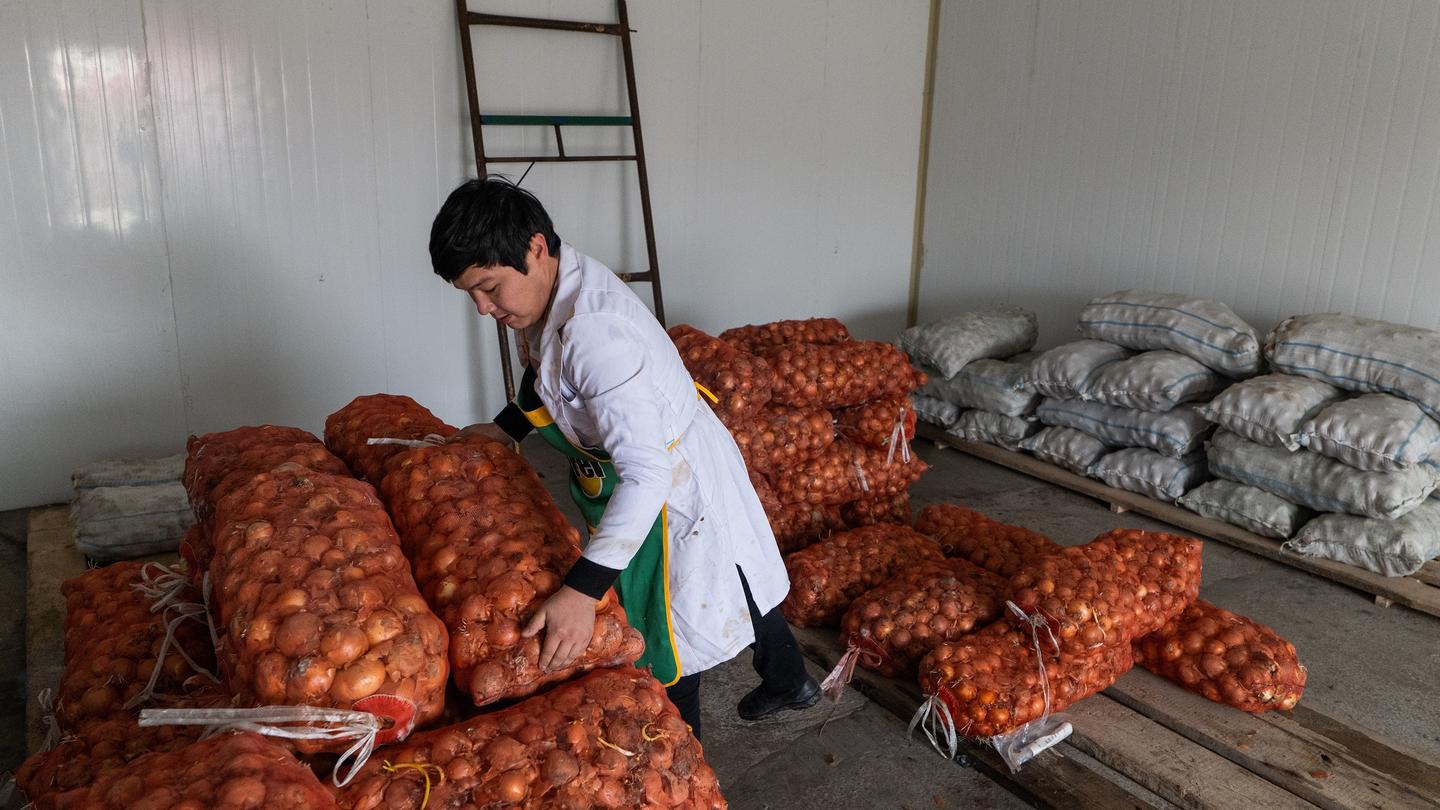
Through UNDP’s One Village One Product platform, rural producers across Karakalpakstan have developed locally distinctive products and reached new markets.
A registered trademark and dedicated online marketplace give producers access to markets beyond the project cycle. More than 70 percent of those supported are women, in a region where women and young people face particularly high levels of unemployment and economic exclusion.
Economic opportunity does more than generate income. It gives people greater control over their future and helps families build lasting resilience.
From results to scale
Protecting the environment and empowering communities are not competing priorities. In the Aral Sea region, they are inseparable.
The UNDP Aral Sea Programme has reached more than one million people, contributed to national policy and helped catalyse additional financing. In February 2026, Japan committed US$4.6 million for water governance in the region.
The challenge now is to scale proven solutions.
The experience of the Aral Sea shows why human security matters. Clean water is inseparable from health. Restoring land cannot be separated from livelihoods. Stronger institutions matter when they help communities respond to the risks they face. And economic opportunity matters because resilience ultimately depends on people having choices about their own future.
Nearly a decade of work in Karakalpakstan offers a simple lesson; human security is not an abstract principle. It begins with what people need to live safely, with dignity and with the possibility of a better future.
Related
content
content


