

 Locations
How solar energy made digital learning possible for students in Manatuto
Discovering the World ahead with ICT labs
December 22, 2025

Kayrala Public School in Manatuto, where students once learned about computers only through theory, until UNDP's ICT lab installation brought the digital world within reach.
Photo: UNDP BRH/Kapil Das
"We'll be using laptops when we find jobs. Everything requires computer use now. This prepares us," said Alexandrina Pereira Campos, an 18-year-old student at Kayrala Public School.
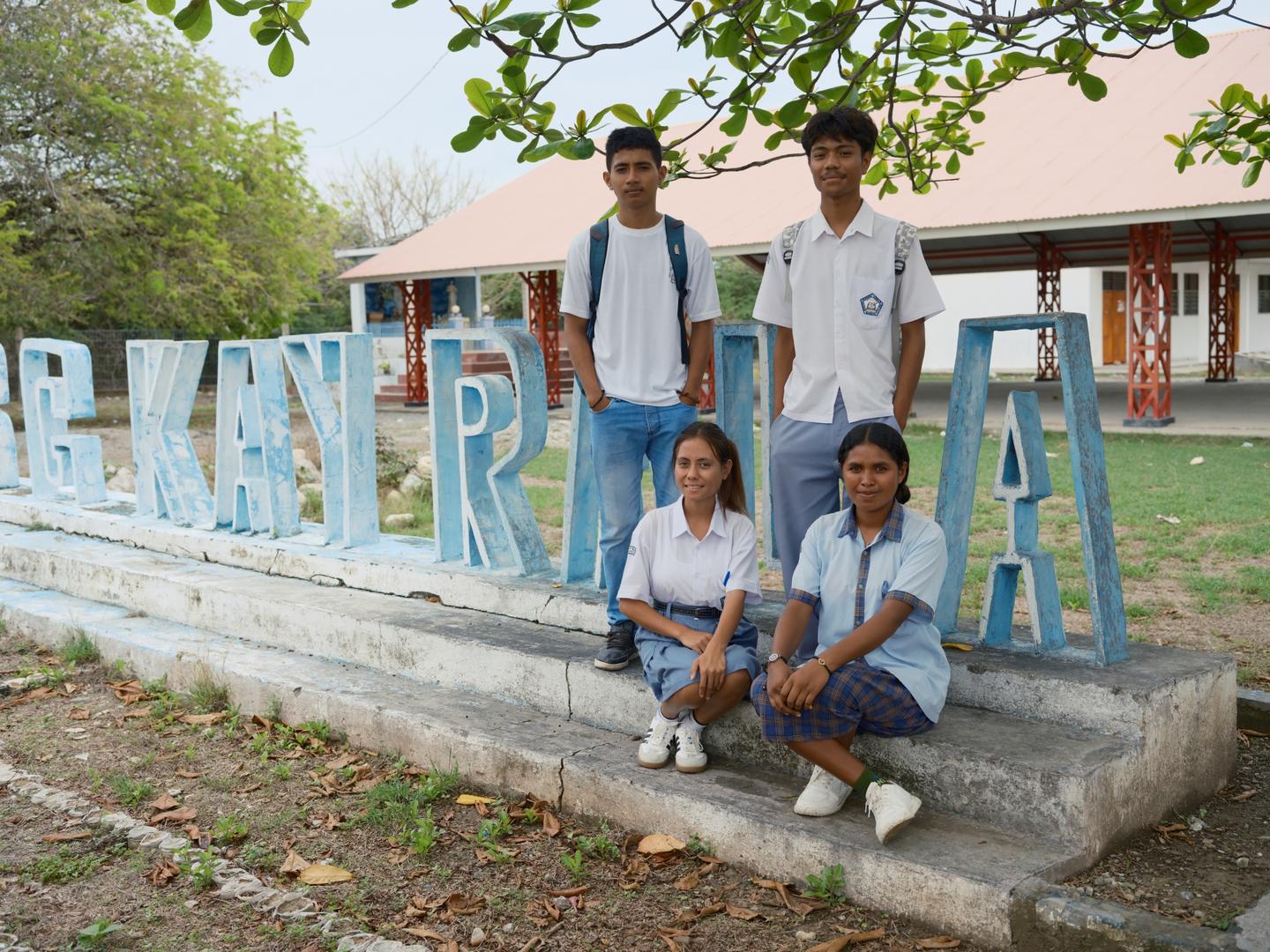
Cláudio Firmino Lay Soares, Alexandrina Pereira Campos, Aurélia Franjo Ximenes Carvalho da Costa, and Natalino Balman dos Reis Soares at ESG Kayrala (left to right) are Grade 11 students who are finally experiencing hands-on computer practice after years of theoretical-only multimedia classes. Photo: UNDP BRH/Kapil Das
At Kayrala Public, a senior secondary school in the Manatuto district, as a new ICT lab gets installed, many students get access to computers for the first time.
For 18-year-old Cláudio Firmino Lay Soares, computers existed out of his reach. As part of his multimedia class, he learned many skills—how to turn them on and off, the names of fonts and symbols, and the components like UPS systems and keyboards. But their learnings were limited to theory. Due to limited computer resources, many students like Cláudio never had the opportunity to test and practice these concepts, which are yet to become skills.
"We only learned theories about computers and their components," Cláudio recalls. "We hoped everyone would get the same opportunity for hands-on experience, but there were so many students and no working computers." His classmate Alexandrina Pereira Campos, also 18, added, "We never had any practice using computers in our classes before. We learned about them, but we couldn't really use the components we studied in theoretical classes."
Another grade 11 student, Natalino Balman dos Reis Soares (17 years old), said that he recognises the need to master basics like typing, understanding the symbols and commands to prepare for further education and employment, but infrastructural constraints worry him. "I don't have a computer of my own. I need to learn these basics. But there was nowhere to practice."
Timor-Leste's national education standards mandate multimedia instruction, recognising the pivotal role of digital skills to open avenues for greater opportunities. Many young students across rural Timor-Leste worry about how future employment opportunities may be affected due to limited access to resources. Many of them continue to face barriers due to unreliable power supply, both at home and in school, despite a strong commitment towards improving literacy across the country.

Students at Kayrala's ICT lab engage with computers for the first time, touching keyboards, navigating interfaces, and building the digital literacy skills essential for their futures, now powered by reliable solar electricity. Photo: UNDP BRH/Kapil Das
In alignment with SDG Goals 4 and 13—quality education and climate action, respectively—UNDP, with support from the Government of Japan, has made significant strides towards the upgradation of school infrastructure in Timor-Leste. As part of the Pacific Green Transformation Project, they have built 15 ICT labs in secondary schools. Kayrala Public School has been one of the recipients of the solarised labs, where students have been filled with new enthusiasm and curiosity. UNDP's ICT lab installation has provided students and staff with functional computers with reliable solar power, internet connectivity, and trained teachers.
"I am very happy about the installation of the computer lab," Cláudio says with evident joy. "We finally have the opportunity for hands-on experience."
Natalino's excitement centres on timing: "I feel very happy because we can finally have a computer classroom in 2025. I'm very interested in digital skills, and now I can practice using them."

In this digital era, Kayrala students are practising typing, learning Microsoft Office, and exploring the internet to prepare for careers where laptop skills will be essential, just as Alexandrina noted. Photo: UNDP BRH/Kapil Das
Such a transformative change benefits students not only with digital literacy but also guides them towards new possibilities for the future. For instance, Cláudio harbours ambitions to learn coding and software development—complex skills the school curriculum doesn't cover, but which require foundational digital competency.
"In this digital era, many schools have already advanced their teaching methods using computers. We were falling behind. What we've gotten will truly make advancements in our education."
His vision for the school includes fixed schedules ensuring every class receives computer practice time, plus Saturday sessions and extracurricular programs, maximising access for students eager to develop digital skills.
While Alexandrina sees immediate practical applications, greater ease in completing homework assignments using Microsoft Office tools, and conducting better research online, skills that are directly applicable to future employment.

A student works toward his dream of learning coding and software development, which is now possible with adequate classroom resources and hands-on practice in the new ICT lab. Photo: UNDP BRH/Kapil Das
For others, the installation of solar panels powering the ICT lab offers hope. Students shared instances when annual events such as Valentine’s Day celebrations came to a jarring halt due to a power outage, and they had to rely on flashlights and candles. Cláudio, Alexandrina, Aurélia, and Natalino represent countless students across Timor-Leste—young people whose futures depend on skills they've never practised, and possibilities they've only imagined. But now, possibilities are accessible.
For Aurélia, this moment marked the start of a new journey: "I am very pleased to have an ICT class now. I want to learn a lot about computers."