Locations
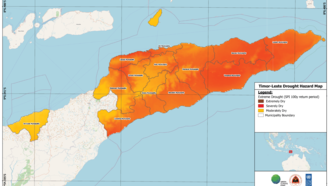
Timor-Leste is facing growing drought risk, particularly in the southern and eastern parts of the country, where hazard mapping identifies moderate to severe drought conditions. These areas are increasingly vulnerable to prolonged rainfall deficits, water shortages, and impacts on agriculture and livelihoods.
Drought and Fire Risk in Timor-Leste: What El Niño Means for Our Communities
July 14, 2026

Timor-Leste Drought Hazard Map
UNDP Timor-Leste
The Lasting Effects of the 2023–2024 El Niño
The current situation reflects the impact of the 2023–2024 El Niño event, which brought significantly below-average rainfall and above-average temperatures across much of the country. Between October 2023 and January 2024, rainfall was more than 30% below normal levels, triggering drought conditions in 10 of Timor-Leste's 13 municipalities and one special region. These conditions have already led to crop failures, livestock losses, and water scarcity in many communities (ACAPS, 2024).
El Niño typically reduces rainfall and shortens the rainy season in Timor-Leste, especially in the northern municipalities. Climate change is compounding this pattern, driving more erratic precipitation, more extreme rainfall events, and rising temperatures. By 2099, Timor-Leste could experience up to 100 additional days per year with temperatures above 35°C, even under lower-emission scenarios (ADB/WB, 2021; CFE-DM, 2022). Climate change is also increasing the frequency of extreme weather events, with stronger El Niño and La Niña occurrences becoming more common compared to pre-1960 levels (Cai et al., 2023). Together, these shifts are likely to make future droughts more severe and harder to predict (ACAPS, 2024).

Timor-Leste Wildfire Hazard Map
UNDP Timor-Leste
A Growing Wildfire Risk
Hazard mapping also points to a growing concern around wildfires. While most of Timor-Leste experiences low to moderate wildfire risk, historical fire data show that some areas face a notably higher likelihood of fire occurrence. During El Niño years, dry vegetation, grasslands, and forests become highly combustible, raising the risk of bushfires and wildfires across the country.
A Compounding Threat to Food Security and Livelihoods
Drought and wildfire, when combined, can have severe and compounding consequences. Wildfires can destroy forests, crops, grazing land, and biodiversity, while drought diminishes water availability and agricultural productivity. Together, these hazards pose a significant threat to food security, livelihoods, and the well-being of rural communities that depend heavily on agriculture.
According to the 2019 Timor-Leste Agriculture Census, 66% of households rely on agriculture as their primary source of income — underscoring how exposed much of the population is to these climate-related shocks.
What can Communities do?
Building resilience starts with practical, everyday actions:
- Save and store water whenever possible.
- Avoid uncontrolled burning of grasslands and agricultural land.
- Report signs of wildfire early.
- Protect vegetation and watersheds that help retain moisture.
- Follow seasonal climate and early warning information.
- Promote climate-resilient farming practices.
Building resilience against drought and wildfires is crucial as Timor-Leste faces an increasingly variable climate. By understanding these risks and preparing in advance, communities, government, and partners can work together to protect livelihoods and the natural environment for future generations.
Sources: ACAPS (2024); Asian Development Bank / World Bank (2021); Center for Excellence in Disaster Management and Humanitarian Assistance (2022); Cai et al. (2023); 2019 Timor-Leste Agriculture Census.