
 Locations
A community-led effort to combat climate change
Preserving mangroves in the Solomon Islands
December 18, 2025

Angouru community from the air. Malaita Province, where 20 percent of the coastline is fringed by mangroves, is particularly vulnerable to climate change.
Photo: UNDP Solomon Islands
Angouru community is a beautiful village in South Malaita, Solomon Islands. Life goes as it always has for many generations, although little changes can be seen. Some electricity is provided by solar panels, however cooking is still done by firewood stoves as the smoky kitchens indicate.
Lydia George talks from her kitchen while cooking mangrove pods with coconut milk, a local delicacy: “Mangrove is one of our most important foods. And we utilize it also for building houses. From the mangrove forest we get many other benefits like the mud crab that lives in there and the forest protects our village from storms when the waves get too high,” she says.
Mangroves underpin the livelihoods of coastal communities by providing timber, firewood, and food such as fish, shellfish, and the edible mangrove fruits themselves.
Mangroves are unique ecosystems, thriving in salty environments where few other plants can survive. In the Solomon Islands they cover 60,000 hectares, representing 3 percent of the nation’s land area and 40 percent of the world’s mangrove species. These ecosystems also serve as nurseries for marine life, natural barriers against coastal erosion and critical carbon sinks. Each hectare of mangroves can store up to 1,000 tonnes of carbon.
Mangroves filter pollutants and their intricate root systems prevent seawater from seeping into freshwater ecosystems. However, these vital functions are under threat from climate change, rising sea levels, coastal erosion and pressure from increasing populations.
Mangrove forests are disappearing at an alarming rate due to pollution, land clearance and natural disasters. Solomon Islands, home to 12 percent of the world’s mangrove forests, plays a crucial role in the global fight against mangrove loss. These ecosystems are biodiversity hotspots supporting over 1,500 species, and serve as natural defenses against storms.

Lydia George prepared mangrove in her kitchen. She is spearheading an ambitious project to address the urgent threats facing one of Solomon Islands' most vital ecosystems.
Photo: UNDP Solomon Islands
The Angouru Community Development Association (ACDA) in Small Malaita where Lydia lives is spearheading an ambitious Mangrove Conservation and Rehabilitation Project to address the urgent threats facing one of Solomon Islands' most vital ecosystems. Supported by the Small Grants Programme of the Global Environment Facility (GEF), administered by UNDP with funding from the Australian Government’s Department of Foreign Affairs and Trade, this initiative exemplifies the power of locally driven solutions in safeguarding biodiversity and enhancing community resilience.
Malaita Province, where 20 percent of the coastline is fringed by mangroves, is particularly vulnerable to climate change. Rising sea levels are eroding mangrove forests, compromising their ability to protect communities and foster marine biodiversity. Intensifying wave action exacerbates the decline, threatening food security and the livelihoods of local populations such as the Angouru community.

Rising sea levels are eroding mangrove forests, compromising their ability to protect communities and foster marine biodiversity.
Photo: UNDP Solomon Islands
In response to these challenges, ACDA has undertaken a comprehensive approach to mangrove conservation and rehabilitation. It involves replanting mangroves in degraded areas and educating local communities about their ecological and economic importance. Project Coordinator Beven Aieile emphasizes the role of mangroves as “lifelines for marine ecosystems and a source of nourishment for us all.”
A centrepiece of the initiative is a research centre, providing a place for students and researchers to study mangroves and to develop conservation strategies. This education-focused component aims to instill a sense of stewardship in younger generations and equip them to tackle environmental challenges.


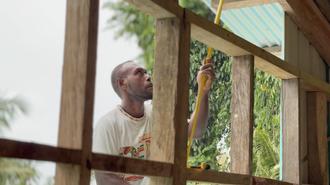
The project prioritizes local leadership and communal participation for climate resilience. By involving communities in identifying issues, taking decisions, and implementing solutions, it ensures that responses are tailored to local needs and are sustainable over the long term.
ACDA’s work highlights the interconnectedness of ecological health and human resilience. By restoring mangroves, the project not only preserves biodiversity but also strengthens the community's ability to adapt to climate change while bolstering food security and creating livelihoods.
As the world grapples with escalating climate challenges, initiatives like ACDA’s Mangrove Conservation and Rehabilitation Project underscore the importance of protecting vital ecosystems. By combining traditional knowledge with scientific research this project serves as a model for how local communities can lead the way in environmental conservation.
It reminds us of the everyday need to recognize the value of mangroves and to support efforts to preserve them for future generations. Through collaboration and commitment, we can ensure these remarkable ecosystems continue to thrive, safeguarding both biodiversity and livelihoods.
Related
content
content


