
 Locations
How young people are shaping policy, transforming systems and redefining leadership
“Each step forward brings tears of sadness and joy.”
January 15, 2026

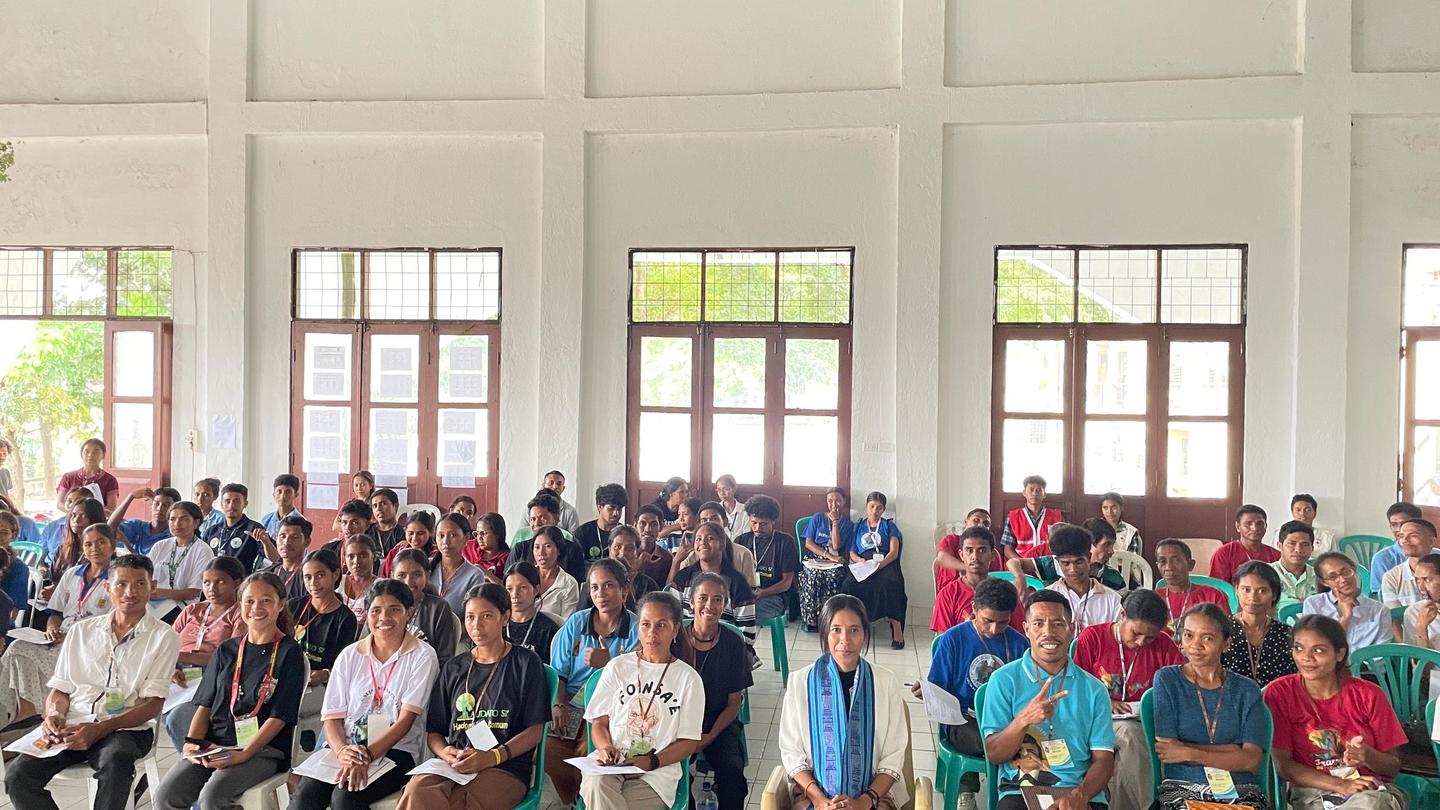
In Peru, the Jóvenes Tejiendo Ciudadanía (Young People Weaving Citizenship) is a space for dialogue and for promoting a youth agenda.
Photo: UNDP Peru/Bruno Cámara
With 1.9 billion young people worldwide, today’s youth generation, the largest in history, has inherited a landscape of complex global challenges. Yet in their communities, countries and continents young people are not standing on the sidelines. They are leading political movements, reshaping public narratives and charting pathways toward more inclusive and sustainable development.
Through the Funding Windows, UNDP’s primary mechanism for thematic, flexible non-core funding, and with the contributions of Denmark, Luxembourg and the Republic of Korea, we invest in this generation of young leaders as powerful agents of structural transformation. As co-architects of a future rooted in equity, dignity and democratic values, their stories show what becomes possible when young people are truly given the space, trust and resources to lead and create societal change.
“Understanding politics isn't something distant and reserved for a few. It transforms reality, expands rights and builds a fairer society.”- Ema Wilkins, 24, Uruguay
At 24, Uruguayan activist Ema Wilkins has already spent six years in the Frente Amplio political coalition, now representing a faction on the party’s Mesa Política Nacional. Her interest in civic and political engagement began unexpectedly in her final year of secondary school, at a friend’s gathering ahead of the 2019 elections. There, she met members of the coalition’s youth movement, Juventud Frenteamplista, a connection that would launch her into national youth leadership.
Ema later joined the Juventud Interpartidaria, an interparty youth group facilitated by UNDP, which collaborates across party lines to address national challenges.
With UNDP’s support, the group works on civic education, mental health, political transparency and responsible public debate. In May, youth from opposing factions jointly backed the Marcha de Silencio (Silent March), calling for memory, truth and justice for Uruguayans who were forcibly disappeared. “Young people come together with openness and purpose,” Ema says.

Agustín Ruiz (Partido Nacional), Ema Wilkins (Frente Amplio) and Luana Ortega (Partido Independiente) take part in a plural exchange space aimed at promoting youth political participation at the Interparty Youth Platform in Maldonado.
Photo: UNDP Uruguay
Their unity has also shaped national politics. During the presidential election, the interparty youth group drafted a joint resolution urging candidates to commit to fair campaign financing, respectful dialogue and youth priorities, including rehabilitation opportunities for young people involved in drug-related offenses. They presented it at the only public event featuring all presidential candidates, gaining significant media attention.
For Ema, dialogue is not radical, it is essential. In a country grappling with youth unemployment, rising housing costs and a mental health crisis, she envisions a future where all Uruguayans have equitable access to education, housing and support. Real change, she believes, demands collaboration between politicians, social leaders and young activists working both within and beyond traditional political spaces.

Young leaders from different political parties came together to strengthen democratic dialogue and build shared agendas through diversity.
Photo: UNDP Uruguay
“We know the situation, the real situation of women… there is no one else who can represent what we face. It’s supposed to be the women that talk about it.”- Joanita Antonita Pinto, 28, Timor-Leste
When Joanita Antonita Pinto speaks her words carry clarity and conviction. Growing up in Timor-Leste, she witnessed firsthand the struggles of women, such as limited decision-making power, restricted access to education and gender-based violence. These realities shaped her understanding of the world and motivated her engagement in advancing women’s rights.
“Many women share similar experiences, but each one also faces unique struggles.”
Today, Joanita is a leading advocate for gender equality. With support from UNDP, she has become a prominent voice in community activism and public dialogue, hosting the first episode of Coffee Talks, a podcast highlighting women’s resilience and solidarity. The platform allowed her to call for systemic change, including shifting how financial resources are allocated so women can “grow to realize their goals.”
Her advocacy is both personal and practical, supporting survivors of gender-based violence, teaching digital literacy in schools and working with women in remote areas where opportunities are scarce.
“Each step forward brings tears of sadness and joy.”
Resistance has been constant. As a young woman challenging traditional norms, Joanita has often been told her voice doesn’t matter. But she sees that mindset slowly shifting. Community conversations are eroding patriarchal attitudes; more young people and married women are speaking openly about exploitation and discrimination.
“Strong women’s leadership positively influences families and society.”
Across the country, women are standing up to violence and reclaiming their futures. Working with UNDP and local youth initiatives Joanita continues pushing for systemic improvements in education and capacity-building for women. Her goals are clear: eliminate violence, strengthen women’s leadership and promote equity for women and children.




Photos: Joanita Antonita Pinto
“I firmly believe that this generation, even though battered and silenced, has the will to bring about change.”- Jorge Carrión, 26, Peru
Jorge Carrión was still in secondary school when a document changed his life.
Reading UN Resolution 70/1, the blueprint for the Sustainable Development Goals, moved him deeply and convinced him, at just 17 years old, to commit himself to finding solutions to the world's challenges. Now, at 26, he is doing just that.
Raised in the La Libertad region of northern Peru, Jorge decided to get involved in the issues that most affected his community, where many children had to work to support their families. He was student mayor and sought to work with his school authorities to find solutions. Public service became his compass.
During the COVID-19 pandemic, he joined Redpública, a citizen participation platform supported by UNDP. For Jorge, it became a space to transform frustration into dialogue and collective action.
“Many people my age have great ideas but lack the spaces to engage, participate and bring their proposals to spaces of real change.”

Jorge Carrión at Redpública, citizen participation platform supported by UNDP.
Photo: UNDP Peru/Megumi Nagayoshi
Jorge particularly highlights his participation as a spokesperson at the Jóvenes Tejiendo Ciudadanía (Young People Weaving Citizenship) meeting, a space for dialogue and co-creation of a youth agenda.
“In the dialogues, we addressed issues such as corruption and proposed solutions such as citizen oversight mechanisms to influence public institutions.”
But the road has not been easy. Jorge describes his years in public administration as “the hardest experience he has ever had”, due to the challenges he faced as a young person navigating these spaces. Yet, thanks to his experience in different types of institutions, he learned how to develop public policies that respond to the priorities of young people.
Now, as a young leader, Jorge is working to make political institutions more accessible and trustworthy for young people. His mission? Build a more inclusive Peru, where the barriers that prevent young people from participating can be overcome.

Jorge Carrión speaking at a meeting between young people from Redpública and young people from political parties.
Photo: UNDP Peru/Megumi Nagayoshi
"My message to other young people is this: Don't wait for permission to matter. Your perspective is valuable right now, not in 20 years when you've 'earned your place'."- Shan Hettigoda, 27, Sri Lanka
Shan Hettigoda did not grow up imagining a life in politics. For years, public power in Sri Lanka felt distant–something imposed, not shaped. That changed during his studies in Australia, where he discovered LGBTQIA+ advocacy spaces that offered belonging, dignity and the radical idea that collective action could change systems. When he returned to Sri Lanka, Shan carried that lesson with him and turned it into purpose.
His early work focused on LGBTQIA+ health and rights, including introducing PrEP medication to local communities. His lived experiences, however, strengthened his dedication to advocacy. After surviving police brutality solely because of his sexuality, he committed to ensuring others would not face the same injustice. That promise now drives his work to repeal colonial-era laws criminalizing same-sex relationships and to remove bureaucratic barriers affecting transgender people.
Through the Liberal Youth Movement and cross-party initiatives like NextGenSL, Shan has helped build platforms where young people are not symbolic participants but real decision-makers. With training and mentorship from UNDP Sri Lanka, he stepped into mainstream politics without hiding who he is. His leadership insists that youth and marginalized voices belong not someday, but now.
Shan’s vision for Sri Lanka is expansive and deeply personal.
"The future I hope we're building for Sri Lanka is one where identity is no longer destiny, where the circumstances of your birth, your sexuality, your gender identity, your ethnicity or your economic background don't predetermine the possibilities of your life."
His journey has taught him that real change is claimed rather than granted.
"Transformational change happens when those who have been excluded refuse to accept their exclusion, when those who have been silenced refuse to stay quiet, and when those who have been told to wait their turn insist that the time is now."
For Shan, his country’s future is already being built by those brave enough to insist they belong.


Photos: Shan Hettigoda
By supporting young leaders like Ema, Joanita Antonita, Jorge, Shan and millions of young people worldwide, UNDP is helping shape a future driven by the largest, and also most digitally fluent and globally connected youth generation ever. Their respective journeys remind us that when young people are provided with the relevant tools, platforms and partnerships, they do more than imagine change; they lead it. Looking ahead, we will continue to expand pathways for youth leadership in digital governance, peacebuilding, climate action and social innovation, ensuring that young voices are not only heard, but meaningfully included at the heart of decision-making for our shared future.
Learn more about UNDP's work with and for young people: https://www.undp.org/governance/youth-empowerment
Related
content
content


