
 Locations
Clearing WWII ordnance in Solomon Islands
Danger in paradise
April 22, 2026

More than 80 years after World War II, Solomon Islands remains one of the most heavily mine-contaminated places in the Pacific.
Photo: UNDP Solomon Islands
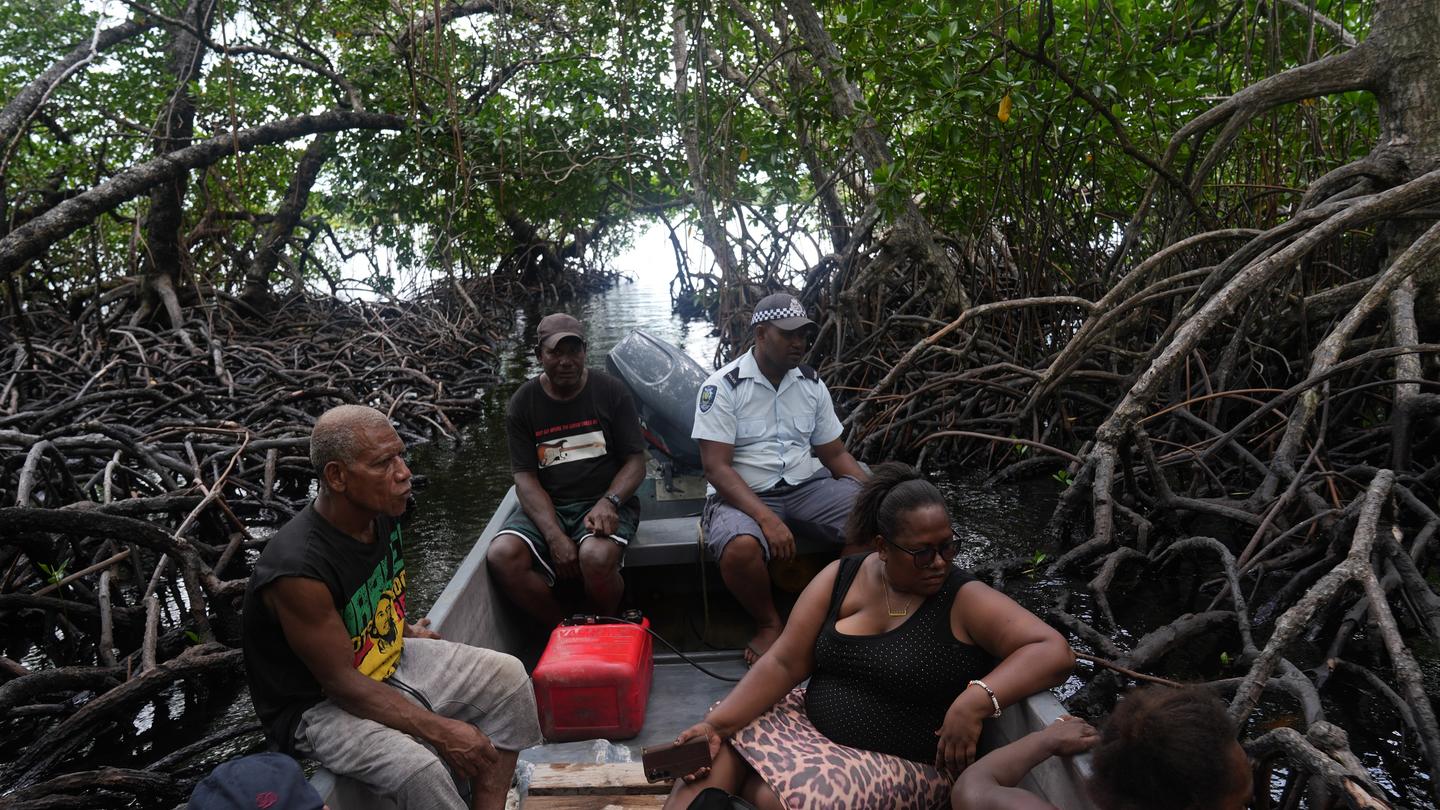
The boat from the Royal Solomon Islands Police inches along a narrow channel into Lever’s Point. Mangroves close in on either side. As roots and branches tangle more tightly, passage becomes impossible. The rest of the journey must continue on foot.
Lever’s Point lies in the Russell Islands of Central Province, Solomon Islands. Crystalline blue water, coconut-lined shores, reefs teeming with life, it seems an untouched tropical paradise.

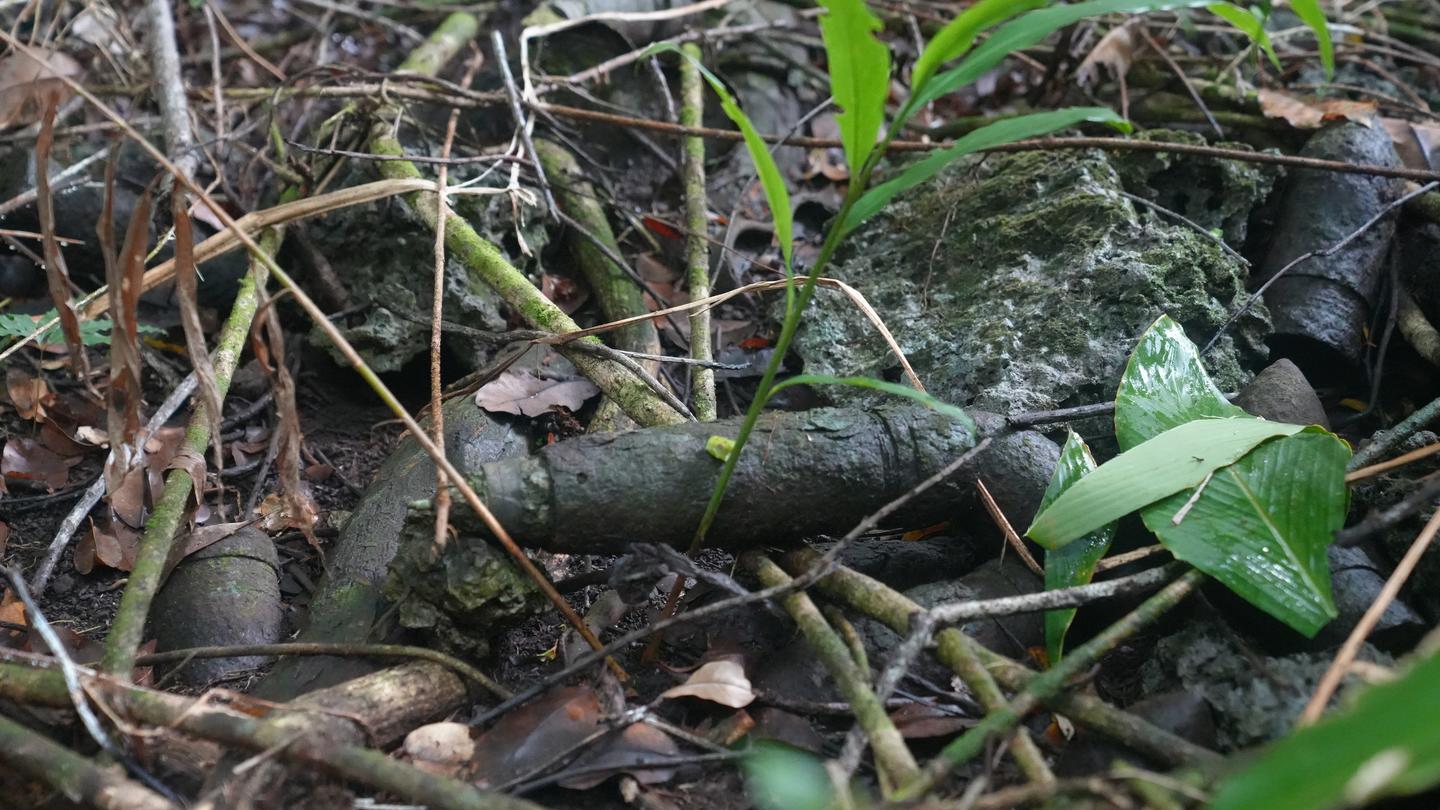
As decades-old unexploded ordnance corrode, heavy metals and explosive residue are released into the air, soil, water and sea.
Photo: UNDP Solomon Islands
Billy, 50, a farmer and fisherman, knows better. Machete in hand, he cuts a path through the jungle, guiding the police inland.
“Here they are,” he says. “There are bombs everywhere.”
Across the forest floor lie hundreds of bombs. Some still with fuses. Some half-buried. Rusted to the colour of mud and bark. Decaying into the earth. Dormant relics of World War II, they remain lethal.
“On the land, in the sea, in the reefs,” says Billy, “the bombs are becoming part of the island.”

Like many farmers in Solomon Islands, Billy must contend with soil that can contain elevated levels of heavy metals and explosive compounds such as TNT.
Photo: UNDP Solomon Islands
The long shadow of war
More than 80 years after World War II, Solomon Islands is one of the most heavily contaminated places in the Pacific. Thousands of unexploded ordnance (UXO) lie across land and coastal waters.
Places like Guadalcanal saw major land and sea battles, while the Russell Islands were used by the Allies as a staging post, including for the storage of ordnance.
“The remains of the bombs cause fear among the people,” says Inspector Brian Kamai of the Royal Solomon Islands Police Force. For generations, the message has been simple: don’t touch, don’t light fires, report.
But a more complex threat is now emerging. As the UXO corrodes, they release heavy metals and explosive residues into the air, soil, water and marine ecosystems.




When food becomes a risk
Like most people in the Russell Islands, Billy’s family depends on the land and sea.
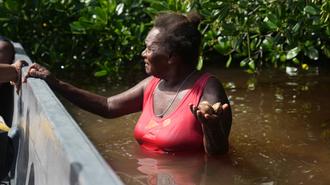
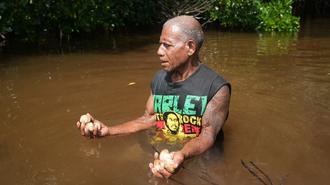
“We live off selling copra, what we grow in the garden and fishing,” he says. “As well as fish, we eat clams we pick from the mangrove beds.”
On Lever’s Point, Billy points out clam beds just a short distance from where corroding munitions lie scattered.
“A few years ago, the women went out to pick clams from this place,” he says. “They cleaned and cooked them like normal.”
The sickness that followed came soon after. “We began to feel dizzy, our eyes became sore, our heads ached and we vomited. We were ill for about a day,” he says.



New evidence of toxins in the ecosystem
With funding from the Government of Japan, UNDP supported researchers from The University of Queensland to examine the environmental and public health impacts of UXO contamination. The findings are the first of their kind in the Pacific.
At Lever’s Point and other sites, soil samples revealed elevated levels of heavy metals. Explosive compounds such as TNT and PETN were also detected. In some locations, traces were found in marine life, including shellfish.
Dr Stacey Pizzino, who led the research, says the risk is growing.
“The health risk from World War II bombs is increasing as the ordnance breaks down and releases heavy metals into the environment,” she says. “Communities are already reporting illnesses that may be linked to exposure.”
While the research does not claim to represent the entire country and does not establish a definitive causal link, the convergence of environmental evidence, community reports and observed health patterns points to a credible and growing risk.

With funding from the Government of Japan, UNDP supported researchers from The University of Queensland to examine the environmental and public health impacts of UXO contamination.
Photo: UNDP Solomon Islands
A pattern of illness
At the Yandina Area Health Clinic, nurse Agnes Sade is one of just three nurses serving around 3,000 people.
“People come with unusual abdominal pains,” she says. “Babies who are still breastfeeding come in with boils on their bodies.”
Fish and clams are dietary staples. “Sometimes when I eat clams, I get a headache,” she says.
Across the islands, communities report rashes, fevers, vomiting and skin irritations after eating seafood. Babies and young children appear especially vulnerable.

At Yandina Area Health Clinic, nurse Agnes Sade is one of just three health professionals serving around 3,000 people.
Photo: UNDP Solomon Islands

At health clinics, communities report rashes, fevers, vomiting and skin irritations after eating seafood.
Photo: UNDP Solomon Islands
Climate change accelerates the risk
For farmers like Tommy Kiki, the impacts of climate change are increasingly visible. Coastal roads are washed away. Gardens flood. Crops fail. “The sea goes up 10 to 20 metres inshore,” he says. “The weather patterns have affected the crop yield and where we can live.”
But climate change is doing more than affecting livelihoods.
More than half of known UXO sites are within one kilometre of the coast. Flooding, erosion and storm surges expose buried ordnance, shift it and accelerate corrosion. Contamination is carried into rivers, wells and reefs. Warmer, more acidic seas may intensify the release of toxic chemicals.

For farmers like Tommy Kiki, the impacts of climate change are increasingly visible as coastal roads are washed away and crops fail.
Photo: UNDP Solomon Islands
Living with danger
For police, the procedure is clear.
“If anyone sights a bomb, we advise them not to touch it and to mark the area,” says Inspector Kamai. “Then we call the Explosive Ordnance Disposal team.”
Working with the Government, UNDP is strengthening national coordination, research and capacity to address UXO. Partners include The HALO Trust, the Geneva International Centre for Humanitarian Demining (GICHD), and specialist teams from the Royal Solomon Islands Police Force.
Between 2011 and 2025, police recorded 7,773 UXO callouts, many near homes, gardens and fishing grounds. But not all are reported.
“There are so many around,” says Nancy from the local women’s centre in Yandina on the Russell Islands. “Unless it is a big bomb, people don’t report it.”
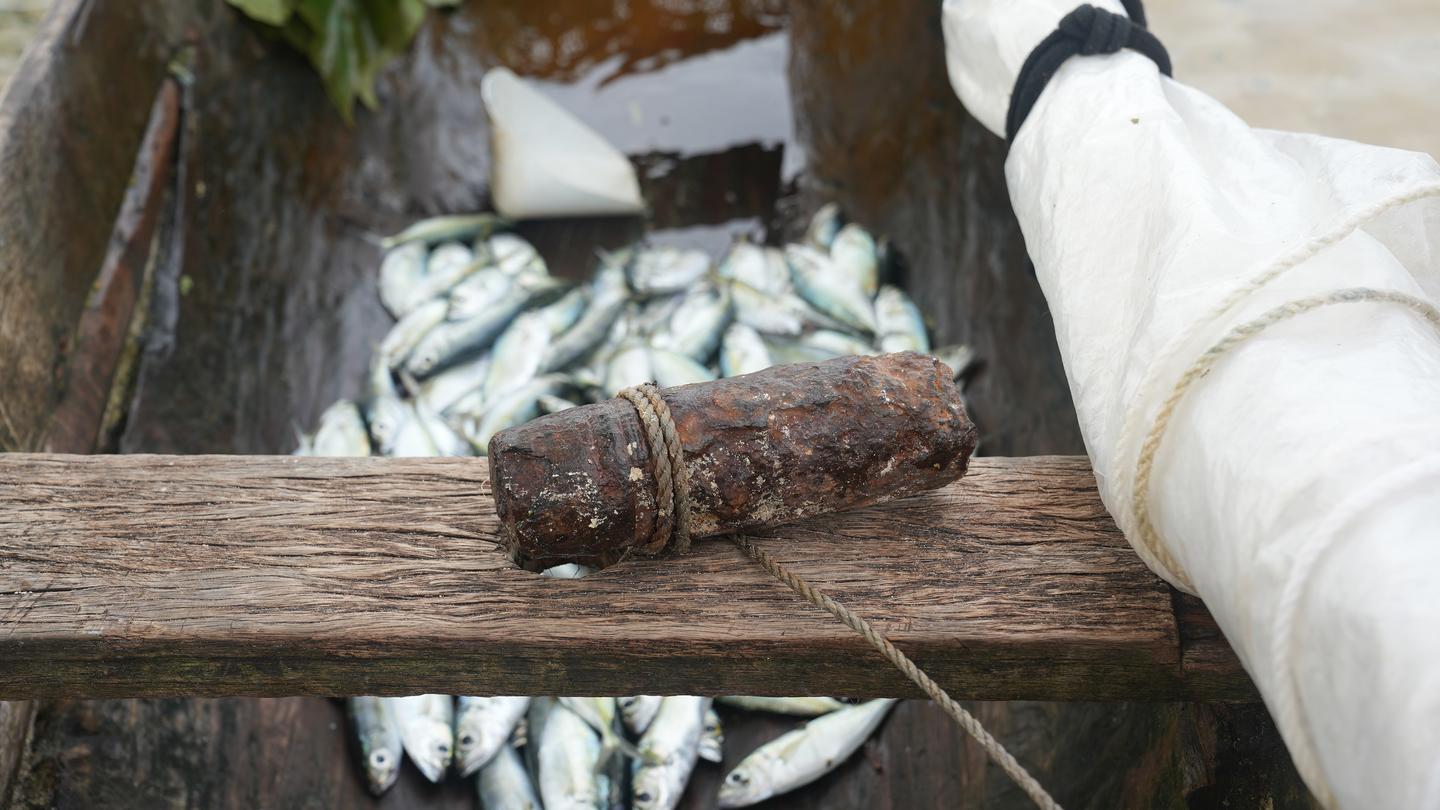
Living with UXO has become normalized. It’s common to see rusted ordnance used as canoe anchors. During celebrations, children make “bangers” using material from old explosives.

Contamination from unexploded ordnance is carried into rivers, wells and reefs, and warmer, more acidic seas may intensify the release of toxic chemicals.
Photo: UNDP Solomon Islands
Clearing the past
On Gavutu Island, farmer Fred has seen what clearance can change.
“The EOD unit comes and blasts lots of bombs,” he says. “When we know the area is clear, we can relax. We can plant crops. We don’t worry for the children.”
But clearance is slow and complex. The scale is vast.
“This is a wartime legacy not created by Solomon Islanders,” says Karen Galokale, Permanent Secretary at the Ministry of Police, National Security and Correctional Services. “Yet its impacts continue to hinder development, food safety and human health.”
UXO is not only a safety issue. It affects agriculture, fisheries, infrastructure and growth. “It is an issue of environmental justice, public health and human dignity,” she says.

On Gavutu Island, farmer Fred has seen what clearance can change--crops can be planted and children can play without fear.
Photo: UNDP Solomon Islands

Karen Galokale, Permanent Secretary, Ministry of Police, National Security and Correctional Services, says unexploded ordnance continues to hinder development.
Photo: UNDP Solomon Islands
A global responsibility
For Japan, which supported the research, the findings are significant.
“This research has never been done before,” says Ambassador Keiichi Higuchi. “It provides a scientific basis for addressing UXO not only here, but globally.”
For UNDP, the issue is central to development.
“UXO had always been an important issue,” says Deputy Resident Representative Raluca Eddon. “Time is running out as more hazardous chemicals leak into the environment, harming reefs, sea life and coastal communities."
For other partners, the research shows the impact of World War II UXO goes well beyond physical harm.
“These health and environmental impacts bring with them hidden economic costs that place a heavy burden on a developing country like Solomon Islands,” says New Zealand High Commissioner Jonathan Curr.
A coconut with a message
More than 80 years earlier, in these same islands, the surviving crew of the USS PT-109 waited for rescue. A young naval officer carved an SOS into a coconut shell, carried across the water by islanders.
The officer was John F. Kennedy. Years later, the coconut sat on his desk in the Oval Office. In his 1961 inaugural address, President Kennedy said, “United there is little we cannot do.”
Today, that idea still resonates in Solomon Islands. It is reflected in the Wantok system of mutual responsibility, where no one is left behind. In that spirit, making people safer from the remnants of war is not only possible. It is essential.
Because here, the impact of war is enduring. It cannot simply be buried. It continues to undermine ecosystems, health and long-term development.
Back at Lever’s Point, the police mark the site. The next step is to call in specialists to assess and clear the area.
“Now we understand there might be an even greater risk,” says Billy. “We want the bombs to be removed. We want to live in safety.”
Related
content
content


