Locations
SDGs Plus Programme
Project Summary
Pakistan was among the first countries to endorse the Sustainable Development Goals (SDGs) at the 2015 UN Summit and, through an Act of Parliament in 2016, adopted them as part of its national development agenda.
Since then, Pakistan has demonstrated strong policy and institutional commitment to implementing the 2030 Agenda. The country presented its Voluntary National Reviews (VNRs) in 2019 and 2022 following inclusive national consultations. However, Pakistan faces growing challenges in achieving the SDGs, including a shrinking fiscal space, high debt burden, and increasing climate risks — exemplified by the 2022 and 2025 floods — which continue to threaten the country’s sustainable development trajectory.
To address these challenges, the SDGs Plus Programme (2023-2028) builds on the earlier National Initiative for SDGs (2016-2023), focusing on policy integration, resilient institutions, inclusive partnerships, and innovative financing to accelerate progress towards the SDGs.
Outputs
The Programme has an integrated framework comprising three strategic outputs:
- Mitigate challenges around policy and governance including support on regional equalization in least developed areas, particularly those most affected by 2022 floods; building capacity for transformative governance, reforms, and digitalization; and optimally aligning Public Sector Development Plans and Annual Development Plans with priority SDGs.
- Support mobilization of innovative Financing for Development.
- Mainstream Gender, Inclusion and Innovation in national, sub-national and local development processes and solution
Outcomes
- Engaged national and provincial Parliamentary SDG Task Forces through policy briefings to clarify their roles and accelerate implementation in the final stretch toward achieving the 2030 Agenda.
- Facilitated the alignment of national and subnational policies with the SDGs through technical assistance, policy dialogues, and the integration of SDG principles into key planning documents and reform agendas.
- Trained 250+ government officers through SDG-aligned workshops to mainstream SDGs across federal and provincial institutions.
- Organized capacity-building activities on Integrated National Financing Frameworks, established a dedicated Debt Management Lab at the Economic Affairs Division, and supported the government in developing innovative financing instruments such as Debt Swaps.
- Partnered with OICCI and leading financial institutions to unlock private investment in SDG-aligned and climate-resilient ventures, including gender-smart and sustainability-certified businesses.
- Launched Pakistan’s SDG Investor Map, developed a US$7.9 billion investment pipeline to attract private capital in climate and development sectors, and showcased a $2.8 billion SDG-aligned portfolio at the UN SDG Investment Fair.
- Conducted feasibility studies of $400M+ in SDG projects and led national workshops to prepare a robust pipeline for the 2025 SDG Investment Fair in collaboration with UNDESA.
- Piloted the UNDP Sustainability Impact Framework with Fatima Fertilizer and rolled out the “Spirit of SDGs” public campaign to promote corporate accountability and citizen engagement.
- Hosted the National SDG Innovation Challenge Cup, along with provincial editions in Punjab and Gilgit-Baltistan, awarding blended finance to youth- and women-led solutions focused on climate resilience and socio-economic development.
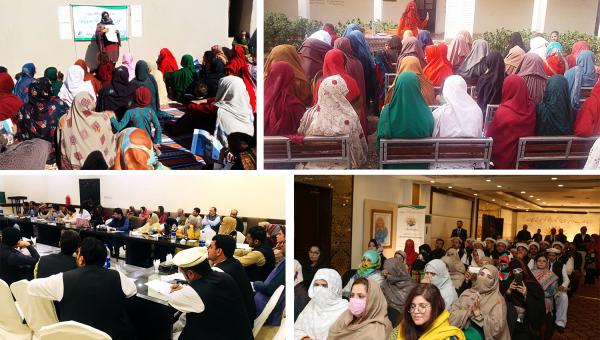
- Supported gender-disaggregated data systems in Punjab, delivered skills training for marginalized women in Sindh, and strengthened advocacy around Gender-Based Violence through technical assistance in Khyber Pakhtunkhwa.
Project Brief