Locations
Pakistan Legislative, Electoral, Digital Governance and Empowerment (PLEDGE) Project
Project Summary
The PLEDGE project provides targeted technical assistance to the Election Commission of Pakistan (ECP) to consolidate Pakistan’s democratic transition, strengthen governance, and strengthen public trust in institutions. Developed in response to the Government’s request and drawing on UNDP’s decade of electoral support (2012–2024), the project addresses critical challenges of credibility, transparency, and accountability in the electoral process.
Its comprehensive framework builds ECP’s institutional capacity, expands inclusiveness in political participation, supports parliamentary effectiveness, and promotes responsible digital practices in political discourse. These measures contribute to a more participatory, resilient, and transparent electoral environment.
PLEDGE also advances Pakistan’s commitments under the Sustainable Development Goals (SDG)s, particularly SDG 16 (Peace, Justice, and Strong Institutions), SDG 5 (Gender Equality), SDG 10 (Reduced Inequalities), and SDG 17 (Partnerships), while upholding the principles of human rights, gender equality, and sustainable development.
Objectives
- Strengthen ECP’s institutional capacity through targeted technical support to improve electoral processes and public perception.
- Promote inclusive electoral and governance processes through stakeholder engagement, capacity development, civic and voter education, and improved voter registration, enabling participative and effective decision-making.
- Strengthen parliamentary effectiveness and oversight by offering technical, advisory, and capacity-building support to encourage inclusive and transparent legislative processes.Ensure safe, ethical, and responsible digital practices within the political and social environment to improve digital information security and inclusion in political discourse.Increase public trust in democratic institutions by addressing issues of credibility, transparency, and accountability through integrated inclusive governance initiatives.
Outcomes
- ECP’s institutional and human resource capacity is strengthened, leading to improved digital transformation, electoral integrity, sustainable practices, and more effective communication and accessibility for marginalized groups.
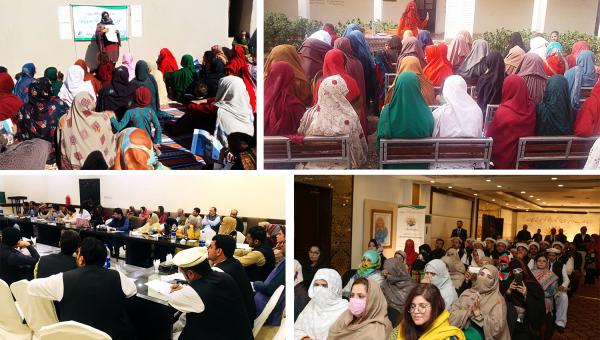
- Women and marginalized communities participate more actively in electoral and political processes through improved voter registration, targeted education campaigns, and collaboration with National Database & Registration Authority (NADRA), civil society, and women’s commissions.
- Parliamentary bodies demonstrate greater effectiveness in inclusive law-making, SDG oversight, and budget integration, with transparent and participatory processes through consultations and hearings.
- Citizens and institutions show stronger resilience against disinformation and online manipulation, supported by ethical digital governance standards, partnerships with regulators and tech actors, and digital literacy initiatives.
Citizens benefit from safer and more inclusive online political participation, with reduced technology-facilitated gender-based violence through awareness campaigns, policy support, and protective digital tools.
Project Brief