

 Locations
Building a Safer and More Inclusive Tourism Sector in West Manggarai
July 27, 2026

Aerial View of Harbour in Labuan Bajo
Over the past decade, Labuan Bajo has transformed from a quiet fishing town into one of Indonesia's fastest-growing tourism destinations. As the gateway to Komodo National Park and one of Indonesia's Super Priority Tourism Destinations, the town has become a symbol of Indonesia's ambition to build a world-class, nature-based tourism industry. Today, Labuan Bajo welcomes more than 400,000 visitors each year, with new hotels, restaurants, homestays, dive operators, and community enterprises emerging alongside a thriving tourism economy that has created new livelihoods and opportunities for local communities.
But sustainable tourism is about more than attracting visitors.
Behind every memorable journey through Flores are the people who make tourism possible—tour guides leading treks across rugged islands, hotel staff welcoming guests, restaurant workers, boat crews, artisans, homestay owners, drivers, and countless small entrepreneurs whose work shapes every visitor's experience. As tourism continues to grow, an equally important question emerges: who benefits from that growth, and under what conditions?
For many women, persons with disabilities, youth, and other vulnerable groups, employment in tourism does not always translate into equal opportunities, safe working environments, or pathways to leadership. Across Indonesia, tourism is largely driven by micro, small, and medium-sized enterprises (MSMEs), many of which have limited capacity to establish formal workplace policies or safeguarding mechanisms. As destinations expand, ensuring that tourism creates decent, respectful, and inclusive jobs becomes just as important as protecting the landscapes and biodiversity that attract visitors in the first place.
This understanding sits at the heart of the IN-FLORES Project, implemented by the Ministry of Forestry in collaboration with UNDP, and with support from the Global Environment Facility (GEF). While the project is widely recognised for conserving globally significant biodiversity—including the Komodo dragon, the yellow-crested cockatoo, and the Flores hawk-eagle—and strengthening community-based ecotourism, its vision extends beyond conservation. It seeks to ensure that tourism growth also strengthens communities by creating opportunities that are equitable, inclusive, and safe for everyone.
It was against this backdrop that Women in Tourism Indonesia (WTID), in collaboration with the Komodo National Park Office through the IN-FLORES Project, organized a two-day workshop on Gender Equality and Social Inclusion (GESI) and Safe and Respectful Workplaces on 17–18 June 2026 in Labuan Bajo.
Inside a modest meeting room at the Unio Diocese House, around 50 participants gathered from across the tourism ecosystem. Homestay owners sat alongside hotel managers. Tour guides exchanged perspectives with MSME operators. Representatives from local government, law enforcement, academia, media, civil society, and organisations of persons with disabilities joined the discussion. Although they represented different sectors, they shared a common ambition: ensuring that tourism in West Manggarai grows in a way that benefits everyone—not only visitors, but also the people who power the destination every day.

<em>Anindwitya Rizqy Monica (Co-Founder WTID) delivered a presentation on Gender Equality and Social Inclusion (Doc: Yudha Pamungkas - WLSA)</em>
The workshop focused on turning principles of equality and inclusion into practical actions that tourism businesses and institutions can implement immediately. Participants explored ways to strengthen workplace policies, improve complaint-handling mechanisms, and foster professional environments where workers feel safe and respected.
“Tourism is a human-centred industry. It is therefore essential that every worker—women and men, permanent staff and interns, and other vulnerable groups—have equal opportunities to grow and work in safe, respectful environments,” said Anindwitya Rizqi Monica, Co-Founder of WTID.
From Awareness to Systems Change
The workshop brought together around 50 participants from tourism businesses, local government, law enforcement, academia, media, civil society, and organisations of persons with disabilities — homestay owners sitting alongside hotel managers, tour guides exchanging perspectives with MSME operators.
Using the Safe and Respectful Workplace Framework, discussions centered on three key pillars: prevention, response, and support. It created a space for stakeholders to examine the systems, assumptions, and power relations that shape workplace experiences across the sector. Participants discussed challenges often left unspoken: harassment that goes unreported, blurred professional boundaries between guests and workers, fears of retaliation, and the absence of clear reporting procedures.
One of the workshop’s greatest strengths was the diversity of voices in the room. Persons with disabilities, including visually impaired participants, contributed their perspectives alongside tourism operators, government officials, and community representatives. These exchanges highlighted how gender norms, social expectations, and workplace power dynamics can affect both employee wellbeing and the overall quality of tourism services.
What emerged was a notable shift in perspective. Many participants initially viewed workplace harassment and discrimination as isolated incidents or individual problems. By the end of the workshop, discussions increasingly turned to structural factors — unequal power relations, permissive workplace cultures, gender bias, and weak institutional safeguards. Safer workplaces, participants recognised, require institutional solutions, not just individual awareness.

<em>Participants and facilitators pose for a group photo after completing the two-day Safe and Respectful Workplace in Tourism workshop in Labuan Bajo (Doc: Yudha Pamungkas - WLSA)</em>
“In the same room we had hoteliers, tour operators, MSMEs, communities, local government, law enforcement, academics, and persons with disabilities. Building safe and inclusive tourism cannot be done by a single sector; it requires collaboration across stakeholders,” Monica reflected.
This shift mirrors the approach of the IN-FLORES Project itself. Rather than treating workplace safety as a matter of personal conduct alone, the project works to strengthen the institutions, systems, and policies that make long-term change possible, combining research, capacity-building, institutional strengthening, and policy engagement to build a tourism ecosystem that is more inclusive, accountable, and responsive to the needs of workers and vulnerable groups.
To help turn these commitments into action, WTID and the IN-FLORES Project also developed a Safe and Respectful Workplace in Tourism Toolkit, offering practical guidance on safeguarding, reporting mechanisms, risk assessment, codes of conduct, and institutional accountability. The toolkit bridges awareness and implementation, helping tourism operators move from understanding the problem to building systems that can address it.
A Destination Measured by More Than Arrivals
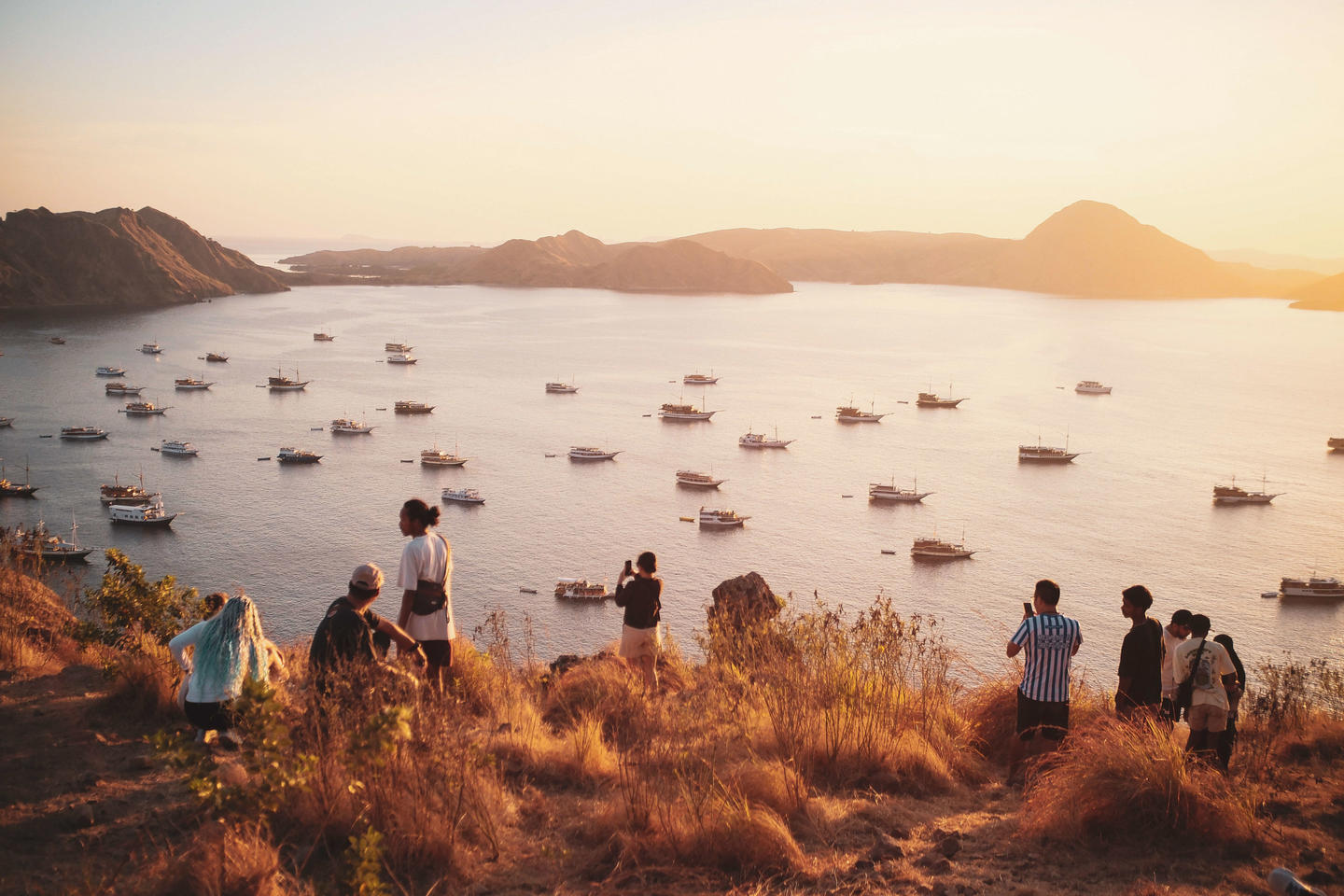
Aerial View of Labuan Bajo. Doc : Rizqi Megaswara/INFLORES Project Indonesia
“Inclusive tourism means ensuring everyone has the opportunity to participate, benefit, and feel safe in tourism spaces. These values must be embedded in destination management so economic gains do not come at the expense of worker safety and dignity,” said Imanuddin Utoro, Coordinator for Terrestrial and Marine Landscapes, Western Region, IN-FLORES Project.
The workshop also underscored that creating safe and inclusive tourism destinations cannot be achieved by any single institution acting alone. For the IN-FLORES Project, these discussions are closely linked to broader efforts to promote sustainable and community-based tourism across Flores. For UNDP, this work is part of a broader vision of sustainable tourism in Flores: protecting biodiversity and expanding community-based ecotourism must go hand in hand with advancing gender equality, strengthening worker protection, and ensuring that no one is left behind.
By the end of the workshop, participants had developed tangible outputs: draft internal policies, simple reporting mechanisms, and plans for follow-up staff training within their respective organizations. These commitments represent important first steps toward building more respectful and inclusive workplaces throughout the tourism sector.
The initiative reflects the wider vision of the IN-FLORES Project, which seeks not only to conserve globally significant biodiversity—including the Komodo dragon, yellow-crested cockatoo, and Flores hawk-eagle—but also to strengthen the social and economic foundations of sustainable development through community-based ecotourism.
Creating a culture of safety, respect, and inclusion requires long-term commitment—from policy development and institutional accountability to ongoing training and support systems. Yet the workshop in Labuan Bajo offered a powerful reminder that progress often starts with small, consistent actions.
As West Manggarai continues to position itself as a world-class destination, its success will not be measured by visitor arrivals or economic growth alone.
It will also be measured by whether women, persons with disabilities, youth, and other vulnerable groups can participate fully, contribute safely, and share equitably in the benefits tourism creates. Through the IN-FLORES Project, UNDP and its partners are helping lay the foundations for that future — one where conservation, inclusion, and economic opportunity advance together (*).
Written by : Yudha Pamungkas (IN-FLORES Project), Anindwitya Rizqi Monica (Women in Tourism Indonesia), Wiene Andriyana (UNDP Indonesia)
Edited by : Thomas Benmetan, Nabilla Rahmani
Related
content
content


