

 Locations
UNDP and Government of Suriname Take Stock of 2025 Results and Priorities for 2026
December 16, 2025

The United Nations Development Programme (UNDP) Suriname, in partnership with the Government of Suriname, hosted its end-of-year partner dialogue to review progress in the implementation of the current Country Program priorities and to discuss areas for future cooperation.
The dialogue featured remarks from Katy Thompson, UNDP Resident Representative for Guyana and Suriname alongside Miquella Huur, Minister of Regional Development, and Stanley Soeropawiro, Minister of Land Policy and Forest Management, underscoring robust collaboration between UNDP and the Government of Suriname and the joint commitment to deeper cooperation in 2026 and beyond.
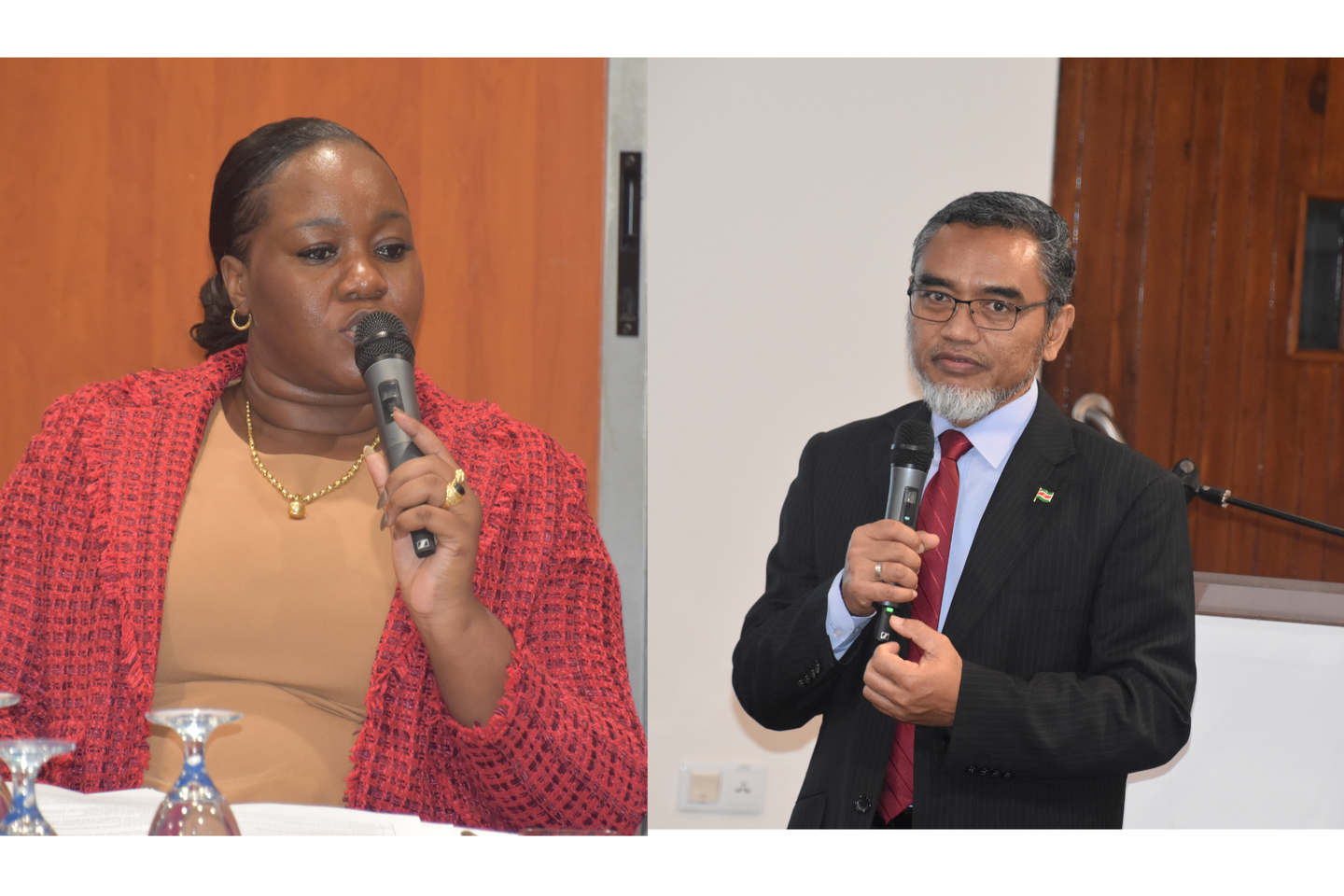
(L)Miquella Huur, Minister of Regional Development and (R) Stanley Soeropawiro, Minister of Land Policy and Forest Management
In 2025, UNDP Suriname and its national partners, helped advance environmental sustainability, governance, and inclusive development results and policies, including their cooperation on the Green Development Strategy, the NDC3.0 and other important policy areas. The projects in Suriname mostly focus on biodiversity conservation, renewable energy, forestry, artisanal and small-scale gold mining and natural resource management, with a strong emphasis on improvement of livelihoods in Suriname’s interior.
The UNDP Deputy Representative, Berdi Berdiyev thanked the partners without whom this would not be possible to achieve and highlighted the important role of the Global Environment Facility (GEF), the European Union, the UN SDG Fund, the Climate Promise initiative, and many other partners who support UNDP. The participants also noted the evolving cooperation with the International and Regional Financial Institutions.
Beyond environmental programming, in 2025 UNDP supported electoral processes, ensuring timely procurement of essential materials, voter awareness, technical support, among others. The organization also advanced work on human rights institution development, gender equality, and policy support for national strategies, reinforcing governance as a cross-cutting priority.
UNDP reaffirmed its pledge to leave no one behind, working closely with indigenous and tribal communities to improve access to clean water, livelihood development, and renewable energy solutions.
Looking ahead to 2026 and beyond, in addition to the ongoing interventions, the participants highlighted the need to focus on renewable energy and bioeconomy hubs to attract major financing and accelerate green growth, strengthening governance systems, including electoral readiness and institutional reforms for transparency and resilience, decentralization, scaling gender-responsive programming and improving language accessibility for inclusive participation, enhancing community engagement through capacity-building and targeted investments in clean water, sustainable agriculture, and digital connectivity.
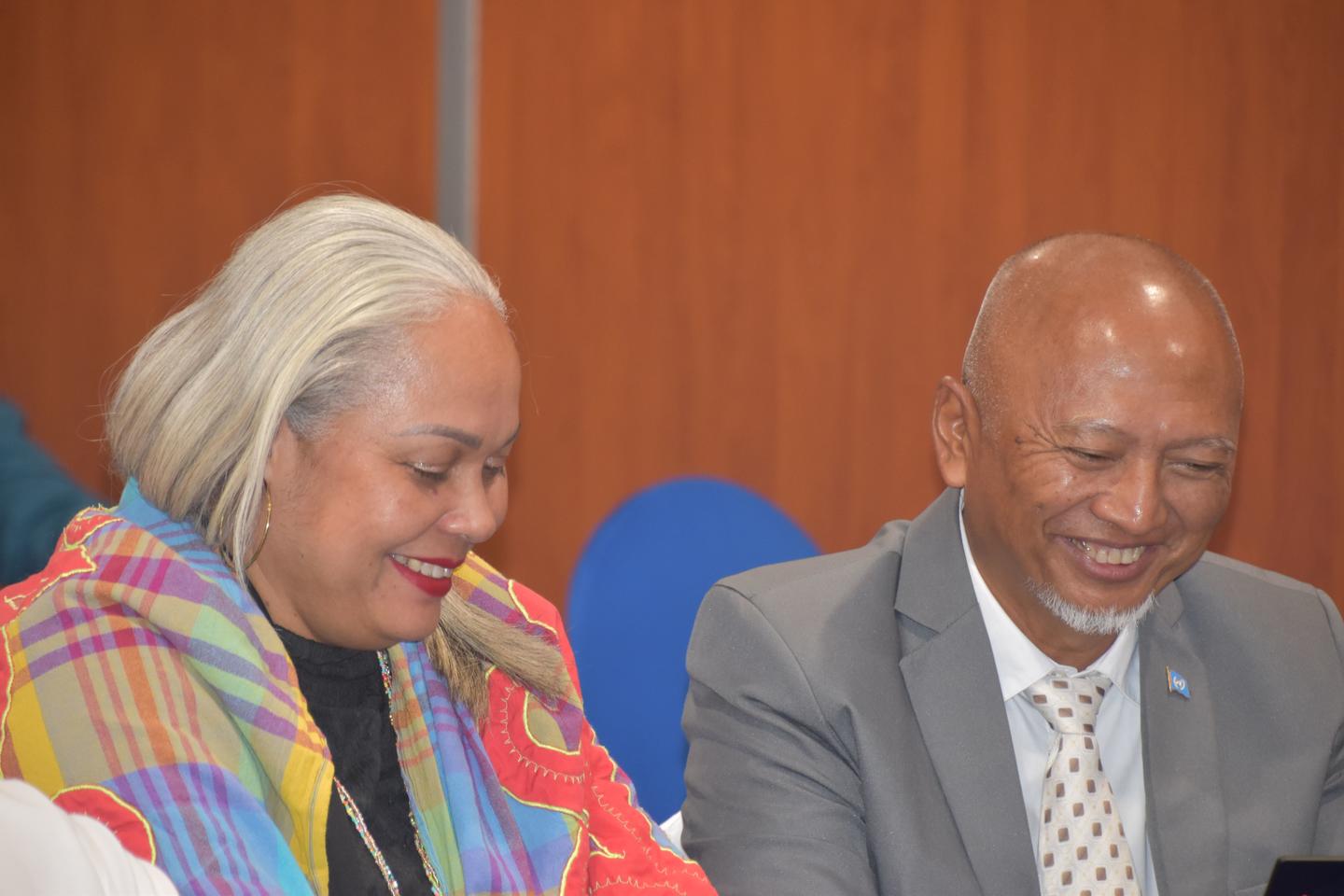
(L) Valerie Lalji Permanent Secretary Energy at Ministry of Natural Resources (R) Ruben Martoredjo, Programme Analyst for Social Development and SDG Integration.
All these interventions must align with national priorities and the UN MSDCF for greater coherence and impact on the ground and be reflected during the formulation of the new UNDP Country Program for Suriname.
In closing, the participants reiterated their commitment to working together in support of the national development priorities as well as the SDG agenda in Suriname.