Locations
Institutional Strengthening (IS) of National Ozone Unit for the Implementation of Montreal Protocol
Project Summary
The ozone layer acts as a vital shield, absorbing harmful ultraviolet (UV) radiation from the Sun, particularly ultraviolet B (UVB) rays. Even small amounts of UVB can cause sunburn, while prolonged exposure may lead to skin cancer, eye cataracts, and immune system suppression. Without this protective layer, life on Earth would be exposed to dangerous levels of radiation.
The Montreal Protocol on Substances that Deplete the Ozone Layer is a landmark international treaty that protects the ozone layer by phasing out the production and consumption of Ozone Depleting Substances (ODS) such as chlorofluorocarbons (CFCs), hydrochlorofluorocarbons (HCFCs), methyl bromide, and halons. The treaty opened for a signature on 16 September 1987 and entered into force on 1 January 1989. Pakistan ratified it in 1992.
To oversee implementation of various ozone-depleting substances (ODS) phase-out initiatives, the National Ozone Unit (NOU) was established within the Ministry of Environment (now the Ministry of Climate Change and Environmental Coordination). The NOU develops various policy measures policies to regulate ODS imports, assists ODS-dependent industries in transitioning ozone-friendly technologies and coordinates with national and internation stakeholders through the United Nations Development Programme (UNDP), United Nations Environment Programme (UNEP), and United Nations Industrial Development Organization (UNIDO) with financial assistance from the Multilateral Fund Secretariat (MLFS).
Pakistan has successfully completed eleven phases of the Institutional Strengthening (IS) project. Phase XII (1 April 2024–31 March 2027) continues to build the capacity of the NOU and ensure compliance with the Montreal Protocol.
Objectives
- Enable the NOU to continue plan, coordinate, and implement activities necessary required to ensure Pakistan's compliance with the Montreal Protocol.
- Support Pakistan to maintain progress in phasing out the consumption of phasing out ODS, strengthen the management system for hydrochlorofluorocarbons (HCFCs), introduce a hydrofluorocarbons (HFC) licensing system, and ensure accurate and timely data collection for Article 7 and Country Programme reporting under Montreal Protocol (MP).
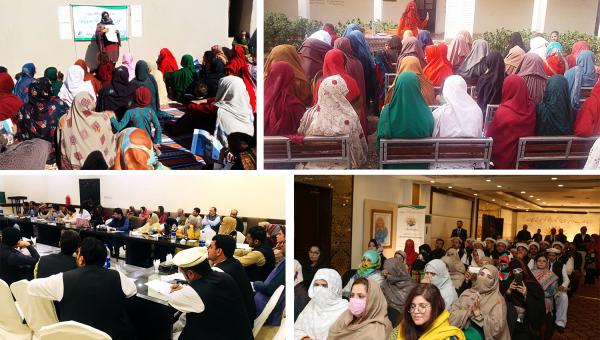
- Promote awareness-raising and information exchange on issues related to the Montreal Protocol.
- Contribute to ozone protection and support the Government of Pakistan in fulfilling its commitments under the Montreal Protocol, thereby maintaining compliance with this global agreement.
Outcomes
- Provision of essential support to help Pakistan maintain progress in phasing out ODS consumption, including achievement of a 67.5 percent reduction target in HCFC phase out as of 1 January 2025.
- Effective and timely data collection for Article 7 and Country Programme reporting.
- Awareness-raising and information exchange on issues related to the Montreal Protocol.
- Sustenance of NOU’s capacity to ensure effective compliance with the Montreal Protocol.
- Contribution to ozone protection and support to the Government of Pakistan in fulfilling its commitments under the Montreal Protocol, thereby maintaining compliance with this global agreement.