

 Locations
National dialogue backs a Trade Negotiation School to safeguard exports and market access post-graduation.
Speakers Call for Stronger Trade Negotiations Capacity Ahead of LDC Graduation
September 7, 2025
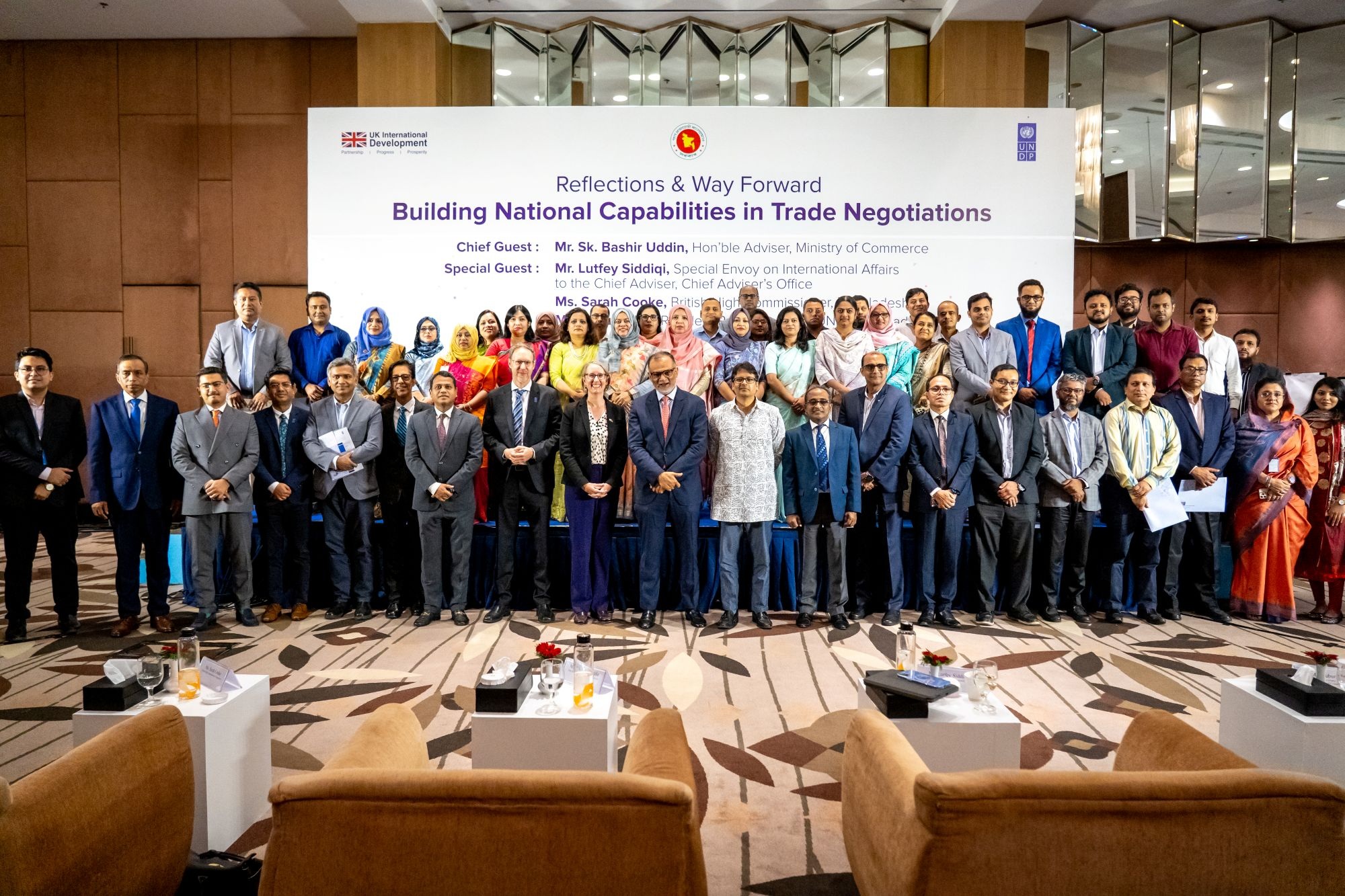
Building Bangladesh’s trade negotiation capacity as government, academia and partners convene in Dhaka under the Ministry of Commerce and UNDP TEPP financed by the UK Government FCDO to prepare for LDC graduation in 2026.
©UNDP Bangladesh
Speakers at a national dialogue today underscored the urgency of strengthening Bangladesh’s trade negotiation capacity as the country prepares to graduate from the Least Developed Countries (LDC) category in 2026. The dialogue, “Reflections & Way Forward: Building National Capabilities in Trade Negotiations,” was organized by the Ministry of Commerce with support from the United Nations Development Programme (UNDP), under the Transformative Economic Policy Programme (TEPP), financed by the UK Government’s Foreign, Commonwealth and Development Office (FCDO).
During the dialogue speakers, emphasized that building a skilled pool of trade negotiators is crucial for sustaining export growth, diversifying markets, and safeguarding Bangladesh’s interests in an increasingly competitive global trading system.

©UNDP Bangladesh
Addressing as the chief guest, Sk. Bashir Uddin, Hon’ble Adviser to the Ministry of Commerce, called for institutionalising trade negotiation capacity, stating, “As Bangladesh prepares to graduate from LDC status, the Trade Negotiation School will be vital in equipping our negotiators to secure the nation’s interests in a complex global trade landscape.”

©UNDP Bangladesh
Lutfey Siddiqi, Chief Adviser’s Envoy for International Affairs, stressed, “Trade negotiations cannot be approached casually. They demand institutional change, specialist expertise, authority, and continuity to succeed.”
©UNDP Bangladesh
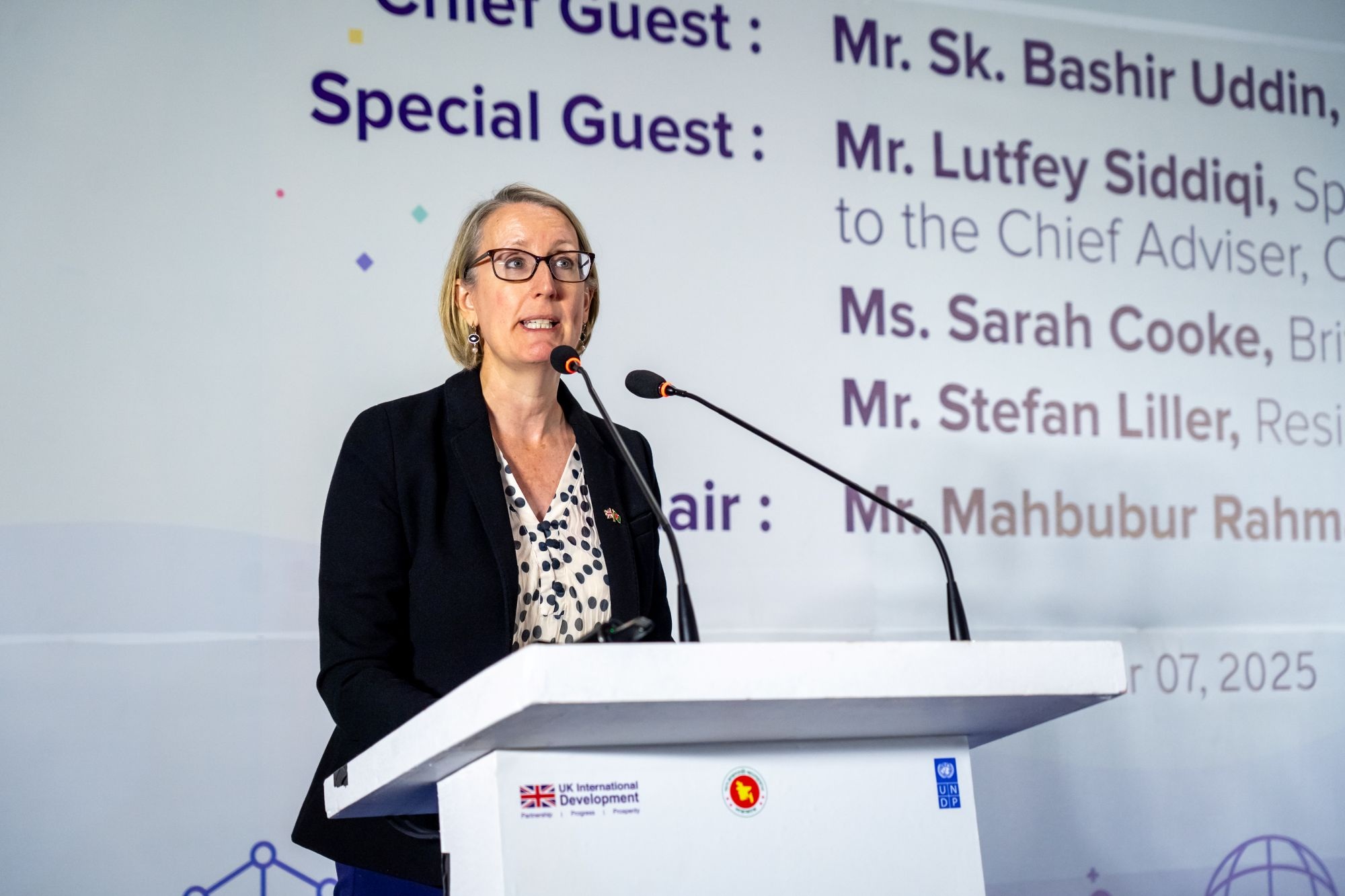
Special Guest, H.E. Sarah Cooke, British High Commissioner to Bangladesh, reaffirmed the UK’s partnership, “The UK is proud to support Bangladesh to build a new generation of trade negotiators, and we remain firmly committed to supporting its journey toward a modern, inclusive economy”.

©UNDP Bangladesh
Stefan Liller, Resident Representative of UNDP Bangladesh, stressed that Bangladesh’s graduation is “a call for an economic reset.” He said, “Bangladesh must craft a new generation of trade and investment strategies, negotiate favourable agreements, and defend its interests in global forums. Central to this effort is a skilled and strategic team of trade negotiators, and I’m delighted the Ministry of Commerce has established such a pool. UNDP, together with the UK Government is proud to support this effort so that Bangladesh not only participates in global trade talks but does so with clarity, unity, and foresight.”
The event, chaired by Mr. Mahbubur Rahman, Secretary, Ministry of Commerce, also recognised members of the newly formed pool of trade negotiators with certificates. Drawing expertise from ministries, agencies, and academia, this cadre is expected to play a pivotal role in advancing Bangladesh’s trade interests in bilateral, regional, and multilateral forums.
Md Abdur Rahim Khan, Additional Secretary (Export Wing), Ministry of Commerce, Owais Parray, Country Economic Advisor, UNDP Bangladesh and Dr. Mohammad Abdur Razzaque, Chairman, RAPID were also amongst many who shared their views.
UNDP, through the TEPP, is supporting the Government of Bangladesh to strengthen national trade capacities by developing a dedicated pool of trade negotiators, providing specialised capacity-building programmes and facilitating technical assistance. The initiative is designed not only to build individual skills but also to create institutional mechanisms that ensure knowledge retention and long-term sustainability of trade negotiation capacity.
Related
content
content


