

 Locations
Healthcare professionals are trained to manage the impacts of climate change
August 14, 2025

Photo: UNDP Moldova
Storms, torrential rains with hail, and sweltering heat—these are just a few of the extreme events we have witnessed and experienced firsthand in recent years. Environmental experts warn that such natural events will occur more frequently in the future due to climate change. At first, it might seem that the negative effects of global warming affect everyone similarly. Not quite, doctors say. Very high summer temperatures, for example, pose major risks to children, older adults, pregnant women, and people with chronic illnesses. To respond to these challenges, experts from the School of Management in Public Health, with support from UNDP Moldova and the Green Climate Fund, have launched the pilot course “Adaptation to Climate Change.”
More than 120 healthcare professionals expressed interest in the course dedicated to climate change adaptation. From physicians to hospital managers, all acknowledged that the extreme weather events of recent years have impacted their daily work.

Rodica Eremciuc
One of them is Rodica Eremciuc, a pediatrician and university lecturer in the pediatrics department at “Nicolae Testemițanu” State University of Medicine and Pharmacy, with over 12 years of professional experience.
“It was one of the most interactive courses I’ve attended: we worked beyond the scheduled hours and had many practical activities. You should know that participants not only worked on concrete action plans, they also changed daily habits: after the first day of the course, they came with reusable water bottles from home. What I liked about this course is that everyone worked on specific plans for specific institutions with specific solutions: energy-efficient bulbs, careful water use, and so on. We are promoters of a healthy lifestyle, and change must start with us,” says Rodica Eremciuc.
Sergiu Cuciuc, head of the radiology and imaging department at the Institute of Cardiology, who has worked in the field for over 27 years, shares the same view:

Sergiu Cuciuc
“Climate change is inevitable. So is technological progress - we cannot stop it, but we can take steps to adapt and prevent health consequences that risk becoming irreversible. Whether we like it or not, heat waves negatively affect our patients. It is important to provide care tailored to the realities of the times. To be able to help them, it is crucial that we are prepared.”
The two doctors emphasize that climate change has a direct impact on health, increasing the risks of heatstroke, dehydration, respiratory diseases, cardiovascular conditions, and more. Therefore, in addition to treatment advice, it is a doctor’s duty to talk to patients about the importance of hydration and avoiding sun exposure during peak hours - especially for older people, children, and pregnant women - the groups most affected by extreme climate events.
The “Adaptation to Climate Change” manual, developed by the School of Management in Public Health with support from UNDP Moldova and the Green Climate Fund, addresses topics such as climate risks to public health, identification of vulnerable groups, planning response measures within medical institutions, managing energy and water consumption, preventing infections in the context of extreme events, and effective communication with patients and communities.

Oleg Lozan
“In our view, this course must be part of the continuing education offer. Moreover, we plan to develop it in an online, distance-learning format, so that it is accessible to everyone interested in the latest developments in the field. We told the specialists who took part in the course: one of the tasks of healthcare workers is to take measures to reduce the negative health impacts. At the School of Management in Public Health, we raise the issue and provide training, but practical implementation remains on them,” says Oleg Lozan, one of the course and manual authors of “Adaptation to Climate Change,” Dr. habil. in Medical Sciences, university professor and director of the School of Management in Public Health.
Healthcare staff on the frontline during climate emergencies


Landslides in the country’s southwest region, episodes of flooding, and the COVID-19 pandemic have shown that doctors are the specialists “on the frontline,” involved in rapid response and supporting victims. That is why they should possess the knowledge and skills needed to anticipate climate risks at the community level, identify vulnerable groups, and develop rapid intervention protocols, underscores Mihail Pâsla, Doctor of Medical Sciences and Associate Professor at the School of Management in Public Health:
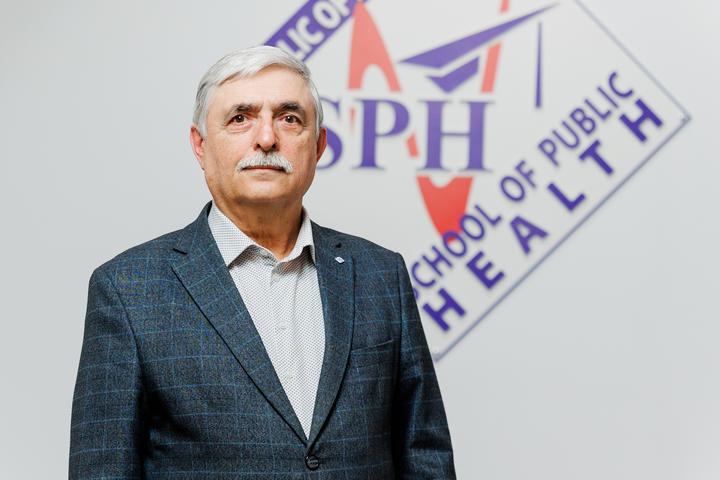
Mihail Pâslă
“Most of the information we provided to students was new to them. What does that tell us? That the impact of climate change on health is not being addressed at the necessary level, even though the effects are significant and potentially costly. The health sector must play a key role in adaptation and in reducing the impact of climate change. Adaptation means educating the public and medical staff - what needs to be done and how - especially in emergencies such as heat waves, heavy snowfalls, or floods. Practice shows that some healthcare workers still lack the necessary knowledge and skills; therefore, this course is crucial for preparing specialists.”
The practical exercises from the course are also included in the “Adaptation to Climate Change” manual. In the chapter “Health institution – adapting to climate change”, students are encouraged to identify potential climate-related risks and hazards, propose measures to increase resilience, suggest at least three actions to be implemented in their workplace to keep up with climate change, and craft climate and health communication messages tailored to at-risk target groups. These exercises were developed with input from course participants, explains Alina Timotin, PhD in Economics and study coordinator at the School of Management in Public Health:

Alina Timotin
“At first, many students were puzzled as to why doctors should be concerned about climate change; by the end, they were enthusiastic and surprised by how much they need to know and do. In one exercise, we asked them to draw climate change as they understand it: they illustrated drought, cracked earth, melting glaciers—without people. We told them they must see the connection between climate change and public health and adapt their messages so that, as future managers and specialists, they can help patients change their lifestyles.”
The authors of the “Adaptation to Climate Change” course claim that investing in professional training in the health sector to deal with climate change is not an option - it is a necessity.
The health sector is among the six priority areas in the National Climate Change Adaptation Programme until 2030 and its Action Plan. Health-sector measures include adjusting existing clinical protocols or developing new ones for the prevention and treatment of diseases caused or exacerbated by climate change. The document was developed with support from UNDP Moldova and adopted by the Government of the Republic of Moldova in August 2023.


