

 Locations
How UNDP is supporting farmers in Hawija, recultivate their land and boost the agricultural sector.
Bringing Life Back to Kirkuk’s Farms
September 2, 2021

Hawija district in Kirkuk has a rich agricultural history. It was known for its booming vegetable, fruit, corn, wheat, and cotton produce that catered to most of Iraq. Though, when ISIL arrived in 2014, farmers and their families fled for their lives, leaving behind their cultivated lands and homes.
The brutal conflict left behind destroyed irrigation systems, damaged equipment, burnt farms, and decimated livestock. It was estimated that this caused over US$ 12.6 million worth of damage to the agricultural sector across Kirkuk.
In 2017, when farmers started to return after the liberation from ISIL, they were met with absolute devastation. Supporting the farmers of Kirkuk to build back their farmlands, UNDP's Funding Facility for Stabilization is rehabilitating critical agricultural infrastructure.


The support includes a comprehensive package of rehabilitating Hawija Agricultural Department's critical facilities, such as testing laboratories, management buildings, a river regulator, irrigation systems, and three warehouses. This will help boost Hawija's crop production, storing, and distribution while ensuring quality control and reducing cost.
How does this directly support the farmers' efforts to revive their farmlands? We speak to four of them - Ihsan, Mohammed, Sabah, Rockan - who are fighting to survive, struggling to live in better conditions, and hoping for a better future for their families.
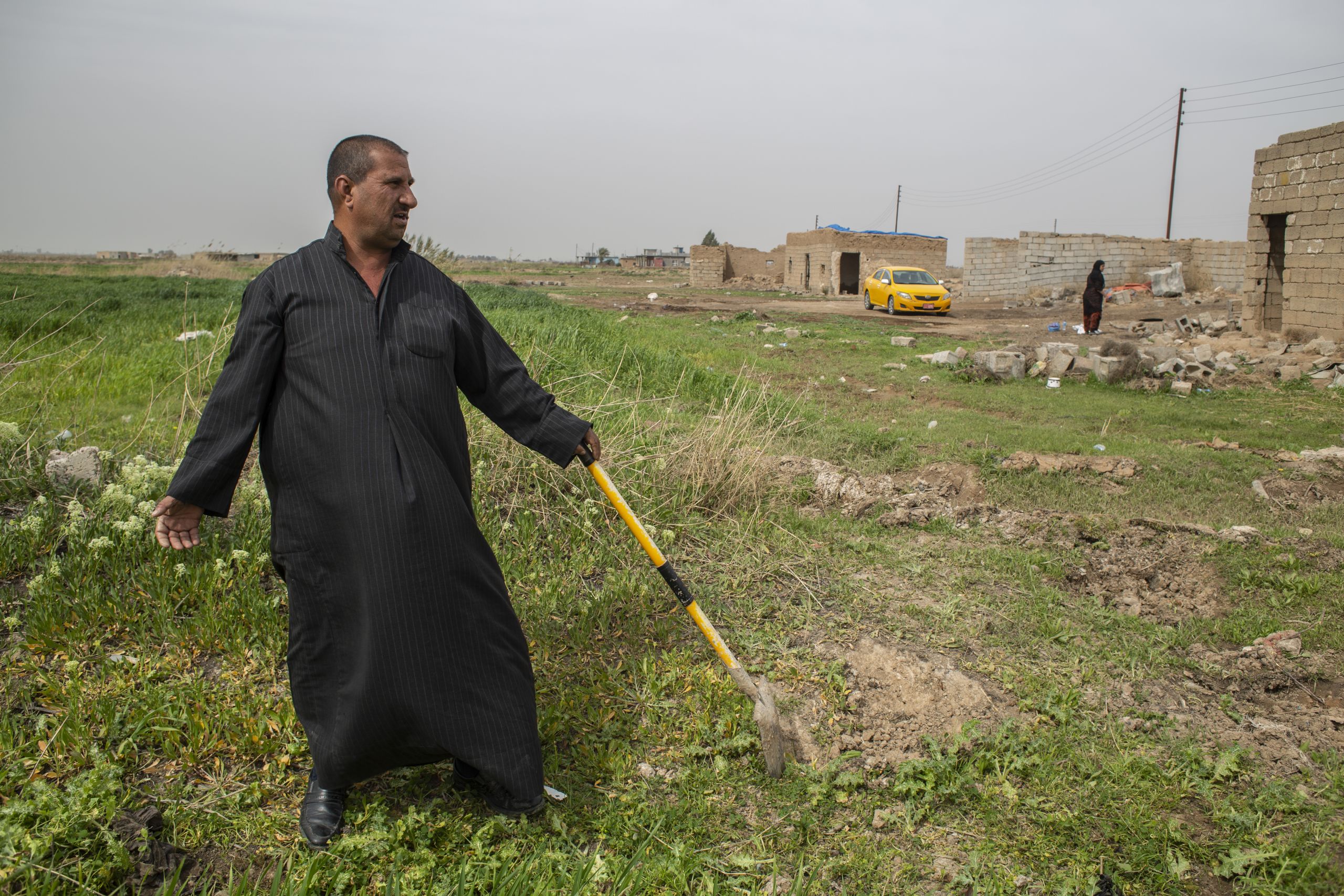

Mohammed Khudher
"ISIL turned my life upside down. I fled for my life, leaving my farm and all that I loved behind in 2015. I went to Kirkuk city and worked as a taxi driver. I still remember how my life changed overnight, from owning a prosperous farming business to nothing," says 45-year-old Mohammed Khudher. He owns 25 acres of land and has been a farmer for over 25 years. Originally from the Al Riyadh district, he is married to two wives.
"After the fighting, my well was damaged, greenhouse destroyed, and cultivated land burnt. We need support with fertilizers and soil to revive the land's health." The lack of access to water is slowing Mohammed's effort to build back. "I only produced five tons of corn last year because of the shortage of water."
Before the conflict, Mohammed would alternate between summer and winter crops. Now, he grows yellow corn and wheat.
"The rehabilitation of the warehouse will directly benefit my crop production as I now have a safe place I can maze and dry the corn. This is also going to encourage farmers to produce more and not worry about storage."


Sabah Saad Muhammad
"My father started farming in 2001. We suffered a great deal under ISIL. We had to flee for our lives, leaving everything behind, including our clothing, land, and belongings," says 18-year-old Sabah Saad Muhammad. They fled to a family friend's residence in Tal Hussein, Kirkuk.
Sabah owns 30 acres of farmland in Hawija. Born into a family of 16, he joined the rest of his siblings to cultivate the family's farm three years ago. "When we returned in 2017, we found most of our land burnt and equipment stolen. For instance, our water pump and fertilizers were stolen while our wells were left contaminated." They grow wheat and corn.
The warehouse facilities will support the processing and storing of Sabah's cultivated corn and wheat. "Before this, we did not cultivate as much since there was no place to safely store them. But today, now that we have access to the facility, we look forward to increasing our productivity." Sabah and his family harvest over 30 tons of corn every month.
"I encourage farmers to come back home and start reviving their land. It is the only way for us to boost the region's economy. I want to assure the other farmers that it is safe to cultivate now."


The rehabilitation of three warehouses is completed and provides facilities for corn mazing, hulling, and drying. It is directly helping 4,000 farmers and their families. Today, the farmers are back to business with a source of income, as crop produce is stored properly in the warehouses.


Rockan Mohammed Ahmed
"I started farming in 2003. It was unfortunate to leave all my hard work behind during ISIL," says 38-year-old Rockan Mohammed Ahmed. He owns 180 acres of farmland in Owain Hussain Baik village in Hawija. "I also used to grow an orchard for delicious apricots, figs, and apples. I was famously known for the quality of fruits I produced."
Today, life is different for Rockan. His house was left destroyed along with his fertile lands. "Ever since I returned, I have only been able to cultivate 15 out of the 180 acres I own due to the depleting land quality and lack of water." He used to produce over 60 tons of wheat every season and 300 tons of corn. During this season, he has only grown over 142 tons of yellow corn.
While Rockan slowly builds back his life, he is also thinking of upgrading his existing systems. "I am saving money to install a solar system to produce power, instead of depending on fuel as it affects the environment and is expensive."
"Rehabilitating the river regulator will address the irrigational challenges that are limiting us from recultivating our land. I encourage other farmers to come back. We need to find ways of working together and helping each other out to rebuild our once-prosperous country."


Ihsan Dalf Salih
"My primary source of income is farming. When my family and I were displaced, we lost our income and housing," says 29-year-old Ihsan Dalf Salih. Farming runs in his veins as he is a third-generation farmer. The father of two owns 75 acres of land.
Ihsan returned in 2017 after the liberation from ISIL. Due to a lack of irrigational facilities, he only cultivates wheat now. "We still lack access to electricity. I wish to go back to growing a greater variety of crops such as cotton, vegetables, barley, fruits, and corn. But I need electricity to pump water and a more reliable source of water to be able to do this." This season, he produced only 30 tons of wheat.
"With the rehabilitation of R1 river regulator, I hope to see an improvement in our irrigation systems. This way, I can start to experiment with crops by growing sesame and millet."

The rehabilitation of the R1 River Regulator will provide water to over 288,000 acres of land across Kirkuk, Salah al-Din, and Diyala. This is built to regulate the water levels fed into irrigation canals that eventually reach the farmlands.

The comprehensive agriculture package is implemented by UNDP's Funding Facility for Stabilization with funding from the German Federal Ministry for Economic Cooperation and Development (BMZ), provided through KFW Development Bank. It will directly benefit over 40,000 farmers and their families.
