

 Locations
Rooting Resilience in Wakatobi
February 19, 2026

In Wakatobi, fishers navigate longer journeys and uncertain catches as warming seas push fish farther from shore—turning traditional knowledge into a daily test of resilience.
UNDP Indonesia

The first thing you notice in Wakatobi is how life moves with its natural elements. The sea sets the day’s schedule, and the sky decides what can be planted and when. For generations, families across these islands have built livelihoods from what nature provides: small farms stitched into sandy soils, fishing boats pulled onto coral-fringed shores, community ties as dependable as the ties.
But in recent years, nature has become less predictable. With nearly 97 percent of the regency’s territory covered by ocean, even small shifts in weather or marine conditions affect daily life. Farmers now face rains that come late, or in sudden intense bursts.
The sea grows warmer, pushing fish farther from the familiar grounds where fishers like Bihi, a Bajo fisher with two decades on the water, used to find their catch within hours.
Bihi grew up reading the ocean the way other people read a clock. The wind direction, the colour of the water, the way the surface “moves” before dawn—these were the cues that guided when to leave, where to fish, and how long he could stay.
“We used to go out at night and return before sunrise with three or four good-sized tunas,” he recalled. “Now, even one is not guaranteed.”

Bihi has spent 20 years of his life in the sea, making ends meet as a fisher. Photo: UNDP Indonesia
From Instinct to Policy
This "lived uncertainty" is precisely why Wakatobi has become a critical focus for Indonesia’s climate strategy. When traditional instinct is no longer enough to navigate a changing climate, formal systems must step in to bridge the gap.
This bridge is the National Adaptation Plan (NAP) Readiness project. Supported by the Green Climate Fund (GCF) and led by UNDP in partnership with the Indonesian government, the project ensures that what Bihi sees on the water isn't lost in translation when it reaches the halls of government in Jakarta.
By connecting community priorities directly to national budgeting and planning systems, the NAP transforms local struggles into strategic priorities. It ensures that the Ministries of Planning (Bappenas), Environment, and Finance are all rowing in the same direction as the people on the shoreline.
A Plan Built from the Shoreline Up
In Wakatobi, adaptation planning began with what communities already know—how their environment is changing, where vulnerabilities exist, and which households are most affected. UNDP worked with local government to translate these community insights into a stronger evidence base by pairing them with climate and risk data. This joint approach ensured that decision-making is informed not only by scientific analysis, but the lived realities of those experiencing change every day.
Through a series of workshop facilitated together with UNDP and government partners, district officials sat alongside village leaders, community groups, academics, youth and civil society organisations. Together, they mapped risks using both data and lived stories: wells turning salty during droughts, exposed coastlines, and livelihoods sensitive to weather and sea-level changes.
“Wakatobi is made up of small islands with a vast marine area. At the Wakatobi Government, we understand the significant risks brought by climate change. That’s why we place climate change issues as a strategic priority and a main indicator of our regional development progress,” said Muhammad Kasim, Socio-Economic Lead of the Regional Development Agency of Wakatobi Regency.

Muhammad Kassim. Photo: UNDP Indonesia
At the national level, the NAP supported stronger systems for monitoring, assessment, and budgeting, ensuring that lessons from Wakatobi inform wider policy and investment planning. This is done by the involvement of NAP in supporting enhancements to the government’s SIDIK (Sistem Informasi Data Indeks Kerentanan) platform, helping ensure it provides more robust, gender‑responsive data for both national and sub‑national adaptation planning. This bottom-up approach is intentionally collaborative, creating a multi-level partnership from village to ministry.
Livelihoods that Can Withstand Change
For families in Wakatobi, adaptation is about protecting livelihoods in a changing climate. For farmers, it means adjusting planting schedules and crop choices to avoid losing entire seasons. For local government, it means ensuring that climate information and preparedness are part of everyday governance—not emergency responses. And for Bihi, it means the sense of security and feeling of knowing his children's future is anchored, even if the tides are changing.
“The income I earn from tuna fishing has helped support my children’s education all the way to university. I’m really hoping they can graduate on time,” Bihi said.
When local governments strengthen their planning and prioritize actions using clearer risk information, those priorities can be better connected to wider national frameworks—helping scale learning from one district into broader systems. The elements will keep changing—tides, seasons, currents, rainfall.
As Wakatobi strengthens its planning systems, its experience becomes a model for how local priorities can shape national adaptation efforts. The elements will continue to shift—tides, seasons, currents—but Wakatobi is shifting too: from instinct to informed planning, from reacting to preparing, and from facing risks alone to sharing responsibility across communities, local government, national ministries, UNDP, and partners.
For Bihi, resilience is measured in everyday ways: safer journeys at sea, income that lasts through uncertain months, and the hope that his children can build their future on these islands. These everyday wins are exactly what adaptation plan is designed to protect (*).
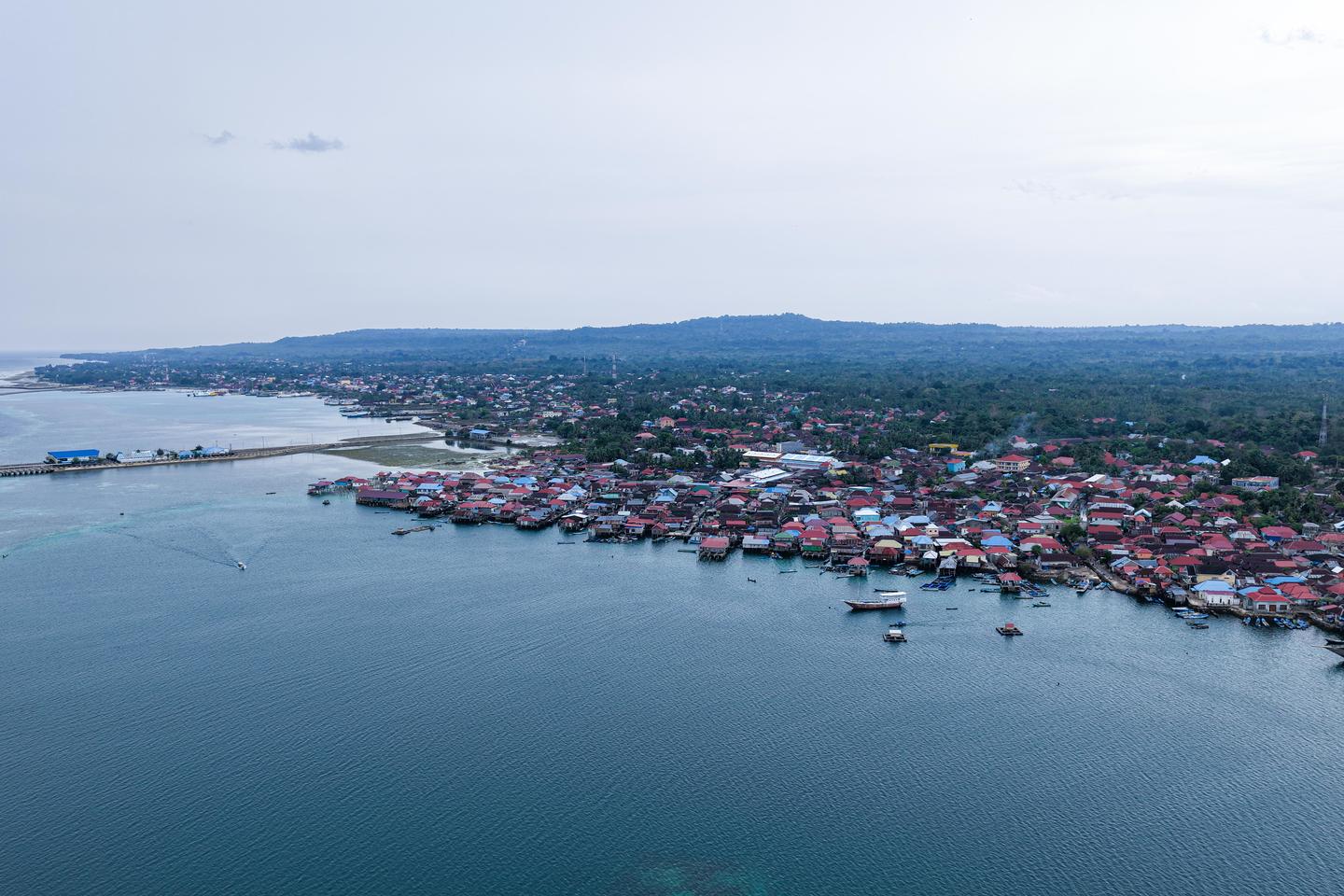
Photo : UNDP Indonesia