

 Locations
UNDP Resident Representative and Ambassador of Serbia inaugurated two projects in Lori region
April 17, 2026

A group photo with the beneficiaries of the multifunctional public space.
On 16 April, a new gender-sensitive and inclusive multifunctional public space has officially opened in the Dzoraget settlement of Pambak community, Lori region. The initiative was implemented under the UNDP “Resilience from the Start” project, with the financial support of the Government of Serbia and in partnership with the RA Ministry of Territorial Administration and Infrastructure.
The opening ceremony brought together high-level representatives and partners, including H.E. Tatjana Panajotović Cvetković, Ambassador of Serbia to Armenia; Ms. Natia Natsvlishvili, UNDP Resident Representative in Armenia; Mr. Arsen Gharibyan, Deputy Governor of Lori region; and Mr. Suren Kostandyan, Head of Pambak community.
The newly opened space will expand access to educational and cultural initiatives, including theatre, arts, and creative clubs to over 7,000 residents, from which 58% are women and children. It was designed through participatory processes ensuring the involvement of women and vulnerable groups, including refugees, in urban planning and local decision-making on services meeting their needs.
Speaking at the event, UNDP Resident Representative in Armenia Natia Natsvlishvili expressed appreciation to the Government of Serbia for the support and highlighted the importance of such spaces in fostering social cohesion by bringing together host communities and refugees from Nagorno-Karabakh in a safe and inclusive environment.
Afterwards, the high-level guests, accompanied by Head of Lori Berd community Arayik Nersisyan, visited the newly constructed daily water regulated reservoir in the Hovnanadzor settlement of Lori Berd community that has a capacity of 8,900 m³ and a 450 m distribution pipeline.
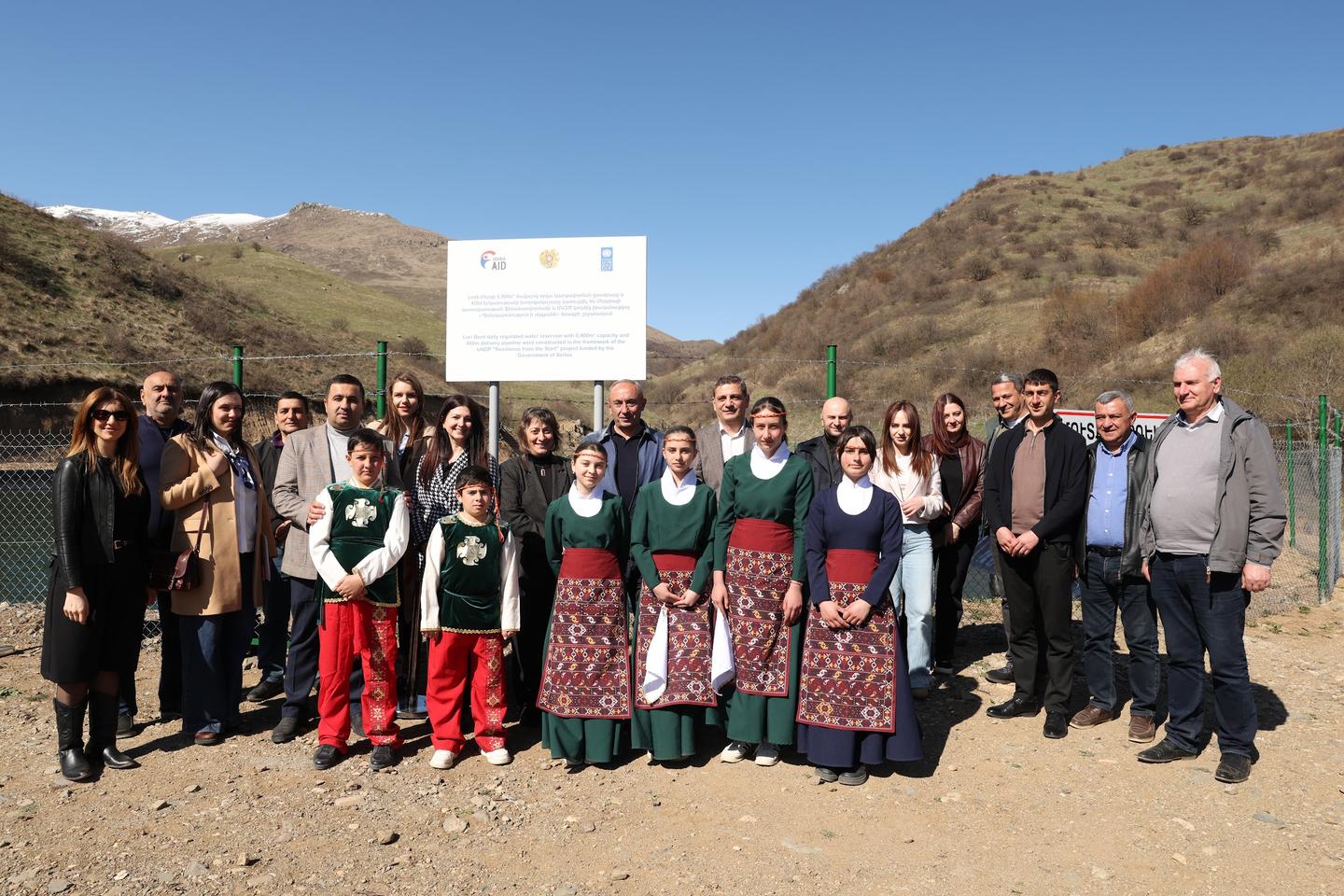
The reservoir bridges two consolidated communities - Lori Berd and Alaverdi - and directly benefits nine rural settlements by feeding the existing irrigation channel. 900 households (around 3,700 farmers) will directly benefit from this infrastructure, while over 8,000 people, including refugees, will benefit indirectly. 400 hectares of land will be irrigated. Crucially, this includes 160 hectares that previously had no access to water, bringing dry lands back into cultivation and stopping gradual soil degradation.
This infrastructure is about more than just agriculture, it is about security. Situated on a tributary of the Debed River, the reservoir acts as a vital flood retention shield.
Related
content
content


