

 Locations
A sneak peek inside the programme cultivating three young women leaders to reshape Zambia’s innovation ecosystem
Stewards of The Next Innovation Generation
January 26, 2026

Three young women. One innovation hub. A generation of change in motion.
Photo by: Vanessa Wematu Akibate/UNDP Zambia

“I have learnt to put myself out there because I have been able to implement programmes and talk to people that I didn’t think I could talk to."
When Mable Chileshe joined the Mukuba UniPod Next Gen Managers programme with a mind full of ideas and drive to shape development in Zambia with technology, she did not expect the journey to redirect the course of her career or widen her imagination. Surrounded by the hum of fabrication machines in the UniPod’s FabLab and the buzzing energy of innovators tinkering with prototypes and engaging with the Pod mentors, she quickly realised that she was part of a new wave sending small ripples through Zambia’s innovation ecosystem that will travel much farther than we could see today.
The Mukuba UniPod NextGen Managers Programme is designed for exactly this kind of ripple effect. Following a competitive selection process launched in July 2025, three emerging leaders were chosen to undergo three months of intensive training as potential UniPod Managers. Thanks to the financial support of the United Nations Development Programme’s (UNDP) Partners at Core, and technical support from UNDP and the Mukuba UniPod implementing institution, the Copperbelt University as well as others within Zambia’s innovation ecosystem and beyond, a pool of experts was constituted to provide mentorship and coaching sessions to the NextGen Managers. Over a three-month period, the young leaders are undergoing a series of capacity-building sessions intended to stretch their technical skills and deepen their ability to deliver sustainable impact. They have been flexing their skills by designing and leading a suite of programmes for young innovators – from hackathons in partnership with UNLEASH and internships to a MineTech pipeline and, most recently, the RootLab Ignite Programme, that have attracted # young people from across the country.
“With the NextGen Managers Programme, UNDP is investing in a generation of stewards for Zambia’s innovation future,” noted Dr. James Wakiaga, UNDP Zambia’s Resident Representative. “When young people are trusted to lead, design programmes, and work directly with partners, the impact can cascade into universities, industries, and communities across the country.”
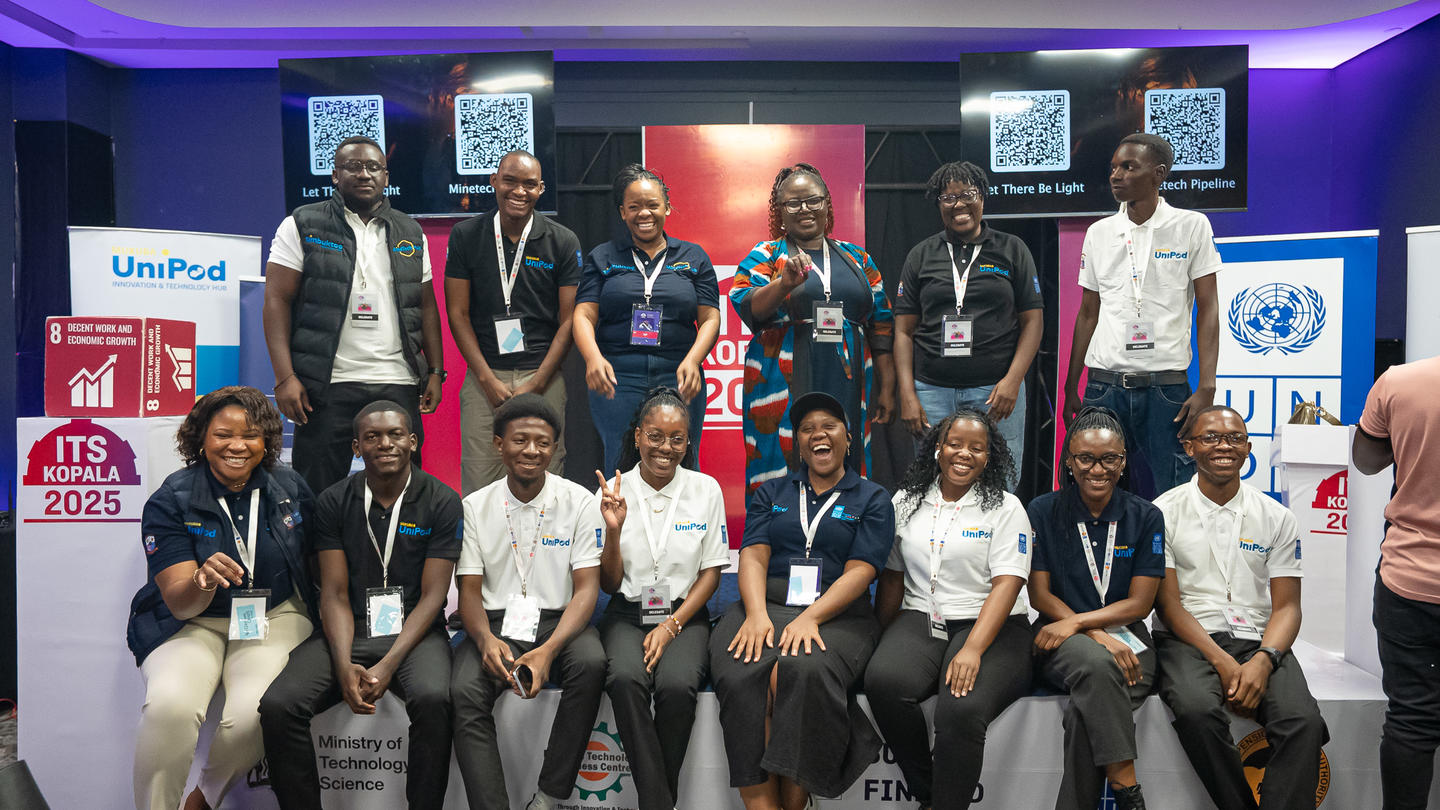
One of the notable results was from the training is the successful implementation of the RootLab Ignite programme, that delivered 13 participants to the Innovation and Technology Summit (ITS Kopala) in the Copperbelt, where the young innovators had an opportunity to participate in masterclasses, engage with experts in the innovation ecosystem including high level government representatives led by the Minister of Technology and Science, Hon. Felix Mutati. The hallmark of the RootLabbers was their pitch session showcasing what could happen when early-stage ideas are given room to grow. This achievement demonstrates what could happen when the youth are given the torch to light the way to a future, they come with bold ideas and courage to challenge the status quo.
Mable calls the NextGen Managers training “full-stack”. By training, Mable is a software developer and innovator herself, but she describes herself as a listener and social engineer, quietly absorbing what others in the room are building, what they are worried about and what they hope to change. Her innovation, Bumi Hub, is a health application whose name carries its own meaning. “Bumi”, or “life” in Bemba, brings together a social layer, AI features and tracking tools to help users stay on course with their health goals. It is designed as a one-way instruction manual and simultaneously a digital community where healthy decisions can accumulate and even influence others to grow.




But beyond the technical skills, it has moved her beyond the comfort of code to explore programme design, management and the everyday realities of running an innovation space. She has learned how to use equipment in the FabLab and maker spaces, to speak about her work with clarity, and to negotiate for what her project and the community needs.
“The highlight is the people,” she says, reflecting on how the relationships between her and the fellow NextGen managers, young innovators and mentors have blossomed. In this way the programme has also facilitated and strengthened her connections with others in the spaces, building linkages needed to learn and scale in the competitive and often siloed innovation space.
Here, she has discovered herself as a leader, connecting with younger women stepping cautiously into the lab and recognising the same hesitation she once felt. She finds herself reaching out and mentoring them to stake their claim in the space. Her greatest takeaway, she says, is the courage to “dare to dream”.
Read the Full Story on Exposure

Related
content
content


